Night Sweats, Low Libido, Weight Gain and Headaches in Men: When Four Symptoms Point to One Hormonal Cause and When They Do Not
Some men do not arrive at a doctor's office with a diagnosis in mind. They arrive with a list. Sweating through shirts at the desk, a sex drive that has quietly gone missing, a belt that keeps moving out a notch, and headaches that arrive more often than they used to. Each symptom on its own is easy to explain away. Together, they feel like a pattern, and a search engine will happily suggest that the pattern has a single name.
Sometimes it does. Low testosterone can produce exactly this combination. But many other conditions produce overlapping versions of it, including sleep apnea, thyroid disease, early diabetes, chronic stress, medication effects and depression. Treating the wrong one wastes months, and treating a hormone that is not the problem can add risks without adding relief.
This guide works through the four symptoms as a physician would: what each one can mean on its own, how they cluster, which causes tend to travel together, which tests separate them, and which warning signs mean the question should not wait. It is general education, not a diagnostic tool, and no list of symptoms substitutes for an examination and laboratory testing.
Why a symptom cluster is harder than a single symptom
A single symptom narrows the field a little. A cluster should narrow it more, but only if the physician resists the first plausible story. The trouble is that hormones, sleep, metabolism and mood all influence one another. Poor sleep lowers testosterone, low testosterone encourages weight gain around the middle, abdominal fat converts testosterone to estrogen and lowers it further, and the resulting fatigue and low mood suppress desire. A man can start anywhere in that loop and end up with all four symptoms.
That is why the order matters in the history. When did each symptom start, and which came first? Did the weight come before the libido, or after? Do headaches arrive in the morning, after exercise, or at the end of a stressful day? Does the sweating happen at night, after meals, during activity or at random? A careful timeline often separates causes more reliably than any single blood test.
Excessive sweating: the symptom with the widest range of causes
Sweating is a normal response to heat, exertion and anxiety. Excessive sweating that is new, drenching or unrelated to temperature has a long differential.
Hormonal causes come first in many minds. In men, a sudden drop in testosterone can trigger hot flashes and night sweats through the same temperature regulation pathways that cause them in menopause. This is seen most clearly in men who lose testosterone abruptly, such as those on androgen deprivation therapy for prostate cancer, but it also occurs in men with severe deficiency. At the other end, men taking testosterone sometimes sweat more as well, since testosterone and sweating are linked when levels swing high between injections.
An overactive thyroid is another classic cause. Excess thyroid hormone speeds metabolism, producing heat intolerance, sweating, a racing heart, tremor, weight loss and anxiety. The weight usually falls instead of rises, which helps distinguish it, though a minority of cases are less typical.
Sleep apnea causes night sweats because repeated airway collapse triggers stress responses through the night. Men with apnea often wake damp, snore, feel unrefreshed and have morning headaches.
Blood sugar problems can also cause sweating. Low blood sugar produces cold sweats, shakiness and hunger, and in men on diabetes medications it is a real concern. Insulin resistance can produce reactive dips after high carbohydrate meals.
Medications are underappreciated culprits. Antidepressants, especially SSRIs and SNRIs, are among the most common causes of drug induced sweating. Some blood pressure drugs, opioids, steroids and other medicines do the same.
Infection and, rarely, cancers such as lymphoma cause drenching night sweats, usually with fever, unexplained weight loss or swollen lymph nodes. This is the reason night sweats combined with those features deserve prompt evaluation instead of a hormone prescription.
Finally, anxiety and stress alone can produce significant sweating, especially of the palms, underarms and chest, and a stressed man may notice it most in the hours before and after a high pressure day.
Low libido: a symptom that rarely has one cause
Desire is one of the most sensitive barometers of overall health, and it falls for many reasons.
Low testosterone is the best known cause, and in men with true deficiency, libido is the symptom most consistently restored by replacement. A man with low desire, fewer morning erections and low testosterone on repeated morning tests has a reasonably clear story. A man with low desire and normal testosterone does not, and replacement is unlikely to help him.
Depression and anxiety are among the most common causes, and they cut both ways, because low desire itself can depress mood. Relationship stress, performance anxiety, grief and burnout all matter and are not found on a blood test.
Medications play a large role. SSRIs commonly reduce desire and delay orgasm. Certain blood pressure drugs, finasteride and dutasteride, opioids and some others have sexual side effects. A medication review is often the fastest route to an answer.
High prolactin, caused by a pituitary adenoma or certain drugs, suppresses testosterone and desire. It is uncommon but important to catch, particularly when libido is very low or headaches and visual changes accompany it.
Thyroid disease, both under and overactive, can reduce desire. Sleep apnea reduces it through low testosterone and exhaustion. Alcohol, cannabis and recreational drug use contribute, as do vascular problems that cause erectile difficulty and lower confidence.
Weight gain: why the middle is where hormones show up
Weight gain, especially around the abdomen, is both a consequence and a cause of hormonal change. Low testosterone encourages the body to store visceral fat and to lose lean mass. Visceral fat in turn produces the enzyme aromatase, which converts testosterone to estrogen, and inflammatory signals that suppress the brain's drive to the testes. The result is a self reinforcing loop.
Other causes sit alongside it. Hypothyroidism slows metabolism and encourages modest weight gain, with fatigue, constipation, cold intolerance and dry skin. Insulin resistance promotes fat storage and often shows up as a thick waist, high triglycerides, low HDL and creeping blood pressure. Chronic stress and elevated cortisol shift fat to the abdomen and can lead to a rounded face and easy bruising in more severe cases. Poor sleep alters appetite hormones and increases cravings. Medications including some antidepressants, antipsychotics and steroids promote weight gain.
Muscle loss deserves its own mention. A man can hold a steady weight while losing muscle and gaining fat, a pattern known as sarcopenic obesity. The scale misses it, and the symptom shows up as weakness, slower recovery and a softer physique at the same body weight.
Headaches: separating hormonal from everything else
Headaches have the longest list of causes of the four, and most are not hormonal.
Tension headaches are the most common, often linked to stress, neck tension and poor sleep. Migraines have a hormonal component in women but occur in men as well, and triggers include sleep changes, dehydration, alcohol and certain foods. Morning headaches suggest sleep apnea, caused by low oxygen and high carbon dioxide levels overnight. Medication overuse headaches develop when pain relievers are taken frequently. High blood pressure can cause headaches, particularly when severe.
Hormones play a role in some cases. Fluctuating testosterone, especially in men on injections, can accompany headaches around the peak or trough. Exercise can bring them on too, which is why hormones and headaches during workouts are a recognized pairing. Pituitary tumors, though rare, can cause headaches along with low testosterone, low libido and sometimes vision changes, which is one reason a physician takes a combination of headache and sexual symptoms seriously.
The causes that tie several symptoms together
Some conditions explain more than one symptom at once, and these are the ones to think of first when a man presents with a cluster.
Low testosterone can account for sweating, low libido and weight gain together, and in some men headaches as well, though the latter is the weakest link.
Obstructive sleep apnea can account for night sweats, morning headaches, daytime fatigue, weight gain and low libido through its effects on sleep and testosterone. It is common, underdiagnosed and more frequent in men with larger necks and abdominal weight. It is also one of the first things worth ruling out, because it can both cause low testosterone and mimic it.
Thyroid disease can account for sweating and low libido, with weight changes in either direction.
Insulin resistance and early type 2 diabetes can account for weight gain, low libido, sweating from blood sugar swings and sometimes headaches.
Chronic stress and burnout can account for all four through cortisol, sleep disruption, poor eating and low mood.
Medication effects can account for sweating, low libido and weight gain, particularly with antidepressants.
Depression accounts for low libido, weight change, sleep disruption and headaches, and may be the driver or the result.
None of these excludes the others, and men frequently have two or three at once. A man with sleep apnea, an enlarged waist and borderline low testosterone does not have a single answer. He has a loop to be interrupted at several points.
What a thorough evaluation includes
A physician working through this cluster starts with a detailed history and examination, then orders targeted tests.
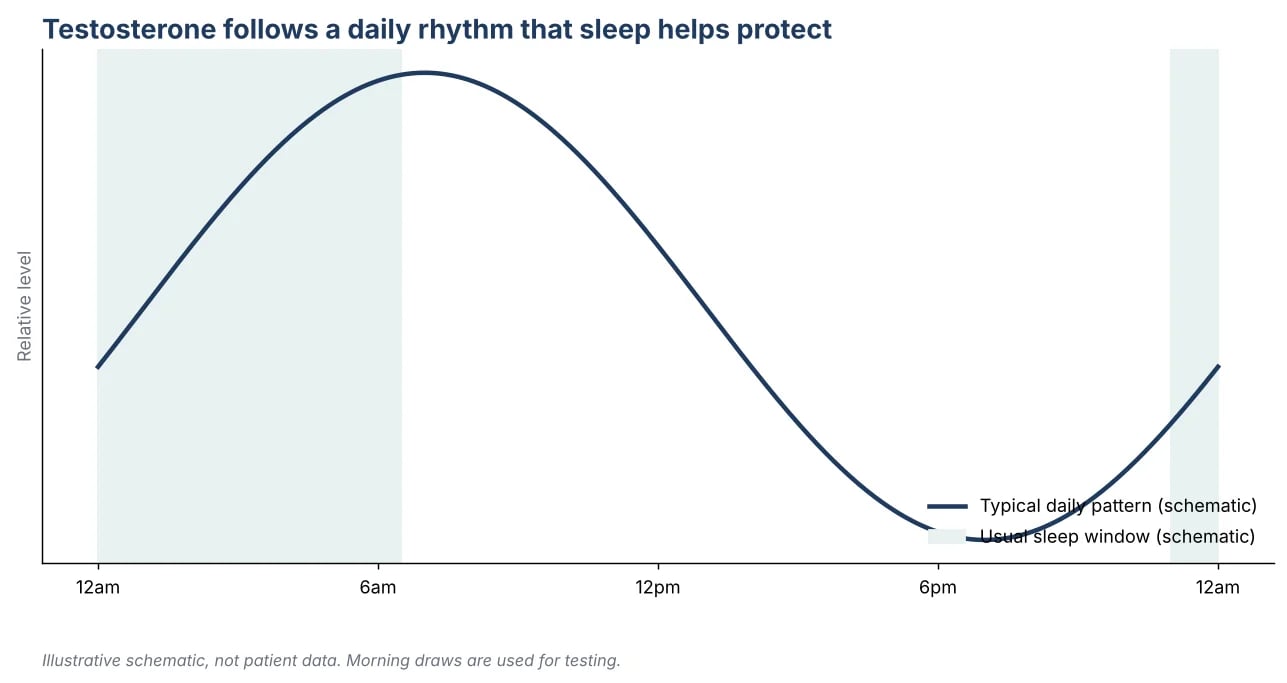
Morning total testosterone, with free testosterone and sex hormone binding globulin. Total testosterone is drawn in the early morning, ideally on two separate days. Free testosterone and binding protein clarify borderline results. The draw is done in the morning, and whether a patient needs fasting before labs depends on which markers are included.
Luteinizing hormone and follicle stimulating hormone. These distinguish testicular failure from a signaling problem in the pituitary.
Prolactin. This is checked when libido is very low or testosterone is low without an obvious cause.
Thyroid stimulating hormone, with free T4 if abnormal. This screens for both over and underactive thyroid.
Hemoglobin A1c, fasting glucose and often fasting insulin. These detect diabetes and insulin resistance.
Lipid panel and metabolic panel. These assess cardiovascular risk, liver and kidney function.
Complete blood count. This detects anemia or high red cell counts that influence treatment decisions.
Sleep apnea screening. A questionnaire such as the STOP-Bang, followed by a home or lab sleep study when indicated.
Mood screening and a medication and substance review. These are not laboratory tests but often provide the clearest answer.
Additional testing, such as cortisol assessment, vitamin D, inflammatory markers or imaging of the pituitary, is added when the story suggests it. Precision diagnostics at this level, rather than a single testosterone number, are the foundation of men's health care at Liondale Medical, and the subtler markers of hormonal aging often show up in the same panels.
Reading the results
Interpretation is where experience matters. A total testosterone clearly below the reference range on two morning draws, together with low desire and a compatible history, supports a diagnosis of hypogonadism and a conversation about treatment. A borderline value in a man with sleep apnea, obesity and poor sleep suggests that treating those first may raise testosterone without medication. A normal testosterone with a high A1c points toward metabolic disease. A low thyroid function explains fatigue, weight and low desire without any need for testosterone.
Men are sometimes disappointed when testosterone comes back normal, as if it meant nothing is wrong. The opposite is true. A normal result narrows the search and steers the physician toward the cause that can actually be treated.
What treatment looks like when the cause is found
Treatment follows the cause, not the symptom list.
If testosterone is clearly low and other causes have been addressed, replacement may be appropriate. What it involves, including monitoring and risks, is the subject of testosterone replacement therapy for men. It is most likely to help libido and, in some men, mood and body composition, and least likely to fix headaches.
If sleep apnea is present, treatment with CPAP, an oral appliance, weight loss or surgery in selected cases often improves energy, mood, headaches and sometimes testosterone, making it a frequent first step.
If thyroid disease is found, correcting it can relieve sweating, weight changes and low desire without any other intervention.
If insulin resistance or prediabetes is driving the picture, the foundation is nutrition, resistance training, sleep and weight reduction, sometimes with medication. Weight management drugs raise their own questions about muscle and long term health, which is where GLP-1 drugs and longevity come into the picture.
If a medication is responsible, the prescriber can often adjust the dose or switch agents.
If depression or chronic stress is central, therapy, medication when appropriate, sleep repair and lifestyle changes are the effective tools, and hormones are at most an adjunct.
Lifestyle levers that help regardless of the cause
Several habits improve almost every item on the list.
Sleep comes first. Seven to nine hours of consistent sleep supports testosterone, appetite regulation and mood, and it reduces headaches.
Resistance training two to three times a week preserves muscle, improves insulin sensitivity and supports testosterone.
Alcohol reduction helps. Heavy drinking suppresses testosterone, disrupts sleep and contributes to weight gain.
Protein, fiber and whole foods stabilize blood sugar and help reduce visceral fat, and the link between digestion, inflammation and mood means gut health and mood are worth attention too.
Stress management, whether through exercise, time outdoors, therapy or breathing practices, lowers cortisol and improves sleep.
When the symptoms should not wait
Most men with this cluster can schedule an ordinary appointment. A few warning signs call for urgent evaluation.
Sudden, severe headache described as the worst ever, or headache with confusion, weakness, fainting, vision loss or speech difficulty, needs emergency care. Chest pain, shortness of breath or a racing heart with sweating needs emergency care. Drenching night sweats with fever, unexplained weight loss or swollen lymph nodes needs prompt evaluation. Very low libido with headaches, visual changes or breast discharge should prompt prolactin and pituitary evaluation. Thoughts of self harm, or severe depression, need immediate support.
A closer look at the weight and waist connection
Of the four symptoms, weight gain is the one most men notice first and understand least. The belly is not just a passive storage site. Visceral fat is metabolically active, releasing inflammatory signals and converting testosterone into estrogen, which nudges the whole system toward lower testosterone, more fat storage and less muscle. Breaking the loop usually requires attacking it at more than one point.
Waist measurement tells more than the scale. A waist circumference above roughly 40 inches in men is associated with higher metabolic risk, and a rising waist at a stable weight suggests muscle loss and fat gain. Tracking waist, grip strength, how many push ups or squats can be done and the speed of recovery gives a more honest picture than weight alone.
Nutrition changes that help are not exotic. Adequate protein, spread across the day, protects muscle during weight loss. Reducing refined carbohydrates and alcohol lowers insulin and triglycerides. Fiber and whole foods improve satiety and blood sugar. Resistance training does more for body composition and testosterone than steady state cardio alone, though both help heart health.
The role of stress and cortisol
Chronic stress deserves more space than a line on the list of causes. The body's stress system raises cortisol, which in the short term mobilizes energy and in the long term encourages abdominal fat, interferes with sleep, raises blood pressure and suppresses the reproductive axis. A man who works long hours, sleeps five hours, drinks a few evenings a week to wind down and trains hard on top of it may have low testosterone because his body is deprioritizing reproduction, not because his testes have failed.
Recognizing this changes treatment. Replacing testosterone in such a man can make him feel better for a while and still leave the underlying drivers untouched. Sleep, workload, recovery and mental health support are not soft add ons. They are often the main therapy.
Tracking symptoms to make the visit count
A symptom diary kept for two or three weeks before an appointment can turn a vague story into useful data. Useful entries include the time and severity of sweating episodes and whether they follow meals, exercise, alcohol or stressful events; the number of morning erections and the level of desire on a simple scale; headache timing, location and triggers; sleep duration, awakenings and snoring reported by a partner; and daily energy and mood ratings.
Patterns often emerge that a single visit would miss. Sweating that clusters after high sugar meals suggests blood sugar swings. Headaches that peak in the morning suggest sleep apnea. Desire that dips during stressful weeks points toward stress and sleep rather than a fixed hormonal problem.
How to prepare for the appointment
A little preparation makes the visit far more productive. A short timeline of when each symptom began and how it has changed is useful. A list of every medication, supplement and substance, including over the counter and recreational ones, is essential. Notes on sleep, snoring, alcohol, exercise and stress help. Blood work from the past year, if available, saves time. The questions worth bringing are simple: what are the likely causes, what tests will sort them, and what happens if the results are normal?
Men in the New York area who want a physician to work through the cluster can start by booking an appointment, and the same panels that explain these symptoms also feed into the broader anti-aging and longevity work that Liondale Medical does.
The takeaway
Excessive sweating, low libido, weight gain and headaches can point to low testosterone, but they can just as easily point to sleep apnea, thyroid disease, insulin resistance, medications, stress or depression, and often to more than one of these at once. The useful move is to treat the cluster as a question and not an answer: take a careful history, test broadly, rule out the causes that are easy to miss, and treat what the results show. When testosterone turns out to be the cause, replacement can help. When it does not, the same evaluation points to the treatment that will.
Frequently Asked Questions
Can low testosterone cause excessive sweating?
Yes. A significant drop in testosterone can trigger hot flashes and night sweats in men, similar to menopause, though sweating has many other causes including thyroid disease, sleep apnea, low blood sugar, anxiety and medications.
What are the symptoms of low testosterone in men?
Common symptoms include low sexual desire, fewer morning erections, fatigue, low mood, reduced muscle mass, increased abdominal fat and sometimes hot flashes. Because these overlap with other conditions, diagnosis requires symptoms plus low morning blood levels on repeat testing.
Why would a man have no sex drive?
Causes include low testosterone, depression, anxiety, relationship stress, medications such as SSRIs, thyroid disease, high prolactin, sleep apnea, alcohol use and vascular problems. A medication review and hormone testing help separate them.
Can low testosterone cause headaches?
It is not a common direct cause, but hormone fluctuations in men on injections, pituitary disorders and sleep apnea, which also lowers testosterone, can link headaches with hormonal symptoms. New or severe headaches deserve evaluation.
Why am I gaining weight around my middle as a man?
Abdominal weight gain is associated with low testosterone, insulin resistance, hypothyroidism, chronic stress, poor sleep and certain medications. Visceral fat can also lower testosterone further, creating a reinforcing loop.
Which tests help diagnose the cause?
A typical workup includes morning total testosterone with free testosterone and SHBG, LH and FSH, prolactin, thyroid function, A1c and glucose, a lipid and metabolic panel, a blood count and screening for sleep apnea and depression.
Does sleep apnea cause night sweats and low libido?
Yes. Sleep apnea can cause night sweats, morning headaches, fatigue, weight gain and reduced testosterone and libido, making it one of the first conditions to rule out in a man with this cluster of symptoms.
Can antidepressants cause sweating and low libido?
Yes. SSRIs and SNRIs are among the most common medication causes of excessive sweating and reduced sexual desire. A prescriber can sometimes adjust the dose or switch medications, and patients should not stop them without guidance.
When should a man see a doctor about these symptoms?
Persistent or worsening symptoms warrant an appointment. Sudden severe headache, chest pain, drenching night sweats with fever or weight loss, vision changes or severe depression need prompt or emergency evaluation.
If testosterone is normal, what else could be wrong?
Thyroid disease, sleep apnea, insulin resistance, depression, stress, medications and lifestyle factors are common explanations. A normal testosterone result narrows the search and points the evaluation toward other treatable causes.
This page was written and medically reviewed by Lionel Bissoon, D.O., founder of Liondale Medical. Dr. Bissoon is a board-certified osteopathic physician specializing in anti-aging and concierge medicine on the Upper West Side of Manhattan.
This content is for educational purposes only and does not constitute medical advice. Individual results may vary. Consult a qualified physician before beginning any new treatment.
T shots, test shots, testosterone injections: what they are prescribed for, who qualifies after proper lab testing, what they can realistically change and what they cannot fix. A New York physician-led guide.
Low libido in men has many causes besides low testosterone. Learn how doctors separate hormone problems from depression, medicines, sleep apnea, thyroid disease and stress, and which tests are worth doing.
Can low or high testosterone cause hot flashes? Learn how estrogen, androgen deprivation, testosterone injections and look-alike conditions trigger heat surges in men and women, and which labs sort them out.
Sleep apnea and low testosterone often occur together. Learn the questions to ask, what a sleep study and hormone labs show, and how treating sleep can help.
A men's health specialist looks beyond testosterone. See what a thorough workup covers after 40, from heart risk and sleep to labs, and how to choose a doctor.