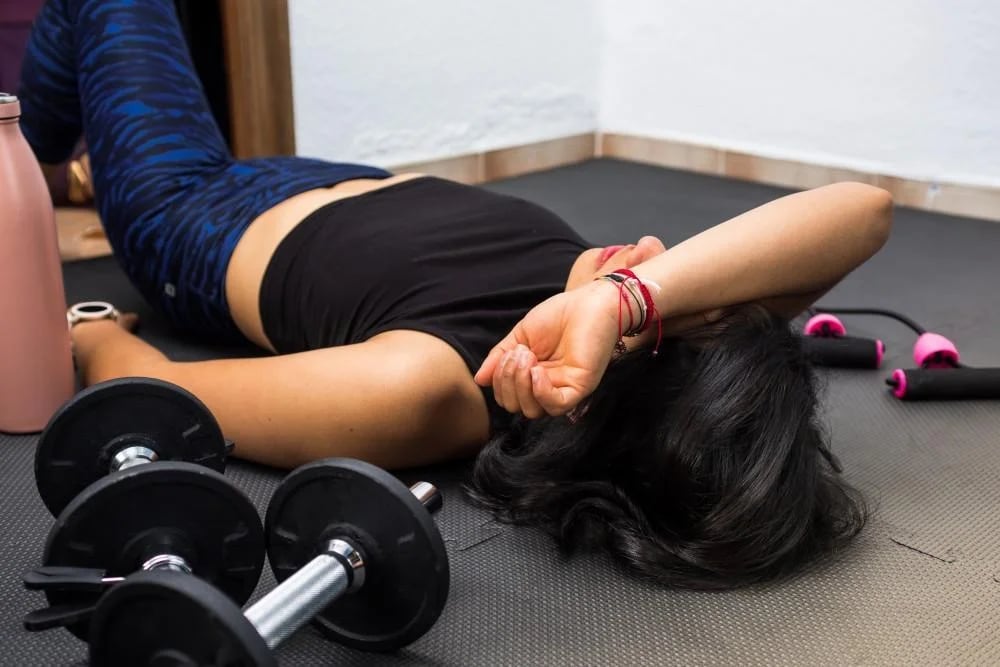
Halfway through a set, or right at the cooldown, your head starts pounding for no clear reason. You did not skip a meal. You are not dehydrated, or at least you do not think you are. And yet there it is, that familiar pressure building behind your eyes just as your workout was supposed to leave you feeling better, not worse.
For a lot of people, this is not random. Hormones are chemical messengers running the show behind the scenes, regulating everything from energy levels to pain sensitivity, and during exercise your body pumps out hormones like cortisol and adrenaline to keep you moving. That surge is usually a good thing, until the interaction between exercise and hormonal shifts, particularly estrogen or blood sugar regulating insulin, triggers a headache instead. Add in dehydration, poor sleep, or a skipped meal, and the odds of your head staging a protest mid workout go up considerably.
The relationship between your hormones and your workouts is genuinely complicated, and headaches sitting at that intersection are more than just an inconvenience. With the right preparation, hydration, proper fueling, hormone balance, and adequate rest, this cycle can often be broken without reaching for a bottle of Advil every time you finish a workout.
Why headaches show up around hormonal changes in the first place
Headaches affect nearly everyone at some point, for a wide range of reasons that have nothing to do with hormones at all. But some people, women in particular, consistently notice headaches clustering around specific hormonal changes rather than appearing randomly throughout the month.
The mechanism behind this comes down to how hormones affect headache linked chemicals in the brain. Steady, stable levels of estrogen and other hormones tend to have a protective effect against headaches, while sudden shifts, up or down, can make headaches more likely or more intense. This pattern holds true regardless of whether you are exercising, but for many people it becomes especially noticeable during or immediately after a workout, when the body is already under a different kind of physiological stress.
What is actually happening during an exercise headache
Exercise itself is a well documented headache trigger, separate from any hormonal component. The American Migraine Foundation describes primary exercise headaches as a recognized category, often producing pulsating pain on both sides of the head that can feel remarkably similar to a migraine, even in people who do not otherwise get migraines.
The mechanism is fairly straightforward physiologically. Exertion increases the body's demand for oxygen and blood, and intense physical activity causes blood vessels to expand in response. That expansion increases pressure within the skull, which is where the discomfort comes from. Dehydration from sweating, or simply not having eaten enough beforehand, compounds this effect further, since both dehydration and low blood sugar are independent headache triggers on their own.
Put hormonal fluctuation and exercise induced vascular changes together, and it becomes clear why certain people, particularly those already prone to hormone related headaches, are at elevated risk of debilitating head pain during or after a workout specifically, even when they would not otherwise expect a headache that day.
The myth that "pushing through" is the right move
A common instinct when a headache starts mid workout is to push through it, assuming it will pass once endorphins kick in or once the workout is over. Sometimes that happens. But for headaches with a hormonal or vascular component, continuing to push intensity can actually make things worse, since it keeps blood vessels dilated and stress hormones elevated at exactly the moment your body needs the opposite to recover.
A more useful approach, particularly for people who already know they are prone to these headaches, is to treat the first sign of head pain as information rather than an obstacle to override. Backing off intensity, rehydrating immediately, and getting some fuel in your system, even something small, often does more to resolve the headache than finishing the set at full effort.
Combating hormone headaches during and after workouts
Several practical steps, alongside guidance from Dr. Bissoon at Liondale Medical, can help address hormone related headaches during exercise.
You might be a candidate for hormone therapy, intravenous (IV) therapy, bioidentical hormone replacement therapy (BHRT), nutrition therapy, or other lifestyle adjustments, depending on what is actually driving your specific pattern of headaches. Exercising regularly still matters, though avoiding extremely intense workouts if you are especially prone to headaches is a reasonable modification rather than giving up exercise altogether. Getting adequate sleep, drinking enough water throughout the day rather than only during your workout, and minimizing overall stress all contribute to reducing headache frequency as well.
Maintaining a healthy body weight through medically supervised weight management can help too, since body composition and metabolic health both interact with hormone balance in ways that extend beyond headaches specifically. If your headaches persist despite these adjustments, further diagnostic testing may be needed to rule out or identify an underlying medical concern that requires direct intervention rather than lifestyle changes alone.
How to tell if your workout headaches are actually hormonal
Not every headache during or after exercise has a hormonal cause, so it helps to know what patterns point more specifically in that direction. Headaches that cluster around a predictable point in your monthly cycle, rather than appearing randomly regardless of timing, are one of the clearer signals. Headaches that intensify during specific life stages, such as perimenopause or after starting or stopping hormonal birth control, also point toward a hormonal component rather than a purely exercise induced one.
Another useful signal is whether the headache responds to hydration and fueling alone, or persists despite doing everything right on that front. If you are well hydrated, have eaten adequately beforehand, and are still getting hit with headaches during workouts on a predictable pattern, hormones are a reasonable thing to investigate rather than continuing to assume it is simply a fueling issue.
What a hormone evaluation for headaches actually involves
If lifestyle adjustments alone are not resolving the pattern, an evaluation typically starts with a detailed conversation about when your headaches occur, how they relate to your menstrual cycle if applicable, your exercise routine, and any other symptoms you have noticed alongside them, such as fatigue, mood changes, or sleep disruption. Bloodwork can then assess relevant hormone levels, including estrogen, progesterone, and blood sugar regulation, to identify whether a specific imbalance is contributing to the pattern.
From there, treatment is tailored to what the evaluation actually shows, rather than a generic recommendation to simply drink more water and hope the headaches improve on their own.
Why this pattern is often dismissed for too long
A lot of people who deal with exercise related headaches assume it is simply something they have to work around, treating it as a personal quirk rather than something worth investigating. This is understandable, since the headaches are not usually severe enough to send someone to urgent care, and over the counter pain relievers often provide enough relief to get through the day. But recurring headaches tied to a hormonal pattern are a signal worth paying attention to, not just for the headaches themselves, but because hormone imbalance significant enough to trigger headaches during exercise is often affecting other areas of health as well, including sleep, mood, and energy levels, even if those connections are not immediately obvious.
Reaching for pain relievers repeatedly, rather than addressing the underlying cause, also comes with its own downside. Frequent use of over the counter pain medication can, in some cases, contribute to a separate pattern called medication overuse headache, where the body becomes dependent on the medication itself as part of the headache cycle. This is one more reason getting to the actual root cause, rather than simply managing symptoms indefinitely, tends to serve patients better over time.
Building a workout routine that works with your hormones, not against them
For people who have identified a hormonal component to their exercise headaches, some practical adjustments to workout timing and structure can reduce frequency without requiring you to give up training altogether. Scheduling higher intensity sessions during the portion of your cycle when you typically feel best, and shifting toward lower intensity movement during the days when headaches are more likely, is a reasonable strategy many patients find effective. Prioritizing a proper warm up, rather than jumping straight into high intensity work, gives your cardiovascular system a chance to adjust more gradually, which can reduce the sharp vascular changes that contribute to exercise headaches in the first place.
The role of blood sugar in exercise headaches
Blood sugar regulation deserves its own mention, since insulin is one of the hormones most directly tied to how your body responds to exercise. Working out on an empty stomach, or after a meal heavy in refined carbohydrates that causes a rapid blood sugar spike and subsequent crash, can trigger headaches independent of any other hormonal factor. This is part of why fueling strategy matters as much as timing when it comes to preventing workout related headaches.
A small, balanced snack containing both protein and complex carbohydrates roughly 30 to 60 minutes before exercising tends to provide steadier blood sugar throughout a workout than either training fasted or eating a large, sugar heavy meal right beforehand. For people whose headaches seem tied more to blood sugar swings than to a cyclical hormonal pattern, this single adjustment sometimes resolves the issue without any further intervention needed.
When hormonal headaches signal something beyond exercise
While this discussion has focused specifically on headaches triggered or worsened by exercise, it is worth noting that hormone related headaches occurring outside of workouts as well, particularly if they are becoming more frequent or severe over time, can be part of a broader pattern worth evaluating. Hormone imbalances rarely affect just one system in isolation. Someone dealing with exercise headaches driven by hormonal fluctuation may also notice sleep disruption, mood changes, or fatigue that seem unrelated at first glance but actually stem from the same underlying imbalance.
Bringing up the full picture during a consultation, rather than focusing narrowly on the workout headaches alone, gives Dr. Bissoon a more complete view of what is happening and increases the likelihood of identifying and addressing the actual root cause rather than just managing the most noticeable symptom.
Frequently Asked Questions
Why do I get headaches specifically during or after workouts?
Exercise causes blood vessels to expand in response to increased oxygen demand, raising pressure in the skull. When this is combined with hormonal fluctuations, dehydration, or low blood sugar, the odds of a headache developing during or after exercise increase significantly.
Are workout headaches related to hormones different from regular migraines?
They can feel similar, often producing pulsating pain on both sides of the head, but the underlying trigger is different. Hormonal exercise headaches are tied to fluctuations in estrogen or blood sugar regulation combined with exercise induced vascular changes, rather than the broader range of migraine triggers.
Can hormone therapy help reduce exercise headaches?
For headaches driven by hormonal fluctuation, bioidentical hormone replacement therapy or other hormone focused treatment can help by stabilizing the underlying imbalance. An evaluation is needed to confirm whether hormones are actually the driving factor in your specific case.
Should I stop exercising if I get headaches during workouts?
Not necessarily. Moderating intensity, improving hydration and fueling, and getting adequate sleep often reduces headache frequency without requiring you to stop exercising altogether. Persistent headaches despite these changes warrant further evaluation rather than simply avoiding exercise.
How do I know if my exercise headaches need medical attention?
Headaches that are severe, sudden in onset, accompanied by vision changes, or significantly different from your usual pattern warrant prompt medical evaluation. Recurring, predictable headaches tied to exercise or hormonal timing are worth discussing at a routine appointment even if they are not severe.
What lifestyle changes help most with hormone related workout headaches?
Consistent hydration throughout the day, eating adequately before exercising, prioritizing sleep, and moderating workout intensity during periods when headaches are more likely all help reduce frequency. For persistent cases, addressing the underlying hormone imbalance directly tends to produce more lasting improvement than lifestyle changes alone.
Contact us today at Liondale Medical by phone or email to balance your hormones, get ahead of workout headaches, and get back to training pain free.
Aging isn’t just about a number. Sometimes your hormones run ahead of the timeline, quietly shifting your energy, mood, metabolism, and more. Here are some hidden signs that your hormones are aging quickly.
If the idea of getting older makes you anxious, you’re not alone. The good news? While you can’t stop time, you can take steps now to make your future self healthier, stronger, and more at ease. Here are five proactive moves for a healthier future.
Feeling “off” lately but can’t put your finger on why? Low energy, brain fog, poor sleep, or mood swings are often brushed off as stress or aging. But hormones may be part of the story. If so, BHRT (bioidentical hormone replacement therapy) can help.
You stayed up late scrolling. Now, you’re tired, lack focus, and feel overwhelmed by simple tasks. Enter NAD+ IV therapy, a revitalizing treatment that recharges cells and boosts your energy. Here’s why you should consider NAD+.
Your gut isn’t just about digesting last night’s dinner. It’s home to trillions of bacteria (your microbiome) that support entire body systems — and even help elevate your mood. If your gut's out of whack, you may feel a bit off. Here’s why.
Many of us don’t call our doctor until something feels “off.” That’s sick care — reactive, short-term fixes after symptoms show up. Instead, true health care focuses on smarter choices aimed at prevention.