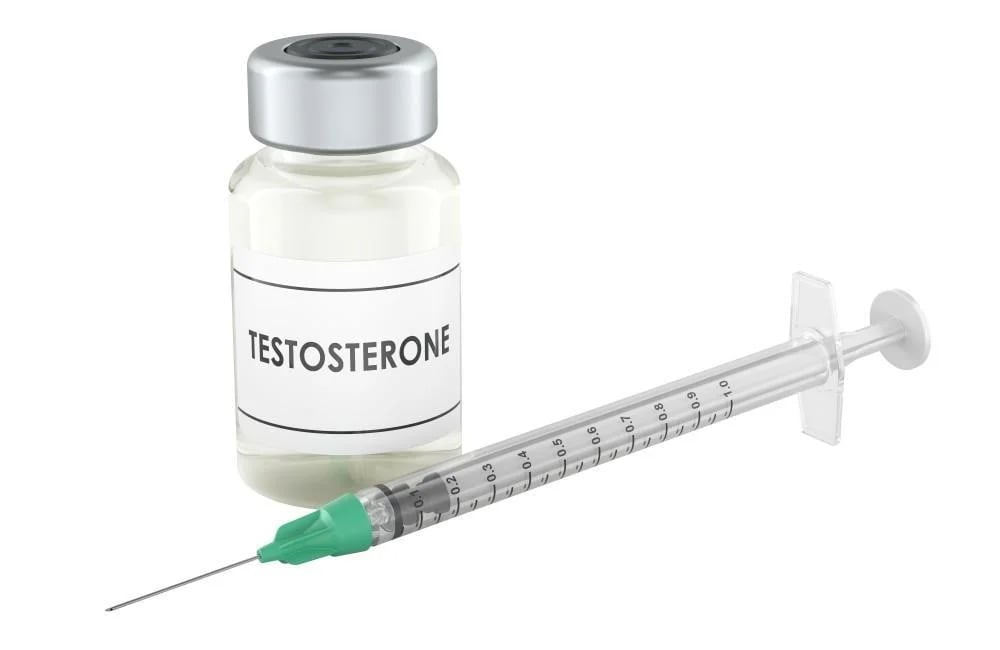
Ten Places a Testosterone Injection Reaches, Ranked by How Strong the Evidence Is: What TRAVERSE, the T Trials and the Diabetes Prevention Data Say About Men on Testosterone Shots in New York
The question sounds simple. What do testosterone shots do for men? Search results answer it with lists of benefits that blur together: more energy, more muscle, better mood, sharper thinking, a stronger libido, a healthier heart. Some of those items rest on randomized trials that followed thousands of men. Others rest on small studies, on observational data or on a well-meaning extrapolation from how testosterone behaves in the lab.
A fairer answer separates the effects by how firmly they are established. This guide does that. It walks through ten places a testosterone injection reaches, from the strongest evidence to the weakest, and for each it says what the research found, what it did not, and what a man with low testosterone can reasonably expect. It is written for men in New York who are thinking about TRT and want to know which promises hold up.
One note before the list. The evidence below comes from studies of men with low testosterone confirmed by blood tests and symptoms, and many of them used formulations other than injections. The principles carry over reasonably well to injectable testosterone, but the particular numbers do not apply to every product. A man whose levels are normal is not the man these studies describe.
A word about placebo before the ranking
Every trial cited below compared testosterone with a placebo, and that design matters more here than in most fields. Symptoms like energy, mood and desire respond strongly to expectation. In several studies, men on placebo reported meaningful improvement simply because they believed they were being treated. A man who feels better two weeks after his first injection may be feeling testosterone, or may be feeling the relief of finally taking action, or both.
This is not a reason to dismiss subjective improvement. How a man feels is the point of treatment. It is a reason to watch trends over months, to pair symptoms with lab values and to be suspicious of any claim that rests on testimonials alone. It also explains why a good clinic tracks symptoms with the same questions at the start and later on, so the comparison does not depend on memory.
1. Sexual desire and function: the clearest benefit
If one effect is best supported, it is the effect on sexual interest. In the large Testosterone Trials, a group of coordinated studies in men aged sixty-five and older with low testosterone and symptoms, men randomized to testosterone reported improvements in sexual activity, desire and erectile function compared with placebo. The improvement was real but moderate, and it was not uniform.
Two details matter. First, benefit tends to appear when testosterone is truly low, and the response in men with borderline levels is less certain. Second, erectile function depends on blood vessels, nerves, medications, mood and relationship factors, so testosterone is one input among several. A man whose erections are poor because of vascular disease or depression may not respond as hoped. This is why any serious evaluation of low libido starts with sorting out other causes before attributing everything to the hormone.
Do not expect an overnight change. Sexual desire often improves over weeks to a few months, and a lack of improvement after a fair trial is a reason to look for another cause.
2. Anemia: strong evidence, in men who have it
Testosterone stimulates red blood cell production. In the anemia arm of the Testosterone Trials, older men with low testosterone and unexplained anemia saw hemoglobin rise more with testosterone than with placebo, and a meaningful portion of treated men no longer met the definition of anemia.
This is a double-edged finding. For a man with anemia, a rise in hemoglobin can mean more energy and better exercise tolerance. For a man who is not anemic, the same effect can overshoot, pushing the red cell count and hematocrit too high, which thickens the blood and raises concerns about clotting. That is why monitoring hematocrit is a standard part of treatment, and why a physician adjusts the plan if it climbs. The practical lesson is that the red cell effect is among the best documented and is the one most in need of watching.
3. Bone density: solid on the scan, unclear on fractures
Testosterone supports bone. In a bone study within the Testosterone Trials, men treated for a year had greater gains in spinal bone density and in estimated bone strength than men on placebo. That is encouraging for men with osteoporosis risk.
The caveat is that a better scan is not the same as fewer broken bones. Fracture prevention requires long, large trials, and a more recent analysis from a large cardiovascular safety trial reported more clinical fractures in the treated group than in the comparison group, an unexpected result that researchers are still interpreting. Men with osteoporosis should treat testosterone as one possible part of a plan with calcium, vitamin D, weight-bearing exercise and, when appropriate, bone-specific medicines, not as the plan itself.
4. Body composition and strength: real changes, modest in size
Testosterone increases lean mass and reduces fat mass in men who are deficient. Studies that measure body composition directly consistently show it, and the changes tend to build over several months. Strength improves in many studies as well, though the gain in lean mass does not always translate into dramatic gains in function in daily life.
The most useful way to think about this is as a tailwind and not a replacement for effort. A man who lifts, eats enough protein and sleeps will likely get more from testosterone than one who does none of those. The loss of muscle that comes with aging has many contributors, and muscle loss is a reminder that hormones are one piece and not the whole puzzle.
5. Mood and energy: modest improvements, with real variation
Many men start testosterone hoping to feel better, and some do. In the Testosterone Trials, men on treatment reported small improvements in mood and depressive symptoms compared with placebo, and some reported improved vitality. Men with clinical depression, though, did not reliably respond as they might to an antidepressant, and testosterone is not a substitute for treating depression.
The experience varies. Some men notice steadier energy and motivation. Others feel nothing, or feel jittery or irritable, particularly when levels spike after injection. Because energy and mood have many causes, including sleep apnea, thyroid disease and stress, fatigue shows up on both sides: too little testosterone can leave a man drained, and too much can do the same.
A note on the mental side effects that men search for. Irritability, anxiety, restlessness, trouble sleeping and mood swings are reported by some men on testosterone, most often when the dose is high or when injections are spaced widely and produce large swings. These effects are usually dose-related and often improve when the plan is adjusted. A man who notices them should say so, not push through.
6. Heart and blood vessels: the big trial offered reassurance, with caveats
For years the largest question was whether testosterone harms the heart. Early observational studies and a few trials raised alarms, while others found benefit. The TRAVERSE trial was designed to settle it. It enrolled more than five thousand middle-aged and older men with low testosterone and existing or high risk of heart disease, randomized them to a testosterone gel or placebo and followed them for years. It found that testosterone did not increase the rate of major cardiovascular events such as heart attack, stroke or cardiovascular death compared with placebo.
That is an important result, and it should be stated with its limits. The trial tested a gel, not injections. Some other events occurred more often in the treated group, including atrial fibrillation, acute kidney injury and pulmonary embolism, and blood pressure effects have been described in other analyses. The conclusion is reassuring about major events in this population, not a blanket statement that testosterone has no cardiovascular effects. Men with a history of heart attack, stroke, clots or heart failure should have the conversation with a physician who reviews that history, not rely on a headline. Tracking biomarkers such as lipids, blood pressure and inflammation belongs in that conversation.
7. Blood sugar and diabetes risk: promising, newer
A trial in men with obesity and prediabetes or newly diagnosed type 2 diabetes tested a lifestyle program with or without testosterone injections. Men who received testosterone had a lower rate of progression to type 2 diabetes over the follow-up than those who received placebo, and some achieved remission of prediabetes, though the effect was strongest alongside lifestyle change.
It is a promising result from a well-run study, and it applies to a specific group: men with low testosterone, obesity and impaired glucose handling. It does not mean testosterone treats or prevents diabetes in everyone. For men who want to see how their body handles glucose, glucose monitoring can show patterns that a single fasting number misses.
8. Thinking and memory: weak evidence, mostly negative
Men often hope that testosterone will sharpen memory or slow cognitive decline. The cognitive study within the Testosterone Trials tested exactly that in older men with age-associated memory impairment and found no benefit of testosterone on memory compared with placebo.
That does not mean low testosterone has no effect on the brain; some men report feeling mentally clearer when treated after a long period of deficiency. It does mean that the evidence does not support using testosterone to treat or prevent memory loss, and anyone selling it for that purpose is going beyond the data.
9. Prostate: monitoring matters more than fear
The old belief that testosterone causes prostate cancer is not supported by current evidence in men without the disease, but testosterone can raise prostate-specific antigen modestly and can enlarge the prostate somewhat, and it is not appropriate for men with untreated prostate cancer. Large trials have not shown an increase in prostate cancer diagnoses with treatment, though they are not long enough to settle every question.
In practice, a physician checks PSA and examines the prostate before starting and monitors afterward. A rising PSA triggers evaluation. Men with urinary symptoms from an enlarged prostate should mention them, since testosterone can change that picture. The takeaway is that prostate safety depends on screening and follow-up.
10. Fertility: the effect that surprises men
This is the one effect that often catches men off guard. Testosterone injections signal the brain to reduce the hormones that drive sperm production, so sperm counts can fall sharply, sometimes to zero, while on treatment. The effect is usually reversible after stopping, but recovery can take months and is not guaranteed.
Any man who might want children should discuss this before starting. There are strategies to preserve fertility, including alternatives to straight testosterone, and the options for protecting fertility while on TRT are worth understanding before the first injection. Banking sperm is another option for some men. This is the effect to settle first, not last.
Testosterone does not act alone
A final complication is that testosterone works inside a network of hormones. Thyroid hormone sets the pace of metabolism, and an underactive thyroid causes fatigue, low mood and low libido that look just like low testosterone. Cortisol, the stress hormone, rises with chronic stress and poor sleep and can suppress testosterone production. Insulin resistance lowers a protein that carries testosterone in the blood, changing how much is available to tissues. Estradiol, made partly from testosterone, has its own effects on bone, libido and mood, and too little or too much can cause symptoms.
For this reason a competent evaluation looks beyond a single number. A man whose thyroid is underactive may feel better after thyroid treatment, without testosterone. A man with severe stress and short sleep may see his levels recover when those improve. Treating the wrong problem, or treating one problem while ignoring the others that feed it, is a common reason men feel no better after starting therapy, and it is the reason broad testing comes before any prescription.
Smaller effects that do not make the ranking
Several things men notice on testosterone are real but do not fit neatly on the list. Skin tends to become oilier, and acne appears or worsens in some men, particularly early on. Body and facial hair growth can increase, while scalp hair loss can speed up in men who are genetically prone to it, because testosterone is converted to a more potent hormone in the scalp. Some men retain fluid, and ankle swelling or a rise in blood pressure are reasons to check in. Part of the testosterone is converted to estradiol, and if levels climb too high, men can develop breast tenderness or enlargement, which is one reason physicians measure it.
Sleep deserves its own mention. Testosterone can worsen untreated obstructive sleep apnea in some men, and loud snoring, gasping at night or daytime sleepiness should be evaluated before and during treatment. Lipid changes are variable, with some men seeing a drop in protective cholesterol. None of these effects is a reason to avoid treatment automatically, but each is a reason for the monitoring that responsible prescribing includes.
Age, and who benefits most
Most of the strongest data come from older men, because that is where low testosterone is common and where trials were funded. That raises the question of younger men. Men in their thirties and forties with low testosterone do exist, and when the cause is a pituitary or testicular problem the case for treatment can be strong. When the cause is obesity, poor sleep, heavy alcohol use or opioid medication, fixing the underlying issue sometimes raises testosterone on its own, and treatment can wait.
The pattern across studies is that men with clearly low levels and clear symptoms benefit most, men with borderline levels benefit less and men with normal levels do not benefit. That is why the first step is deciding whether the diagnosis stands, and why a plan that begins with sleep, weight and medications is often the right first move.
Putting the ten in order of confidence
Laid out together, the picture is clearer. The effects with the strongest support are the improvement in sexual interest, the rise in red cell counts and hemoglobin in men who are anemic, and the gain in bone density. Next come lean mass, fat mass and modest gains in mood and vitality. The heart question has a large trial behind it that is reassuring on major events but includes caveats. Diabetes prevention is promising and newer. Memory is not supported. Prostate safety depends on monitoring, and fertility is a real and predictable cost.
None of this works as a pitch. A treatment with a handful of well-supported benefits, a few modest ones, some unknowns and a few predictable trade-offs is exactly what a physician should describe, and exactly what a man should hear before deciding. If that description sounds less exciting than the usual pitch, that is a feature, since a decision made with accurate expectations tends to hold up better.
Why the starting point decides the outcome
Every study above enrolled men with low testosterone confirmed by repeated blood tests and with symptoms. That detail is not a technicality. A man with normal testosterone has little to gain and the same risks. A single low reading can also be misleading, since levels vary through the day and fall with illness, poor sleep, extreme dieting or a recent hard workout.
So diagnosis comes first. A careful evaluation repeats the measurement, usually in the morning, looks at free testosterone and related hormones, and checks for other causes of symptoms. The reason many practices advise fasting before a panel is partly to keep related values such as glucose and lipids interpretable. The point of this step is to make sure the problem is what it seems to be before treating it.
The physician-led version of this process is the full workup, which looks at hormones, blood counts, metabolic health, the prostate and the cardiovascular system together. Men who skip it are betting on a diagnosis they have not confirmed.
What the research cannot tell you about your own case
Trials report averages. An average improvement in sexual function across hundreds of men hides the man who improved a great deal and the man who improved not at all. Nobody can tell in advance which one you will be. That uncertainty is the reason for a structured trial of treatment: start at a reasonable dose, measure symptoms and labs after a few months, and decide with evidence from your own body whether to continue, adjust or stop.
It also means the decision to stop is legitimate. If a man gives treatment a fair period and sees no benefit, or sees side effects that outweigh benefits, stopping is a good result of a careful process, not a failure. The physician's job is to make that process honest, with defined checkpoints and a willingness to say the treatment is not helping.
Prescribing rules, in-person care and why they exist
Testosterone is a controlled substance in the United States, classified in Schedule III, which means prescribing is regulated and monitored. Rules on whether a first prescription requires an in-person visit have shifted over time, and telehealth policy has changed more than once, so a man should confirm current requirements with his prescriber. Regardless of the legal minimum, a hands-on evaluation that includes an examination, repeat labs and a review of history gives the physician information that a questionnaire cannot.
Quality of care is the other reason. Online services that prescribe after a single questionnaire and a mailed blood kit may not pick up the conditions that mimic low testosterone, the risks that make treatment unsuitable or the early signs of a problem. Men considering treatment benefit from a physician who knows them, repeats the testing and follows them over time.
What the injection itself adds to the picture
Most of the trial data come from gels and patches, so it is fair to ask what is different about injections. An injection delivers a depot of testosterone that is absorbed over days, which produces a peak and then a gradual decline. Injections are inexpensive relative to some options, reliable in delivering a dose and do not transfer to partners or children the way gels can. The tradeoff is the peaks and troughs, which some men feel as swings in energy and mood, and the need for regular injections.
Higher peaks may push the red cell count up more, which is why monitoring matters, and smaller, more frequent doses can smooth the pattern. The alternative of long-acting pellets trades convenience for less flexibility in adjusting the dose. Each approach has a role, and the right one depends on the man.
What monitoring looks like
Because testosterone affects blood counts, the prostate, lipids and more, the treatment is not meant to be set and forgotten. A typical plan includes baseline labs before starting, a check after a few months to see how levels and blood counts have responded and then periodic checks, with the schedule set by the physician. Hematocrit, PSA, testosterone and estradiol levels, lipids and blood pressure are common items. Symptoms are tracked as carefully as lab values, since the goal is to feel better and be safe, not to hit a number.
Patients who know the path a blood sample takes after the draw tend to see why timing, fasting and consistent draws matter. A trough measurement taken just before the next injection answers a different question than one taken at the peak, and the plan depends on knowing which one you have.
Who should not use testosterone
Some men should not start, or should wait. Men with prostate or breast cancer, men with a recent heart attack or stroke, men with severe untreated sleep apnea, men with very high red cell counts and men who are trying to father a child are the main groups. Men with heart failure, a history of clots or uncontrolled blood pressure need special care. Men under the age of testosterone decline who feel tired are better served by looking for a cause first.
It is worth stating that the purpose of treatment is to correct a deficiency, and not to push levels higher than normal. Supraphysiologic doses, the kind used in bodybuilding, carry larger risks and are a different subject entirely.
Reading the headlines with this framework
Some warning signs of imbalance are worth knowing before reading any of it, because symptoms are what send men to the search bar. Testosterone coverage swings between promising and alarming, and the ranking above is a way to read it. A story that claims a new benefit should be checked against the type of study, the population and the endpoint. A story that warns of a new risk deserves the same scrutiny. Randomized trials with clinical outcomes carry the most weight. Observational studies can suggest, not settle. Studies in men with normal testosterone do not describe men with deficiency.
By that standard, the honest summary is that testosterone replacement in a properly diagnosed man improves sexual function and red cell counts and bone density, modestly improves body composition and mood, does not appear to raise major cardiovascular events in the largest trial to date, may help some men with prediabetes and does not improve memory. It suppresses sperm, requires monitoring and is not right for everyone.
Talking it through
A man who recognizes himself in the symptoms can bring a clear list of symptoms, medications, family history and goals to a physician. At Liondale Medical, Dr. Bissoon approaches men's hormone care through measurement first, and the first visit is the place to begin that conversation.
A last point on expectations. The best outcomes tend to come from men who treat testosterone as one part of a larger plan that includes training, sleep, weight and alcohol, rather than as a shortcut around them. A man who expects the injection to do everything usually ends up disappointed, and a man who combines it with the basics usually ends up with a better result and a clearer picture of what the hormone itself contributed.
The most useful outcome of a first visit is a clear answer to a plain question: do the numbers and symptoms together show a deficiency worth treating, and if so, what is the most sensible way to treat it and to know whether it is working?
Frequently Asked Questions
What can testosterone shots change for men with confirmed low testosterone?
In men with confirmed low testosterone, they can improve sexual desire and function, raise red cell counts, increase bone density and lean mass and modestly improve mood. They do not reliably improve memory.
Who are testosterone shots meant to treat?
They are used to treat low testosterone, or hypogonadism, when blood tests and symptoms confirm a deficiency. They are not intended for men with normal levels.
Do testosterone injections improve libido?
Evidence from large trials shows modest improvements in sexual desire and erectile function in men with low testosterone. The response is smaller when levels are borderline or when other causes are present.
Can testosterone injections affect mood?
Some men report better mood and energy, while others notice irritability, anxiety, restlessness or poor sleep, especially at high doses or large peaks. These effects often improve when the plan is adjusted.
Do testosterone shots increase heart attack risk?
The large TRAVERSE trial found no increase in major cardiovascular events with testosterone gel in men with low testosterone and heart risk. It tested a gel, not injections, and other events such as atrial fibrillation occurred more often.
Do testosterone injections build muscle?
In deficient men they increase lean mass and reduce fat mass over several months. Gains are modest and are larger when combined with strength training and adequate protein.
Can testosterone shots cause prostate cancer?
Current evidence does not show that testosterone causes prostate cancer in men without it, but it can raise PSA and enlarge the prostate. It is not appropriate for men with untreated prostate cancer, and monitoring is standard.
Do testosterone injections lower sperm count?
Yes. They suppress the signals that drive sperm production, often sharply. The effect is usually reversible, but recovery can take months, and men who want children should discuss it first.
Do testosterone shots help with diabetes?
One trial found that testosterone injections alongside lifestyle change reduced progression to type 2 diabetes in men with obesity, prediabetes and low testosterone. It does not mean testosterone treats diabetes in everyone.
Can testosterone improve memory?
A study within the Testosterone Trials found no memory benefit in older men with age-associated memory impairment. Testosterone is not an established treatment for memory loss.
Who should not take testosterone injections?
Men with prostate or breast cancer, recent heart attack or stroke, severe untreated sleep apnea, very high red cell counts or plans to father a child usually need to avoid or delay it.
How is testosterone treatment monitored?
Typically with baseline labs, a check after a few months and periodic testing of testosterone, hematocrit, PSA, lipids and blood pressure, along with tracking symptoms.
This page was written and medically reviewed by Lionel Bissoon, D.O., founder of Liondale Medical. Dr. Bissoon is a board-certified osteopathic physician specializing in anti-aging and concierge medicine on the Upper West Side of Manhattan.
This content is for educational purposes only and does not constitute medical advice. Individual results may vary. Consult a qualified physician before beginning any new treatment.
T shots, test shots, testosterone injections: what they are prescribed for, who qualifies after proper lab testing, what they can realistically change and what they cannot fix. A New York physician-led guide.
Which testosterone shot side effects are common, which deserve a call to your provider, and which need prompt care. Dr. Bissoon explains what to watch for.
TRT and fertility in NYC: how testosterone shots lower sperm counts, recovery timelines, hCG and clomiphene options, and the labs to get before you start.