Why Your Annual Physical Bloodwork Missed Everything: Standard Labs vs. Precision Diagnostics
A standard annual physical screens for disease, not trajectory. What precision diagnostics adds across glucose, lipids, inflammation and hormones.

Continuous glucose monitors, small wearable sensors originally developed to help diabetic patients manage insulin dosing, have become an increasingly common tool in longevity medicine for a very different population: patients with no diabetes diagnosis at all, and often with entirely normal fasting glucose and A1c results on standard bloodwork. This shift raises a reasonable question for patients unfamiliar with the technology: if standard blood tests already look fine, what is a continuous glucose monitor actually adding?
This piece, developed for Liondale Medical's concierge longevity practice in New York, explains what continuous glucose monitoring measures that standard bloodwork does not, why glucose variability specifically has become a focus of longevity research, and what patients can realistically expect to learn from wearing one.
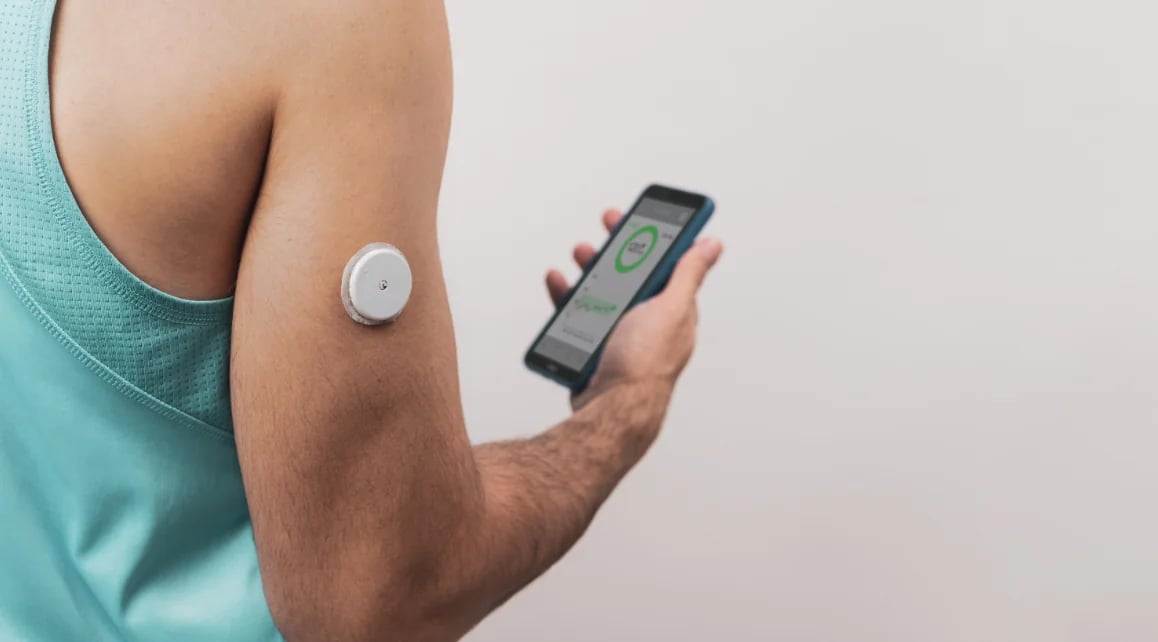
A continuous glucose monitor, commonly abbreviated CGM, is a small sensor typically worn on the back of the upper arm or abdomen that measures glucose levels in the interstitial fluid just beneath the skin, updating readings every few minutes throughout the day and night for a period usually lasting ten to fourteen days per sensor. Rather than the single snapshot a fasting blood draw provides, a CGM produces a continuous, minute-by-minute picture of how glucose actually moves throughout a full day and night, across meals, exercise, sleep, and stress.
Standard bloodwork, including fasting glucose and hemoglobin A1c, provides genuinely useful information, but both are essentially averages or single-moment snapshots. A1c reflects average blood glucose over roughly the preceding two to three months, smoothing out all of the daily variability into a single number. Fasting glucose captures glucose at exactly one moment, typically first thing in the morning after an overnight fast, which tells you nothing about what happens to glucose levels after a specific meal, during a stressful workday, or overnight.
Two patients can have identical A1c results and completely different underlying glucose patterns. One might maintain relatively stable glucose throughout the day with small, well-controlled fluctuations after meals. The other might have significant spikes after certain foods followed by equally significant drops, averaging out to the same A1c despite a meaningfully different, and potentially more metabolically stressful, day-to-day pattern. Standard bloodwork cannot distinguish between these two patients. A CGM can.
A growing body of research has focused less on average glucose levels and more on glucose variability, meaning the size and frequency of spikes and drops throughout the day, as a distinct marker of metabolic health with its own implications independent of whether average glucose or A1c falls within a normal range. Large, frequent glucose spikes, even in patients without diabetes, have been associated in various studies with increased oxidative stress, low-grade inflammation, and endothelial dysfunction, meaning impaired function of the cells lining blood vessels, all of which are mechanisms implicated in cardiovascular aging and broader biological aging processes.
This matters because a patient can have a technically normal A1c while still experiencing a pattern of significant daily glucose spikes that may be contributing to underlying inflammatory or vascular processes relevant to long-term healthspan, well before that pattern would show up as an abnormal standard blood test. Identifying and addressing this pattern earlier, before it progresses to a measurable change in average blood glucose, is part of the broader philosophy behind precision, prevention-focused longevity medicine rather than a reactive model that waits for a problem to appear on standard labs before intervening.
Patients wearing a CGM for the first time frequently discover that specific foods they had assumed were healthy choices produce significant glucose spikes for their particular metabolism, while other foods they might have expected to spike glucose produce a much flatter response. This individual variability is one of the more consistently surprising findings for patients, since glucose response to identical foods can differ meaningfully between individuals based on factors including gut microbiome composition, muscle mass, sleep quality, stress levels, and the order in which foods are eaten within a meal.
Patients also commonly discover that factors unrelated to food, including poor sleep the night before, stress, and even the timing of exercise relative to meals, measurably affect glucose patterns, which can be a genuinely useful insight for patients trying to understand why they feel more fatigued or foggy on certain days despite eating similarly to other days.
Raw CGM data on its own is interesting but not necessarily actionable without proper interpretation. Within a structured longevity plan, CGM data is generally reviewed alongside other metabolic markers, including fasting insulin, which can reveal early insulin resistance well before it affects fasting glucose or A1c, and body composition data, to build a complete picture of metabolic health rather than treating glucose variability as an isolated data point.
The findings from a CGM period are typically used to make specific, individualized adjustments, such as identifying particular foods or meal patterns to modify, adjusting meal timing relative to exercise, or in some cases prompting further investigation if the pattern observed suggests a degree of insulin resistance that warrants more targeted intervention beyond dietary adjustment alone. Patients interested in how this fits into the complete diagnostic picture Dr. Bissoon uses in his concierge practice can review the concierge medicine page, which outlines the broader range of precision diagnostics used alongside tools like continuous glucose monitoring.
Patients with a family history of type 2 diabetes or metabolic syndrome, patients experiencing unexplained energy fluctuations, brain fog, or afternoon crashes, and patients who are generally interested in a more granular understanding of how their specific lifestyle choices affect their metabolic health are all reasonable candidates for a CGM trial period, regardless of whether their standard bloodwork currently looks normal.
Patients already diagnosed with prediabetes or early insulin resistance based on fasting insulin or other markers may find a CGM particularly useful as an active tool for making and verifying the effect of specific dietary changes in real time, rather than waiting three months for a repeat A1c to see whether an intervention worked.
A CGM is not without limitations. Sensor readings can occasionally be affected by factors including sensor placement, certain medications, dehydration, and pressure on the sensor site during sleep, which can produce readings that don't perfectly match a simultaneous blood draw. This is generally not a significant problem for identifying overall patterns and trends, which is the primary value of the tool, but it is worth understanding that individual readings at any single moment should be interpreted as part of a broader pattern rather than treated as a precise lab-grade measurement.
It's also worth noting clearly that a CGM is a data-gathering and pattern-recognition tool, not a diagnostic device on its own. Any concerning patterns identified through CGM use should be discussed with a physician and interpreted alongside standard diagnostic bloodwork, rather than used to self-diagnose a metabolic condition independently.
A CGM trial with Dr. Bissoon at Liondale Medical typically begins with a review of existing metabolic bloodwork, including fasting insulin and A1c, to establish context before sensor placement. The sensor is worn for the standard ten to fourteen day period during normal daily life, ideally including a mix of typical days, higher stress days, and different exercise patterns to capture a representative range of data. Results are then reviewed in a follow-up consultation, where patterns are interpreted in the context of the patient's diet, sleep, exercise, and stress logs from the same period, and specific, individualized recommendations are developed from that combined picture, consistent with the anti-aging approach Dr. Bissoon has built his practice around.

Myth: A CGM will just tell me to eat less sugar, which I already know. While avoiding excessive added sugar is generally sound advice regardless of CGM use, patients are frequently surprised to discover that foods they considered healthy, including certain fruits, whole grain products, or even some savory foods, produce meaningfully larger glucose spikes for their individual physiology than foods they assumed would be more problematic. The value of a CGM lies specifically in revealing individual variation that generic dietary guidance cannot capture, since glucose response to identical foods differs meaningfully between people based on factors including gut microbiome composition and existing insulin sensitivity.
Myth: Any glucose spike is bad and should be avoided entirely. Some rise in glucose after eating is a completely normal physiological response, and the goal of reviewing CGM data is not to eliminate all glucose fluctuation, which is neither realistic nor necessary, but rather to identify unusually large or prolonged spikes that may indicate a pattern worth addressing. Context matters considerably here, since a moderate glucose rise following a balanced meal that includes protein and fiber is a very different signal than a large, prolonged spike following a meal composed primarily of refined carbohydrates eaten in isolation.
Myth: CGM data is only useful while you're actively wearing the sensor. While the sensor only actively collects data during the wear period, the patterns and individual insights identified during that period, such as which specific foods or meal combinations produce outsized responses for a given patient, generally remain relevant well beyond the sensor removal date, since individual glucose response to specific foods tends to be reasonably consistent over time barring significant changes in weight, fitness, or overall metabolic health.
Myth: If my doctor didn't recommend a CGM, I don't need one. Many physicians in traditional primary care settings are not yet routinely incorporating CGM use into non-diabetic patients, in part because it has historically been categorized primarily as a diabetes management tool rather than a general longevity and prevention tool. This is shifting within longevity-focused and preventive medicine practices specifically, where the earlier-detection philosophy underlying the approach makes tools like CGM a more natural fit than in a reactive, disease-focused care model.
When reviewing CGM data within a longevity context, several specific patterns tend to draw particular attention beyond simple average glucose values. The magnitude of post-meal glucose spikes, generally measured as the rise above a patient's pre-meal baseline, is one of the primary metrics reviewed, since research has associated larger post-meal excursions with the inflammatory and vascular effects discussed earlier, independent of overall average glucose.
The speed of return to baseline after a meal, sometimes described informally as how quickly the body "recovers" from a glucose spike, is another pattern of interest, since a slower return to baseline can suggest reduced insulin sensitivity even when the peak glucose value itself doesn't appear alarming on its own. Overnight glucose patterns are also reviewed, since stable overnight glucose without significant dips or unexpected rises generally reflects healthy overnight metabolic regulation, while notable overnight fluctuation can sometimes point toward factors worth further investigation, including sleep quality or evening eating patterns close to bedtime.
Glucose data alone provides an incomplete picture without context from complementary metabolic markers. Fasting insulin, in particular, often reveals developing insulin resistance considerably earlier than either fasting glucose or A1c, since the body frequently compensates for early insulin resistance by producing more insulin, keeping glucose values in a normal range for a period of time before that compensation eventually becomes insufficient and glucose values begin to rise as well. Reviewing CGM patterns alongside fasting insulin, rather than glucose data in isolation, allows a more complete assessment of where a patient sits along the spectrum of metabolic health, even when both individual markers might look unremarkable in isolation.
Body composition analysis, particularly visceral fat measurement, is another complementary data point frequently reviewed alongside CGM results, since visceral fat, the fat surrounding internal organs rather than fat stored just beneath the skin, is more metabolically active and more strongly associated with insulin resistance and glucose variability than overall body weight or BMI alone.
The most common practical adjustment patients make after reviewing their CGM data involves altering meal composition rather than eliminating entire food categories. Adding protein, fiber, or healthy fat to a meal that previously caused a large glucose spike when eaten alone, or simply changing the order in which foods within a meal are consumed, eating vegetables and protein before carbohydrate-heavy components, for example, has been shown in some research to meaningfully blunt the glucose response to the same overall meal composition.
Timing adjustments are another common finding, including recognizing that a short walk after a meal can measurably reduce the glucose spike that would otherwise follow, or that eating a particular meal earlier in the day produces a smaller glucose response than eating the identical meal later in the evening for some patients, a pattern related to natural circadian variation in insulin sensitivity throughout the day.
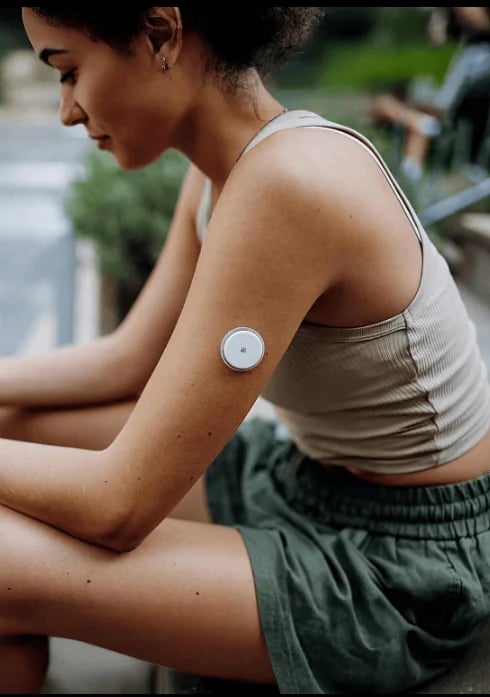
Understanding the basic mechanism behind continuous glucose monitoring helps explain both its usefulness and its limitations. The sensor contains a very thin, flexible filament inserted just under the skin surface that measures glucose in the interstitial fluid, the fluid surrounding cells in the subcutaneous tissue, rather than measuring blood glucose directly the way a traditional fingerstick blood test does. Because glucose moves between the bloodstream and interstitial fluid with a slight time delay, typically several minutes, CGM readings can lag slightly behind what a simultaneous blood draw would show, particularly during periods of rapid glucose change such as immediately after a meal.
This lag is generally not significant for the purpose CGM is used for in a longevity context, which is identifying overall patterns and relative differences between meals, activities, and days rather than requiring split-second precision. The sensor transmits data wirelessly to a paired smartphone app or reader device, allowing continuous, real-time viewing of glucose trends throughout the day, along with the ability to log meals, exercise, and other relevant events directly within the same app for later correlation with the glucose data.
Sensor accuracy has improved considerably over successive generations of CGM technology, and current-generation sensors used in most clinical and longevity settings have been validated against laboratory reference standards with a good degree of correlation, particularly for identifying trends and patterns rather than absolute precision at any single moment.
For patients whose longevity goals include weight management alongside general metabolic health, CGM data can provide a genuinely useful additional layer of insight beyond calorie counting alone. Patients sometimes discover that certain foods within their typical diet, despite fitting within their intended caloric target, produce glucose patterns associated with increased hunger and cravings shortly after the initial spike resolves, a pattern related to the body's insulin response overshooting slightly and causing blood glucose to dip below baseline, sometimes called reactive hypoglycemia, which can trigger hunger signals disproportionate to actual caloric need.
Identifying and adjusting meals that produce this pattern, typically by adding more protein, fiber, or fat to slow the rate of glucose absorption, can help reduce the frequency of these post-meal hunger spikes, which some patients find genuinely helpful for adherence to a broader nutrition or weight management plan, independent of whether the underlying motivation for wearing the CGM was originally focused on longevity markers rather than weight specifically.
A single ten to fourteen day CGM trial provides a useful snapshot, but glucose patterns and metabolic health can shift over time, whether due to weight change, changes in exercise habits, aging, or the effects of interventions made based on the initial trial. Many longevity-focused practices recommend a repeat CGM trial periodically, often annually or after making significant dietary or lifestyle changes specifically intended to improve metabolic health, to verify whether those changes have produced a measurable improvement in actual glucose patterns rather than assuming improvement based on subjective feeling or weight change alone.
This periodic retesting approach mirrors the broader philosophy of precision, data-driven longevity medicine generally: rather than making an intervention and assuming it worked, verifying the actual physiological effect with objective data allows adjustments to be made based on real results rather than assumption, and can also serve as helpful positive reinforcement for patients who can see concrete, measurable improvement in their glucose patterns as a direct result of specific changes they have made.
The underlying premise connecting continuous glucose monitoring to the rest of a longevity practice's diagnostic approach is a preference for identifying subtle dysfunction well before it progresses to a diagnosable condition on standard testing. Waiting for A1c or fasting glucose to become abnormal before addressing metabolic health means, by definition, waiting until a meaningful degree of dysfunction has already developed and been sustained for months or years, since these markers reflect an average that takes considerable time to shift.
A CGM, by contrast, reveals the earlier warning signs, glucose variability and post-meal spike patterns, that often precede measurable changes in average glucose by a meaningful margin, giving patients and their care team a genuine window to intervene earlier in the process rather than after standard testing has already flagged a developing problem. This earlier intervention window is consistent with the broader philosophy underlying precision, prevention-oriented longevity medicine generally, applied specifically to metabolic health.
No. Many patients using continuous glucose monitoring in a longevity context have entirely normal standard bloodwork. The value of a CGM is in revealing daily glucose variability and individual responses to food, sleep, and stress that a single blood draw or A1c cannot capture.
A1c reflects an average of blood glucose over roughly two to three months, smoothing out all daily variability into one number. A CGM provides a continuous, minute-by-minute picture of glucose fluctuations throughout the day, which can reveal patterns that average out to a normal A1c despite meaningful underlying variability.
Large, frequent glucose spikes have been associated with oxidative stress, inflammation, and impaired blood vessel function in various studies, independent of whether average glucose falls within a normal range. This makes variability a potentially useful early marker of metabolic stress before it shows up on standard labs.
Most CGM trials last between ten and fourteen days, which is generally long enough to capture a representative range of typical days, higher stress days, and varied exercise and eating patterns.
Yes. Sleep quality, stress levels, and exercise timing relative to meals can all measurably affect glucose patterns, which is part of why CGM data is generally reviewed alongside lifestyle logs from the same period rather than food intake alone.
Readings can occasionally be affected by sensor placement, certain medications, dehydration, or pressure on the sensor during sleep. This is generally not significant for identifying overall trends, but individual readings should be interpreted as part of a broader pattern rather than a precise standalone lab value.
No. A CGM is a data-gathering and pattern-recognition tool, not a standalone diagnostic device. Any concerning patterns should be discussed with a physician and interpreted alongside standard diagnostic bloodwork.
This page was written and medically reviewed by Lionel Bissoon, D.O., founder of Liondale Medical. Dr. Bissoon is a board-certified osteopathic physician specializing in anti-aging and concierge medicine on the Upper West Side of Manhattan.
This content is for educational purposes only and does not constitute medical advice. Individual results may vary. Consult a qualified physician before beginning any new treatment.
Published