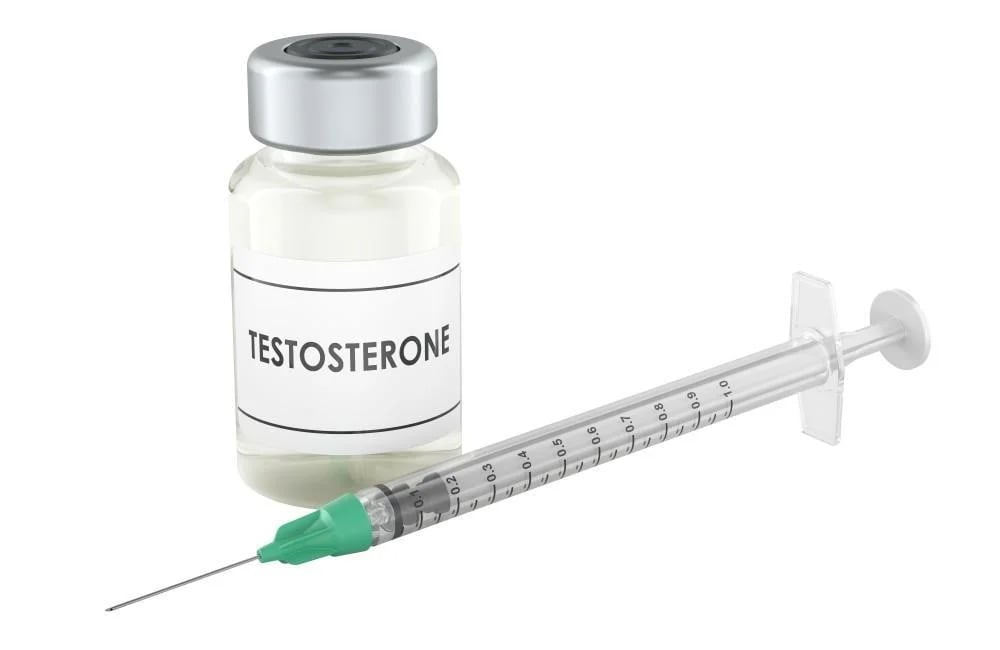
Testosterone Shot Side Effects: What's Normal and What's Not
Which testosterone shot side effects are common, which deserve a call to your provider, and which need prompt care. Dr. Bissoon explains what to watch for.
Among the routine lines on a monitoring blood test for a man on testosterone, one tends to get a physician's attention more quickly than the others. It is not the testosterone level itself. It is hematocrit, a measure of how much of the blood is made up of red cells. When it creeps upward, the conversation changes, and men who have never heard the word can find themselves wondering whether their blood has become dangerously thick.
The worry is reasonable, and it is also easy to inflate. Testosterone does raise red cell production in many men. For most, the rise is modest and manageable. In a smaller number it climbs far enough to need a response. Knowing how to tell the difference, and what the sensible responses are, is a large part of doing testosterone therapy safely.
This article explains what hematocrit is, why testosterone raises it, what other things push it up, why the number matters, how physicians respond and where several commonly mentioned tools, including blood donation, therapeutic phlebotomy and plasma exchange, belong in that picture. It is written by the team at Liondale Medical in New York, where Dr. Lionel Bissoon oversees hormone therapy as a physician-led service. It is general information and not medical advice, and it gives no thresholds or doses for any individual.
Blood is mostly a fluid, plasma, carrying cells. The great majority of those cells are red blood cells, which carry oxygen from the lungs to the tissues. Hematocrit is the fraction of the blood's volume taken up by red cells, usually expressed as a percentage. Hemoglobin, the oxygen-carrying protein inside them, is reported alongside and moves in the same direction.
If a tube of blood is spun in a centrifuge, the cells settle to the bottom and the plasma stays on top. The proportion of the column occupied by red cells is the hematocrit. That plain picture is the best way to understand the problem. A higher fraction of cells means a thicker fluid, which flows less easily, particularly in small vessels.
The number depends on two things: how many red cells the body has made, and how much fluid they are suspended in. That second point is important. A man who is dehydrated has less plasma, so the same red cells occupy a larger share, and his hematocrit rises without any change in production. This is why hydration on the day of a blood draw matters more than most people realize.
Testosterone stimulates red cell production through several routes. It increases the kidney's output of erythropoietin, the hormone that tells the bone marrow to make red cells. It appears to affect iron handling, lowering hepcidin, a hormone that restricts iron availability, so more iron is free for building hemoglobin. And it may act directly on the marrow's precursor cells.
The effect is dose related and varies from person to person. It is also not a malfunction. Men have higher hematocrit than women on average, and testosterone is a large part of the reason. Giving testosterone to a man whose level was low can bring a mildly low red cell count back toward normal, which is sometimes a useful side effect in men with a touch of anemia.
The concern arises when production overshoots. Excess red cells make the blood more viscous, and a hematocrit that rises well above the usual range is called erythrocytosis, or sometimes polycythemia. That is where the monitoring comes in.
Testosterone is not the only factor, and a rising number does not automatically implicate it. Several other things push hematocrit up, and a careful physician looks for them before changing a treatment plan.
Obstructive sleep apnea is one of the most common. Repeated drops in oxygen overnight signal the kidneys to make more erythropoietin, so a man with untreated apnea can have a higher hematocrit independent of any hormone. Smoking has a similar effect through carbon monoxide, which reduces the oxygen-carrying capacity of blood and prompts the body to compensate. Living at altitude, lung disease and some kidney conditions do the same.
Dehydration, as noted, shifts the ratio. Some medicines raise red cell counts too, including a class of diabetes drugs that cause the kidneys to excrete glucose and fluid. Rarely, a bone marrow disorder that produces too many red cells is the cause, and that possibility is one reason a persistent, unexplained high value is evaluated and not just managed.
The men who seek treatment often share these risk factors, since the warning signs that prompt testing, such as fatigue and low drive, overlap with those of apnea and poor fitness. The practical consequence is that a high hematocrit in a man on testosterone prompts a short list of questions. Is he hydrated? Does he snore or stop breathing at night? Does he smoke? Is he on any other medicine that could contribute? Has the dose or the schedule changed? The answers often change what happens next.
Why is a thicker blood a concern at all? The short answer is that very high red cell counts are associated with an increased risk of clots. In people with the bone marrow disorders that cause marked erythrocytosis, the risk of thrombosis is established, and treatment aims to keep hematocrit below a target for that reason.
What is less clear is how much risk a more modest rise carries in a man on testosterone therapy. The data are mixed. Observational studies have linked testosterone treatment with an increased risk of venous clots in some groups and not in others, and the relationship between hematocrit and clots in this setting is not fully settled. A large randomized trial that reported in recent years found no excess of major heart events with testosterone therapy in men with low levels and cardiovascular risk, while noting a higher rate of some other events, including pulmonary embolism, which is a clot in the lungs. Interpretations of those secondary findings differ.
Given that uncertainty, the cautious approach has become standard. Hematocrit is measured before treatment and checked at intervals afterward. Guidelines name a level in the low to mid fifties as the point at which a physician should act, whether by lowering the dose, changing the schedule, switching preparations or holding treatment while the cause is sought. The exact threshold and response are matters of clinical judgment, and the practice's own protocol governs, but the principle is simple: watch the number and respond before it becomes a problem.
A rising hematocrit often causes no symptoms at all. That is part of why testing, and not symptoms, drives the monitoring.
When the blood becomes noticeably thick, some men report headaches, a feeling of fullness or pressure in the head, a ruddy or flushed face, blurred vision, dizziness, itching after a hot shower or unusual tiredness. These are nonspecific and have many other causes, which is why they are not a reliable guide. They are, however, reasons to mention things at a visit and not wait.
Certain symptoms deserve prompt attention whatever the lab values say. Sudden swelling, pain or redness in one leg, sudden shortness of breath, chest pain, or a sudden severe headache, weakness on one side or trouble speaking all require urgent medical evaluation. This is true for anyone, and a man on testosterone should know it.
A standard approach to monitoring includes a baseline hematocrit before starting, a check within the first several months after starting or after any dose change, and then periodic checks, commonly once or twice a year if values are stable. Side effects fall into those that are a normal part of treatment and those that need a call, and a rising blood count sits in the second group.
Monitoring also includes other tests, such as testosterone itself, estradiol, prostate markers and, depending on age and risk, lipids and other measures. A man who understands that the schedule is part of the treatment, and not an inconvenience added to it, is more likely to stay on it.
Timing matters for hematocrit as well. Because dehydration raises the value, blood should be drawn when the patient is well hydrated, and a surprising result is often repeated before decisions are made. Because testosterone levels in the blood move with the injection cycle, some physicians prefer to draw at a consistent point in the cycle so that trends are comparable from one visit to the next.
A hematocrit is a snapshot, and a few details of the day can tilt it. Knowing them helps a man and his physician decide whether a surprising number is real.
Fluid status is the biggest. Arriving thirsty after a morning without water, a long run or a sauna session shrinks plasma volume and pushes the percentage up. Arriving well hydrated does the opposite. Neither is cheating, since the goal is a representative number, and a physician would rather the patient be consistent from visit to visit than perfect once.
Posture and the tourniquet matter slightly. Standing for a long time before a draw and a long tourniquet time can raise values a little, which is why labs ask patients to sit for a few minutes first. Recent illness with vomiting or diarrhea, high altitude travel and heavy alcohol the night before can also nudge the result.
Because of all this, a single high result is usually met with a repeat under better conditions before treatment changes, unless the number is dramatic or symptoms are present.
When hematocrit rises, the first moves are generally modest. A physician reviews hydration and sleep, looks for other contributors and considers the dosing schedule.
Hydration is easy to improve and often explains part of a borderline result. Smoking, where it applies, is worth addressing for many reasons. Sleep apnea, if suspected, warrants evaluation, since treating it can lower red cell production. A review of medicines may find a contributor.
Then comes the testosterone itself. Lowering the dose is the most direct adjustment. For men on injections, changing how the dose is divided can also matter. A larger injection given less often produces higher peaks, and peaks are associated with greater stimulation of red cell production in some men. Splitting the same total into smaller, more frequent doses flattens the curve and, in some cases, lowers the effect on hematocrit. Different preparations and routes carry different profiles. Delivery method changes steadiness, with pellets and injections behaving differently, which is relevant here, since the steadier the level, the smaller the swings that drive the marrow.
Some men do better on a different route altogether, and some find that a gel or other preparation produces a smaller rise, though responses vary. These choices are made individually, with the physician, with the values in hand.
Many men ask whether they can just give blood to bring the number down. The idea has some logic, since removing blood removes red cells. In practice, the answer is nuanced.
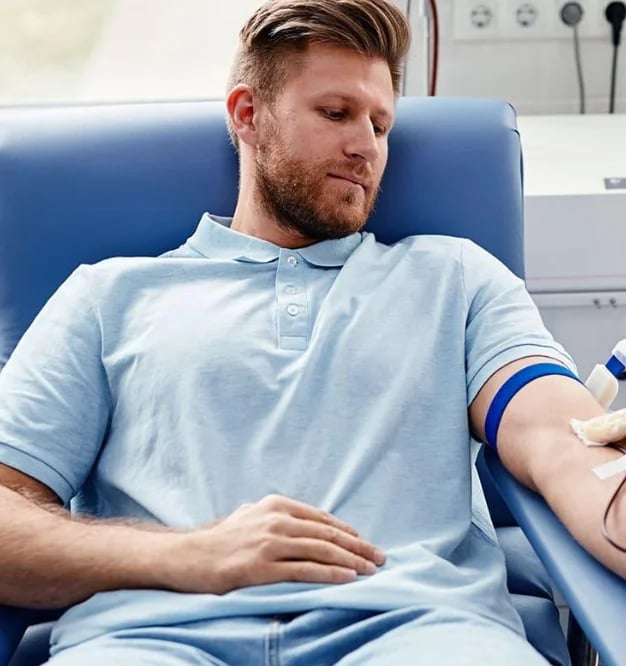
Donating blood does remove red cells and can lower hematocrit for a time. Men on testosterone therapy have in some cases been told that donation is a reasonable way to manage a mild rise, and some blood centers accept donors on prescribed testosterone while others have policies that differ. The rules vary by organization and are updated, and a man should ask the specific center and his physician before assuming anything.
There are also reasons to be careful. A donor center's goal is a safe supply, not management of a donor's own condition, and it may defer a donor with an elevated value or with certain medications. Frequent donation lowers iron stores, and low iron can cause fatigue and other symptoms that might be mistaken for something else, so a man who donates regularly should have his iron status checked. And donation is a blunt tool, with no clinical oversight of the result.
Set beside other procedures, including those marketed for longevity, blood donation teaches a simple lesson here: giving blood and treating a medical condition are different purposes, and what works for one does not substitute for the other.
Therapeutic phlebotomy is the clinical cousin of donation. A physician orders the removal of a set volume of blood to lower red cell mass, with the aim and the schedule set by the patient's values.
It is a standard treatment for conditions such as polycythemia vera and for iron overload, and it is sometimes used in men whose hematocrit remains high on testosterone despite adjustments. The blood is typically discarded, though policies vary, and the process is monitored with repeat blood counts. A hematologist is often involved when the cause is unclear or the values are persistently elevated.
Phlebotomy is a way of managing the number, not of explaining it. A man who needs it repeatedly on testosterone deserves a conversation about whether the dose, the schedule, the preparation or an underlying issue such as apnea should change, and whether continued therapy is the right plan at all. Using bloodletting to keep a high dose going is generally not the goal.
Because the question often arrives at a practice that also offers plasma exchange, it is worth being exact about what that procedure does.
Therapeutic plasma exchange removes plasma, the liquid part of blood, and replaces it with a fluid such as albumin solution. The red cells are returned to the patient. For that reason it is not a standard way to lower red cell count or hematocrit, and a clinic that suggests otherwise is describing a different procedure or making a loose claim. A related procedure, called erythrocytapheresis, selectively removes red cells and is used in specific conditions, but it is a different treatment with different indications.
In fact, exchanging plasma for a replacement fluid can slightly shift the ratio of cells to fluid, and any effect on a hematocrit measured soon afterward would reflect volume changes rather than a fall in red cell mass. This is one reason plasma exchange is not a tool for managing a high count on testosterone.
Safety screening for plasma exchange decides who is and is not a suitable candidate, and elevated hematocrit and certain clotting concerns are among the factors that make careful screening important, since the procedure involves anticoagulation and fluid shifts. Anyone with a persistently high count on testosterone needs that evaluated first.
None of this makes plasma exchange irrelevant to men's health. It simply has a defined role, and the role is not hematocrit control. Plasma exchange can be considered for other purposes, discussed elsewhere, and its laboratory measurements are chosen for those goals.
A particular group of men deserves a direct word. Those who train seriously, use performance supplements or take more than a prescribed dose from another source tend to run higher hematocrit than the general population on therapy, and some arrive already elevated.
Several things contribute. Doses beyond a medical replacement range stimulate red cell production more strongly. Certain over-the-counter and online products contain hidden ingredients that act on the same pathways. Heavy training with sweating and little fluid replacement lowers plasma volume. Creatine and some other supplements alter fluid balance in ways that can affect the result.
Honesty at the intake visit is the single most useful thing such a man can offer. A physician who knows everything the patient takes can interpret the blood count and choose a safer plan, while one who is told only part of the story may adjust the wrong thing. There is no judgment in a good clinic, only a wish to keep the numbers meaningful.
Sometimes the right response to a rising count is to stop. If hematocrit rises above the physician's threshold and does not respond to simpler steps, or if there are symptoms or signs of clotting, treatment may be paused until the cause is clear.
Pausing is not failure. It is a safety step, and the blood count usually falls over weeks to months once stimulation lessens. The physician then decides whether to restart at a lower dose, with a different preparation or schedule, or whether another path suits the man better. If the count stays high without testosterone, a search for another cause becomes more important, including sleep apnea, lung or kidney disease and, rarely, a marrow disorder, which may involve a hematologist.
This is also a reminder of why the decision to start testosterone should come with a clear plan for monitoring and stopping. Seen as a process and not a prescription, testosterone therapy comes with that plan from the start.
Not every man begins at the same place. Men who start with a hematocrit already near the upper range, who smoke, who have untreated apnea, who live at altitude or who are dehydrated at baseline are more likely to cross a threshold on treatment.
For them, the plan may include addressing those factors first, choosing a gentler preparation or schedule, or testing more frequently at the start. A man with a history of clots, a clotting disorder or certain cardiovascular conditions needs an individual discussion about risk, and the decision may involve his other physicians.
Men with a very high baseline, or whose count was elevated before treatment, deserve a workup before hormone therapy, not after. Starting testosterone on top of an unexplained high count would add a stimulus to a system that is already producing too much.
Hematocrit is not the only thing that changes with therapy, and the decisions interact. Testosterone given from outside suppresses the brain's signals to the testes, lowering sperm production, which is why men who wish to father children need to discuss that before beginning. Fertility on treatment is a conversation to have before the first dose.
This matters here because the options for adjusting therapy can differ for a man who wants to preserve fertility, and because the broader picture of what is monitored includes more than the blood count. A man who is considering therapy is best served by a physician who talks through the whole set of effects and trade-offs together.
Many patients receive their results through a portal before anyone has explained them. A few notes can reduce anxiety.
Hematocrit and hemoglobin appear on the complete blood count, usually with a reference range and a flag if outside it. Reference ranges are drawn from general populations and may not fit a man on therapy, so a value slightly above the printed range is not necessarily an emergency, and a value within it is not necessarily ideal. Trend matters. A number that has crept up with each test tells a different story from one that has been stable for years.
Red cell count, mean corpuscular volume and other indices appear alongside. Iron studies, such as ferritin, may be ordered if there is a concern about low iron from donation or high red cell production. Platelet counts and white cells are also reported, and an elevation in all three can suggest a marrow cause and not a hormonal one.
The best habit is to wait for the physician's interpretation and to ask about trends. Standard labs and more detailed testing show how the same blood sample can be read at different depths, and why context matters.
A few habits help a man on testosterone keep his results interpretable and his risk low.
Hydrate well, especially on the day before and the day of a blood test. Avoid heavy alcohol before testing, since it can affect fluid balance and sleep. Keep to a consistent schedule for injections and draws so that results can be compared. Do not smoke or vape. Mention snoring or witnessed pauses in breathing at the next visit and not after the next result. Tell the physician about every medicine and supplement, including over-the-counter products and anything bought online, since some can affect red cell production or iron.
Do not adjust the dose on your own in response to a number you have read about. Doses that seem small to the patient can have large effects, and the response to a high value is best chosen by a clinician who sees the whole picture.
The most important point to carry away is that a rising hematocrit on testosterone is common, expected to be watched and usually manageable. It is a reason for monitoring, not for alarm, and the toolbox for responding is wider than most men realize.
At the same time, it is a real effect and not a footnote. Testosterone therapy is a medical treatment that changes how the body makes blood, and doing it responsibly means measuring that change, understanding its causes and acting on it early. Men who are treated this way tend to do well. Those who ask about the number at every visit, who understand what moves it and who report new symptoms promptly make the monitoring work, and they usually find that the process becomes routine within a few cycles.
For readers who want to see how the whole process is organized, from first workup to follow-up, a men's health service sets out each step in detail, and the consultation is the right place to ask how the blood count will be watched in your case.
Yes. Testosterone stimulates red blood cell production, so hematocrit and hemoglobin often rise on treatment. The rise is usually modest, but some men need a dose change, a different schedule or a pause, which is why blood counts are monitored.
Guidelines commonly name a level in the low to mid fifties percent as the point at which a physician should act. The exact threshold and response are individual decisions made with the whole picture in view.
Dehydration, sleep apnea, smoking, living at altitude, lung or kidney disease, certain medicines and, rarely, a bone marrow disorder. A physician usually checks for these before changing treatment.
Policies vary by blood center and change over time, so ask the center and your physician. Donation removes red cells and can lower hematocrit, but frequent donation lowers iron and is not a substitute for medical management.
Not in the usual sense. Therapeutic plasma exchange removes plasma and returns red cells, so it is not a standard way to reduce red cell count. Procedures that selectively remove red cells are different and have specific indications.
It is the physician-ordered removal of a measured amount of blood to lower red cell mass. It is used in conditions such as polycythemia vera and sometimes in men with persistently high counts on testosterone, usually alongside a review of the cause.
Headache, facial flushing, blurred vision, dizziness and unusual fatigue can occur but are nonspecific, and many men have no symptoms. Sudden leg swelling, chest pain, breathlessness or stroke-like symptoms need urgent care regardless of lab values.
This page was written and medically reviewed by Lionel Bissoon, D.O., founder of Liondale Medical. Dr. Bissoon is a board-certified osteopathic physician specializing in anti-aging and concierge medicine on the Upper West Side of Manhattan.
This content is for educational purposes only and does not constitute medical advice. Individual results may vary. Consult a qualified physician before beginning any new treatment.
Published