Rapamycin, Metformin, and TPE: Can You Combine Longevity Protocols Safely?
Can rapamycin, metformin and TPE be combined safely? What each targets, how they interact, and the monitoring a combined longevity stack requires.
Yes, therapeutic plasma exchange has a strong medical safety record when it is performed in the right setting, with the right screening, for the right patient. Large retrospective studies report serious adverse events in roughly 0.12% of procedures, and TPE has decades of clinical use in autoimmune and neurological medicine. But that is only half the answer. It is a real medical procedure with real risks, and not everyone is a candidate for elective longevity TPE. At Liondale, Dr. Lionel Bissoon reviews your history, baseline labs, medications and overall risk profile before a first session is scheduled. If the fit is wrong, the answer is no.
This page is for the patient asking a more specific question than a service page can answer: is TPE dangerous, what does it feel like, and how do I know if I am a good candidate? For the broader overview, start with therapeutic plasma exchange at Liondale Medical. If cost is your first filter, read TPE cost in NYC.
For a carefully screened adult in a supervised setting, serious complications are uncommon. The more useful framing is that TPE has a known risk profile, not a mysterious one. The risks come from four places: the anticoagulant used in the circuit, fluid shifts, the replacement fluid and the removal of useful plasma proteins along with unwanted ones. Each can be anticipated, monitored and managed, which is why screening before treatment matters more than reassurance after it.
TPE is a mature apheresis procedure with decades of use in hospital and specialty medicine. Across large retrospective datasets, serious adverse events are reported at roughly 0.12% of procedures. Most of that data comes from patients with autoimmune, neurological and other complex conditions, who are often sicker than the typical elective longevity patient. A low serious-event rate in higher-acuity populations is reassuring, though it does not make the procedure risk-free.
The newer longevity-specific data points the same way. In the 2025 Aging Cell trial by Fuentealba and colleagues, 42 adults over 50 underwent a controlled TPE protocol, and only 2 participants discontinued. That is not zero friction, and it should not be presented that way. But it supports the broader picture: when TPE is done in a supervised setting with real selection criteria, it is usually well tolerated. For what that trial did and did not show, read our breakdown of the 2025 TPE clinical trial.
| Effect | What it is | How it is managed |
|---|---|---|
| Tingling, cramping, nausea | Citrate anticoagulant binds calcium | Slow the rate or give calcium; monitored in real time |
| Lightheadedness, low blood pressure | Fluid shifts during the procedure | Hydration beforehand, rate adjustment, monitoring |
| Fatigue | Recovery from a multi-hour procedure | Rest, fluids, food; usually resolves within 24 hours |
| Bruising or irritation at IV site | Vascular access | Site care; usually minor |
| Allergic reaction | Response to replacement fluid or IVIG | Screening history; treated or session stopped |
| Temporary drop in immunoglobulins and clotting factors | Plasma proteins are removed with the plasma | Body replenishes over days to weeks; spacing set by your physician |
| Infection or bleeding | Uncommon procedural risks | Sterile technique; screening for bleeding risk |
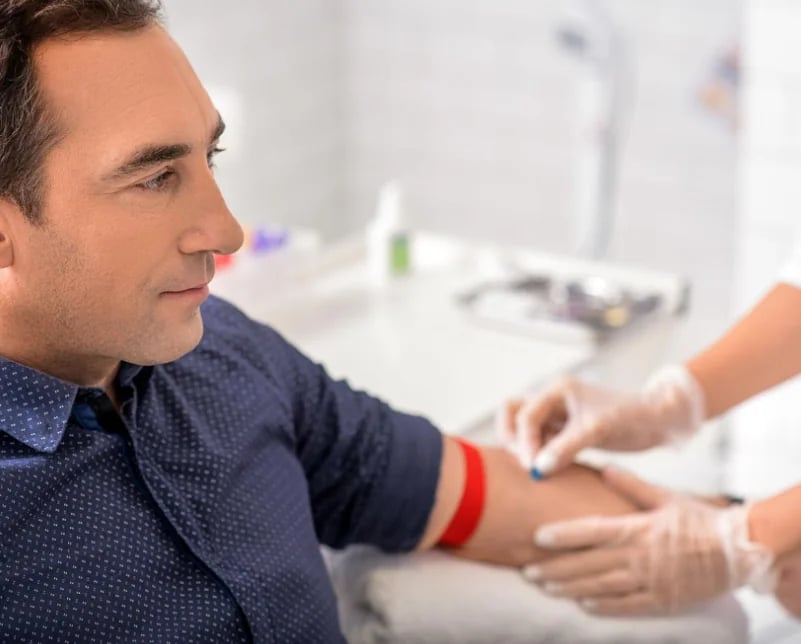
Most patients feel a brief pinch when the IV is placed and little else. The side effects patients ask about most are tingling, brief lightheadedness, fatigue later that day and bruising.
The tingling is worth explaining. To keep blood from clotting in the apheresis circuit, an anticoagulant such as citrate is used. Citrate can bind calcium in the bloodstream, so some patients notice tingling around the lips or in the fingers, occasionally with cramping or nausea. Staff watch for this, and the session can be adjusted. In a well-run setting it is a known management issue, not a surprise.
Fatigue and lightheadedness reflect a medically involved procedure with fluid shifts and time in the chair. Some patients go home, hydrate, eat and feel fine by evening. Others want a quiet rest of the day. Most common side effects resolve within 24 hours. Some patients also report a sense of clarity afterward, which is a patient-reported observation, not a basis for candidacy decisions.
Elective longevity TPE should not be treated like a spa visit. Plan your day around it rather than fitting it between a board meeting and dinner.
Plan for two to three hours. One or two IV lines are placed, usually in both arms, and you are monitored throughout. Eat a meal and arrive well hydrated, which helps reduce lightheadedness. Afterward, drink fluids, eat nourishing food and avoid strenuous exercise and alcohol for a short period. Dr. Bissoon provides instructions specific to your protocol and tells you which symptoms should prompt a call to the office.
Candidacy starts with one question: what problem are we trying to move, and is there evidence in your case that TPE is the right tool? A generic interest in longevity is not enough. Three profiles tend to make clinical sense.
The proactive patient who has already handled the basics. Sleep, nutrition and exercise are in place, and preventive care is happening, but the patient wants a more serious intervention with published human data. TPE is an escalation step here, not the first thing tried. It is not a way to compensate for a weak routine.
The patient with a pattern of inflammatory symptoms. Unexplained fatigue, brain fog, body aches and slower recovery, alongside markers moving the wrong way, such as rising CRP, elevated IL-6 or fibrinogen, or drifting metabolic markers. Symptoms plus biomarker movement is a different conversation than symptoms alone, and one isolated value does not qualify anyone.
The high performer with biomarker drift. Recovery takes longer, travel hits harder and labs that once looked clean no longer do. In the trial context, “poorer baseline health” does not mean medically fragile. It often means there is more room for improvement. But not always, which is why there is no shortcut.
If you want to see where TPE fits against other options, read TPE compared with NAD+, ozone, stem cells and peptides.
A physician-led practice should be more selective here, not less. Plasma exchange may be unsafe or unadvisable in the following situations:
Do not stop blood thinners, immunosuppressants or any prescribed medication on your own because of something you read online. Medication changes belong in a physician-directed plan.
At Liondale, the first session is not booked because someone is interested. Screening always comes first.
1. Consultation and history review. Dr. Bissoon reviews your background, symptoms, goals, prior reactions and the reasoning behind the request.
2. Baseline labs. Drawn before any session is scheduled, covering inflammatory markers, metabolic markers and related panels. See how Liondale tracks TPE results.
3. Medication reconciliation. We review what you take, what may raise procedural risk and what complicates IVIG if it is being considered.
4. A physician decision. Dr. Bissoon makes the candidacy call himself. In an elective practice, selectivity is part of safety.
IVIG deserves its own discussion because it has its own risk profile and is not part of TPE by default. In the 2025 trial, the larger biological age reduction was seen in the TPE plus IVIG arm, which is why patients ask about it. But IVIG is a separate infused product, evaluated patient by patient at Liondale, not added because the headline number is bigger.
Possible IVIG reactions include headache, nausea and allergic response. Most are manageable, and some are enough for a clinician to step back. One contraindication matters a great deal: IgA deficiency, which can raise the risk of a significant reaction and must be addressed before IVIG enters a plan. TPE may be the right procedure while IVIG does not belong beside it.
Long-term elective longevity data are still early. There is decades of experience with TPE as a procedure, but no large long-range datasets for repeated anti-aging use in high-functioning adults. Because plasma exchange also removes useful proteins such as immunoglobulins and clotting factors, which the body replenishes over days to weeks, repeating sessions too frequently matters. That is one reason Liondale treats TPE as a measured intervention with lab tracking and reassessment rather than an open-ended ritual, and why session timing is set by your physician.
Contact the office if you notice persistent or worsening lightheadedness, chest discomfort, shortness of breath, hives or swelling, unusual bleeding, fever, or increasing pain, redness or swelling at an IV site. Dr. Bissoon will review the specific symptoms that should prompt a call for your protocol.
Most of the steps that lower risk happen before you arrive. Tell the team about every medication, supplement and prior reaction, including any history with albumin, citrate or infusions. Do not stop or change any prescribed medication without speaking to your physician first. Report any recent illness, fever or infection, since treatment may need to be postponed. Eat a proper meal, drink fluids and avoid alcohol beforehand. Wear comfortable clothing with sleeves that roll up easily, and bring something to read or work on. During the session, speak up early if you notice tingling, cramping, dizziness or anything that feels unusual, because early adjustments are easier than late ones. Afterward, plan a quiet evening, keep drinking fluids and follow the specific instructions you are given. If you feel worse over the following day instead of better, call the office. Risk is not only about the procedure itself. It is also about preparation, honest communication and a team that is ready to change course, which is why baseline and follow-up labs are part of the plan and not an optional extra.
For a carefully screened adult in a supervised medical setting, serious complications are uncommon, with large retrospective studies reporting roughly 0.12% of procedures. It is still a real medical procedure with risks that include low calcium symptoms, low blood pressure, allergic reactions, bruising and temporary loss of useful proteins. Screening before treatment reduces risk.
Most patients feel a brief pinch when the IV is placed and little discomfort afterward. Some notice tingling around the lips or fingers, cramping or lightheadedness during the session, which the team can usually address by adjusting the rate or giving calcium.
The main risks are citrate-related low calcium symptoms, low blood pressure, fatigue, bruising at the IV site, allergic reactions to replacement fluid, and, less commonly, infection or bleeding problems. Plasma exchange also temporarily lowers immunoglobulins and clotting factors, which the body replenishes over days to weeks.
A session typically takes two to three hours. The exact time depends on your body size, the volume of plasma exchanged and how well your veins tolerate the flow rate.
Maybe, but not automatically. TPE already uses anticoagulation, so the combined bleeding risk must be reviewed. Dr. Bissoon considers why you take the medication, how essential it is and whether timing adjustments are appropriate. Do not stop a blood thinner on your own.
Serious risks are uncommon, but significant reactions can happen, including bleeding concerns, hemodynamic instability or an allergic reaction to a replacement product. A proper medical setting is built for that possibility: the session can be stopped, symptoms treated and the plan changed. The real safety question is whether anyone screened for risk before treatment started.
Long-term data for repeated elective longevity use are still early. That is why Liondale uses lab tracking and reassessment, and why session spacing is set by your physician.
Dr. Bissoon reviews your symptoms, goals, history, medications and baseline labs before scheduling. He pays close attention to inflammatory markers such as CRP, IL-6 and fibrinogen and to broader metabolic drift. The decision is clinical, not algorithmic.
People with active bleeding or clotting disorders, albumin or citrate allergy, severe hemodynamic instability, uncontrolled blood pressure, certain heart conditions, active infection, very poor venous access or pregnancy may not be candidates. Certain medications also need review.
IVIG is a separate infused product with its own risks, including headache, nausea, allergic reactions and higher risk in IgA deficiency. At Liondale it is evaluated patient by patient and is not added by default.
TPE has a longer and better-characterized medical history than many longevity interventions, but it is more involved than a standard IV, so the screening bar is higher. Our TPE comparison guide explains where it fits against NAD+, ozone, stem cells and peptides.
Not unless Dr. Bissoon or your prescribing physician tells you to. Bring the full list to your consultation and let the medical team sort it out.
You are monitored throughout. If you develop tingling, lightheadedness, an infusion reaction or another concerning symptom, the team can adjust the session, treat the issue or stop the procedure.
If you are considering elective TPE and want a physician-led candidacy review, the next step is a consultation with Dr. Bissoon. This is not a treatment to guess your way into. You can also read about our TPE program, explore why patients choose Liondale for TPE in NYC or compare NYC TPE clinics.
Published