Rapamycin, Metformin, and TPE: Can You Combine Longevity Protocols Safely?
Can rapamycin, metformin and TPE be combined safely? What each targets, how they interact, and the monitoring a combined longevity stack requires.
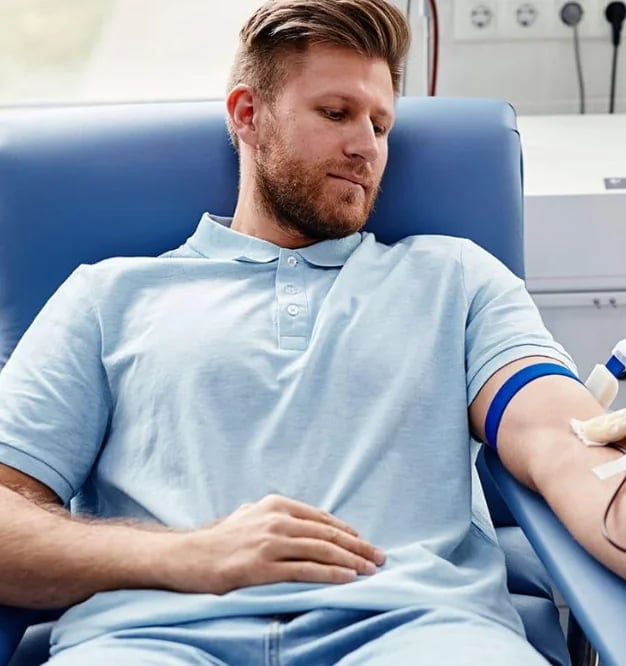
Somewhere in nearly every longevity forum thread about therapeutic plasma exchange, someone posts a version of the same comment: "Why pay thousands of dollars for TPE when you could just donate blood for free and get the same benefit?" It sounds reasonable on the surface. Both involve removing blood from your body. Both are framed in some corners of the internet as ways to "refresh" your blood. The comparison, however, does not hold up once you look at what each process actually removes and replaces.
Rebuttal: Whole blood donation removes a fixed volume, typically around 470 milliliters, of your complete blood, red cells, white cells, platelets, and plasma together. Your body replaces the fluid volume within about 24 hours and the red blood cells over the following four to six weeks. This process does stimulate some new red blood cell production, which is part of why frequent donors sometimes report feeling better afterward. But whole blood donation does not selectively target plasma, the liquid component of blood that carries proteins, lipids, hormones, inflammatory markers, and the small molecules and environmental compounds that accumulate in the body over decades.
Therapeutic plasma exchange works differently. Blood is drawn, mechanically separated so that the plasma component is removed and discarded, and the red blood cells and other cellular components are returned to the patient along with a replacement fluid, typically a combination of albumin and saline. The volume of plasma removed and replaced in a single TPE session is substantially larger than what leaves the body in a standard blood donation, and it is targeted specifically at the plasma compartment rather than whole blood.
Rebuttal: This claim assumes that frequency can substitute for mechanism, but the two processes are not doing the same job even repeated many times. Donating blood monthly for a year removes and replaces roughly the same components each time, whole blood, in modest volume, on a schedule limited by how quickly your body can regenerate red cells safely. TPE performed even a handful of times removes a much larger volume of plasma specifically, in a single sitting, under medical supervision, with lab monitoring before and after to track what is actually changing in the bloodstream.
This is a meaningful distinction for anyone comparing the two based on a vague sense that "removing blood is removing blood." The compartment being targeted, and the volume being exchanged, are what determine whether a specific category of circulating factors is meaningfully reduced. Repetition of a lower-volume, non-targeted process does not automatically produce the same result as a single higher-volume, targeted one.
Rebuttal: This is the claim worth being most careful about, because it is partially fair and deserves an honest answer rather than a dismissive one. The clinical evidence base for TPE as a longevity intervention specifically, as opposed to its long-established use for autoimmune and other medical conditions, is still developing. A notable clinical trial, associated with research out of the Buck Institute, has examined biological age markers before and after plasma exchange protocols and reported measurable changes in certain biological age indicators. This is meaningful early evidence, but it is not the same as decades of large-scale, randomized outcome data.
What can be said with more confidence is that whole blood donation has never been studied, or marketed, as a biological age or longevity intervention in this way. Its established benefits relate to iron regulation in some populations and, of course, its life-saving role for recipients. Comparing it to TPE on longevity grounds is comparing a well-understood but unrelated intervention to an emerging one, not comparing two versions of the same tool.
Rebuttal: This claim conflates cost with mechanism. TPE requires apheresis equipment that mechanically separates plasma from cellular blood components, a controlled replacement fluid, and physician oversight to monitor electrolyte balance, protein levels, and overall safety during and after the procedure. Blood donation requires a simple draw and no separation or replacement fluid at all. The cost difference reflects the difference in equipment, physician involvement, and the volume and specificity of what is actually being exchanged, not markup on an equivalent free alternative.
This doesn't mean TPE is necessarily right for every person curious about it, or that cost shouldn't factor into the decision. It does mean the comparison to blood donation isn't a useful way to evaluate whether the cost is justified, because the two are not substitutable options for the same outcome.
It's worth pausing on why "just donate blood" has become such a persistent talking point in longevity discussions, because understanding the appeal of the comparison helps explain why it's worth addressing carefully rather than dismissively. Part of the appeal is genuinely reasonable skepticism about a relatively expensive, less familiar medical procedure being marketed for a benefit that sounds similar to something free and already well understood. Healthy skepticism toward new interventions, especially ones without decades of outcome data, is a reasonable instinct, and it shouldn't be discouraged just because the specific comparison to blood donation happens to be mechanistically flawed.
Part of the appeal is also simply availability. Nearly everyone has either donated blood or knows someone who has, which makes it an intuitive reference point when trying to make sense of an unfamiliar procedure. When something new is described using terms similar to something familiar, "removing and replacing blood," it's natural to reach for the familiar comparison as a mental shortcut, even when the underlying mechanisms diverge significantly once you look closely.
This is precisely why a careful, honest explanation of the actual mechanistic differences matters more than a dismissive answer. Patients who raise this comparison in a consultation aren't asking a bad-faith question, they're often doing exactly the kind of due diligence you'd want a prospective patient to do before investing in a new, relatively expensive medical intervention.
The clearest way to see why "just donate blood instead" doesn't hold up is to look at what each process is designed to remove. Blood donation is designed around what your body can safely regenerate on a routine basis, whole blood, in a defined volume, on a defined schedule. TPE is designed around what can be selectively removed from the plasma compartment specifically, including circulating environmental toxins, certain inflammatory proteins, and other plasma-borne factors that accumulate over time and are not meaningfully addressed by regenerating red blood cells.
If your goal is simply to be a routine blood donor and support the blood supply, that is a genuinely good and separate reason to donate blood regularly, and it is not diminished by the fact that it isn't a longevity protocol. If your goal is specifically to address the plasma-level accumulation that TPE research targets, blood donation is not a substitute mechanism, regardless of frequency.
This is a more sophisticated version of the original comparison, and it deserves a more careful rebuttal than the whole blood donation claim, because plasma donation genuinely does target the same compartment TPE does.
Rebuttal: Standard plasma donation, the kind done at commercial donation centers, does separate and remove plasma while returning red blood cells, which is mechanically similar to what happens during TPE. The critical difference lies in what replaces the removed plasma and in the intent and monitoring around the procedure. In commercial plasma donation, the donated plasma is not typically replaced with a substitute fluid in the same way, and the plasma removed is intended for use in manufacturing plasma-derived medical products or for transfusion to other patients, not evaluated or selected for what it's removing from the donor's own aging-related biomarker profile. There is also no pre- or post-donation lab panel assessing biological age markers, inflammatory proteins, or accumulated environmental compounds specific to the donor's longevity goals, because that has never been the purpose of plasma donation as a system.

TPE, by contrast, is performed with a specific replacement fluid protocol, typically involving albumin, chosen deliberately to support the patient's own recovery and homeostasis, and is bracketed by physician-ordered lab work specifically designed to track relevant biomarkers before and after the procedure. The volume exchanged per session, and the frequency and monitoring protocol around repeated sessions, are also determined medically rather than by donation center scheduling logistics. Someone donating plasma twice a week for the compensation offered at a donation center is participating in a completely different system, with different goals, different fluid replacement, and no monitoring of the biomarkers that would actually indicate whether anything longevity-relevant is being accomplished.
This is perhaps the most technically minded objection, and it's worth taking seriously rather than dismissing.
Rebuttal: It's true that plasma volume itself is restored quickly, typically within 24 to 48 hours, as your body produces new plasma to replace what was removed. But volume restoration is not the same question as whether the specific proteins, lipids, and other circulating factors present in the old plasma are replaced with an identical composition. The premise behind TPE as a longevity intervention isn't that removing plasma volume itself is beneficial, it's that the new plasma your body produces to replace what was removed is, at least initially, lower in certain accumulated factors that built up gradually over years, before your body's ongoing processes reintroduce them over time at whatever rate corresponds to their underlying causes, whether that's diet, environmental exposure, or age-related changes in clearance and production.
This is also why TPE protocols in a longevity context are typically structured as a series of sessions over a defined period rather than a single one-time treatment, and why post-treatment labs matter so much for understanding your individual pattern, since how quickly those markers trend back toward baseline after a session, or whether they trend back at all, is individual and is exactly the kind of information a single donation-focused system was never built to track.
If you want to compare TPE to something familiar in a way that's actually mechanistically fair, the closer analogy isn't blood donation at all, it's closer to other targeted medical procedures that remove a specific problematic substance from circulation rather than simply removing and replacing a general fluid volume. Dialysis, for example, removes specific waste products and excess fluid from the blood of patients with kidney failure through a targeted filtration process, not by removing whole blood the way a donation does. No one seriously compares dialysis to donating blood as an interchangeable alternative, because the entire premise, targeted removal of specific circulating substances, versus general fluid volume donation, is understood to be a different category of intervention.
TPE sits in that same broad category of targeted plasma-level intervention, even though its specific goals and evidence base are different from dialysis. Recognizing this helps clarify why "just donate blood instead" isn't actually a lower-cost version of the same idea. It's a comparison between two different categories of medical intervention that happen to both involve a needle and a bag.
The honest starting point for anyone weighing TPE against "just donating blood more often" is to be clear about what you're actually trying to accomplish. If it's supporting the blood supply, donate blood, it's valuable regardless of any longevity framing. If it's addressing plasma-level biomarkers associated with biological aging, a conversation with a physician about candidacy for TPE, including a review of your current labs and health history, is the only way to know whether the intervention is appropriate and whether you're a reasonable candidate for it in the first place.
At Liondale Medical, this physician-led evaluation includes looking at your individual health history, current biomarkers, and longevity goals rather than assuming TPE is appropriate for everyone. Proper candidacy screening and pre- and post-treatment lab work help determine whether the intervention is likely to be worthwhile for you specifically, not a blanket assumption that it helps everyone equally.
No. TPE specifically separates and removes plasma while returning your red blood cells and other cellular components, whereas blood donation removes whole blood without any separation.
Not for the same purpose. Blood donation supports red blood cell regeneration and the blood supply, but it does not target the plasma-level factors that TPE research focuses on.
There is emerging evidence, including trial data associated with research out of the Buck Institute, showing measurable changes in some biological age indicators after plasma exchange protocols. This evidence is still developing and should be discussed honestly, not overstated.
TPE requires apheresis equipment to separate plasma from blood cells, a replacement fluid, and physician oversight and lab monitoring, none of which are part of a standard blood donation.
Not necessarily, they serve different purposes. This is worth discussing with your physician based on your individual health status and donation history.
Candidacy depends on your current health status, lab values, and goals, and should be determined through a physician consultation rather than self-assessment.
This page was written and medically reviewed by Lionel Bissoon, D.O., founder of Liondale Medical. Dr. Bissoon is a board-certified osteopathic physician specializing in anti-aging and concierge medicine on the Upper West Side of Manhattan.
This content is for educational purposes only and does not constitute medical advice. Individual results may vary. Consult a qualified physician before beginning any new treatment.
Published