Lipoprotein(a): The Heart Risk Marker Your Annual Physical Probably Never Checked
Lp(a) is a largely inherited heart risk marker that most annual physicals skip. Learn who should test, what the numbers mean, and what to do next in NYC.
Ask most people who have had a routine blood test whether their thyroid was checked, and they will say yes. Ask them which measurement, and many will name TSH, the thyroid-stimulating hormone, and nothing else. TSH is a useful screening test, and in many cases it is the right first step. But it is only one signal in a system that involves the brain, the pituitary, the thyroid gland itself, the immune system and the way the body converts hormones from one form to another. A TSH result that falls within the reference range does not always mean the thyroid is working well.
This article walks through the thyroid tests we review in a longevity-focused assessment, explains what each one measures, shows how to read them together, and describes the situations in which a fuller panel changes the next step. It is written for patients in New York City who have seen a standard result, feel unwell despite it, and want to understand what else to ask for.
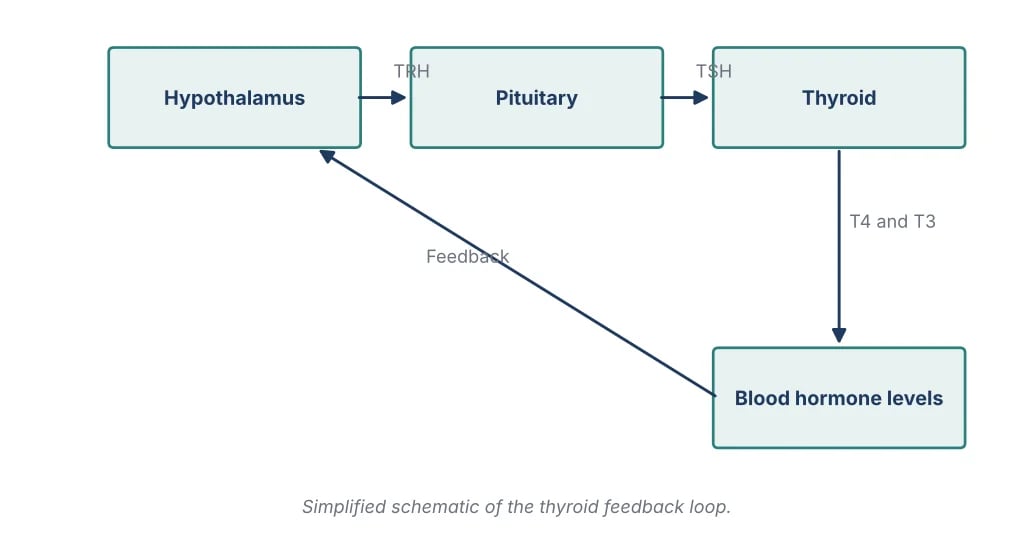
Thyroid feedback loop (illustrative)
The thyroid gland produces two main hormones, thyroxine, called T4, and triiodothyronine, called T3. The gland is controlled by TSH, which is released by the pituitary gland in response to circulating thyroid hormone. When thyroid hormone is low, TSH rises to try to stimulate the gland. When thyroid hormone is high, TSH falls. In most people, TSH is an excellent indicator of thyroid function, which is why it is the standard screening test. A single screening test rarely tells the whole story, a point made in standard labs versus precision diagnostics.
The system is not always so simple. Early or mild thyroid dysfunction may show up first in one marker and not another. Pituitary problems can distort the relationship between TSH and thyroid hormone. Some people convert T4 to T3 less efficiently, so their T4 may look normal while their active T3 is low. Certain medications, illnesses, pregnancy and even the time of day can change the numbers. And a person can feel unwell with a TSH in the middle of the range because they have an autoimmune process, a conversion problem or a non-thyroid cause of their symptoms.
For these reasons, a single TSH value is best treated as the beginning of an evaluation rather than the final word. A broader panel helps confirm what is happening, identify the cause and avoid both missed diagnoses and unnecessary treatment.
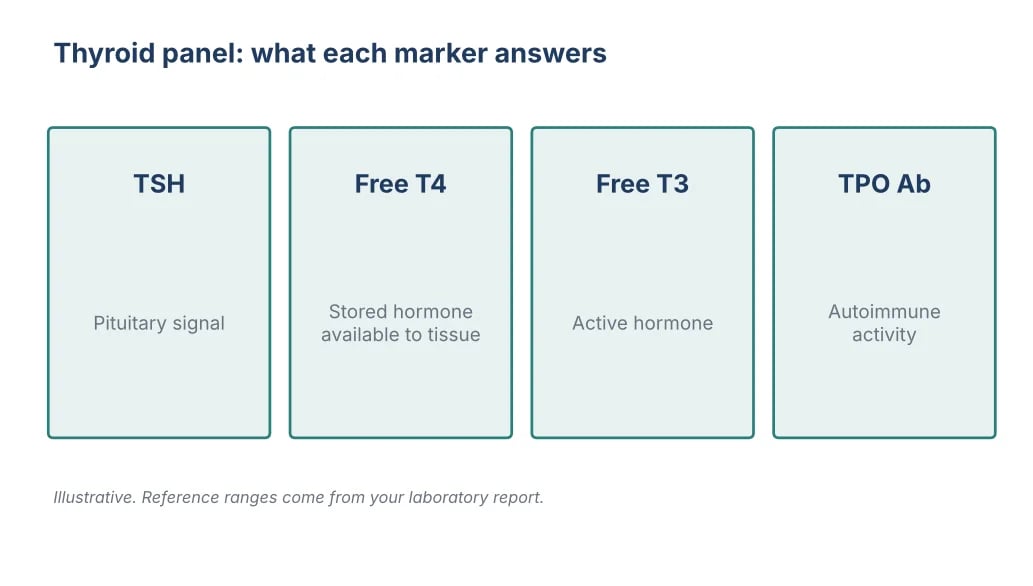
Thyroid panel overview (illustrative)
The panel we typically review in a longevity assessment includes four to six core measurements. Each one answers a slightly different question, and the value comes from reading them together. Thyroid markers sit alongside other biomarkers in longevity labs 101: which biomarkers actually predict healthspan.
TSH shows the pituitary's signal to the thyroid. It is the screening test and the anchor for the rest of the panel.
Free T4 measures the unbound thyroxine circulating in the blood. Because it is the portion that is available to tissues, it is generally more informative than total T4, which can be affected by how much binding protein is present.
Free T3 measures the unbound active hormone. It is especially useful when a patient has symptoms despite a normal TSH and free T4, since it can reveal reduced conversion or low active hormone levels.
Thyroid peroxidase antibodies, usually written as TPO antibodies, are markers of autoimmune thyroid disease. Their presence is strongly associated with Hashimoto thyroiditis, which is the most common cause of hypothyroidism in areas with sufficient iodine intake. Antibodies can be present for years before TSH changes, so they help identify people at higher future risk.
Thyroglobulin antibodies are a second autoimmune marker, often measured alongside TPO antibodies. They are helpful for a fuller picture of autoimmune activity and are particularly relevant in some thyroid cancer follow-up situations, which fall outside the scope of a routine longevity panel.
Some clinicians also review reverse T3, a metabolite produced under certain conditions such as severe illness or fasting. Its clinical usefulness outside those conditions is limited, and we do not use it as a routine marker for thyroid treatment decisions.
Reading thyroid labs is a pattern exercise. The table below shows common patterns that clinicians look for. The ranges shown are illustrative and typical; the reference ranges printed on your laboratory report should always be used for your own interpretation.
| Pattern | What it may suggest | Typical next step |
|---|---|---|
| TSH high, free T4 low | Underactive thyroid (primary hypothyroidism) | Clinical assessment; treatment decisions are usually based on symptoms and the degree of abnormality |
| TSH mildly high, free T4 normal | Possible subclinical hypothyroidism | Repeat testing, check antibodies, review symptoms and other causes |
| TSH low, free T4 and free T3 high | Overactive thyroid (hyperthyroidism) | Prompt medical evaluation, as this pattern can affect heart rate and bone health |
| TSH normal, free T3 low, free T4 normal | Possible reduced conversion or non-thyroid illness | Review illness, medications, nutrition and repeat measurements before concluding |
| TSH normal, TPO antibodies positive | Autoimmune thyroid disease may be present | Track TSH over time and discuss risk with a clinician |
Please note that these patterns are simplified. Pregnancy, acute illness, medications such as biotin, certain steroids and some heart medicines can all affect results, so it is important to tell your clinician about everything you take before your blood is drawn.
Subclinical hypothyroidism describes a situation in which TSH is mildly elevated while free T4 remains in the normal range. Many people with this pattern have no obvious symptoms, and many do not progress to overt hypothyroidism. Others have fatigue, cold intolerance, constipation, dry skin, low mood or difficulty losing weight that may or may not relate to the thyroid. Once your sample is drawn, the lab process matters too, as described in what actually happens to your blood sample after an IV nutrient infusion draw.
The management of subclinical hypothyroidism is a matter of clinical judgment rather than a universal rule. Factors include the degree of TSH elevation, the presence of antibodies, the person's symptoms, age, pregnancy plans, heart health and other lab findings. In some cases, repeat testing over several weeks reveals a result that returns to normal. In others, treatment is considered. Our practice avoids treating a single borderline number without context, and we also avoid dismissing symptoms that persist.
Thyroid hormone affects almost every organ, so symptoms of thyroid dysfunction are numerous and non-specific. Underactive thyroid can contribute to tiredness, weight gain, feeling cold, dry skin, hair thinning, constipation, slowed heart rate, poor concentration, low mood and heavy menstrual periods. Overactive thyroid can cause weight loss, racing heart, anxiety, heat intolerance, tremor, sleep difficulty and bowel changes. Many thyroid symptoms, such as fatigue, overlap with hormone problems, as discussed in testosterone and fatigue: too high or too low.
These same symptoms are shared with sleep apnea, anemia, depression, perimenopause, low testosterone, blood sugar problems and many medications. That overlap is why a thyroid panel is almost always reviewed alongside a broader assessment rather than in isolation. A patient with fatigue and hair thinning, for example, may need a thyroid panel, iron studies, a vitamin D level and a review of sleep and hormone status.
Hair changes are one of the reasons patients ask for thyroid testing. Hypothyroidism is recognized as a cause of diffuse hair thinning, and hyperthyroidism can also be associated with hair shedding. Thyroid-related hair loss usually affects the scalp more broadly rather than producing a single patch, and it often comes with other symptoms or lab changes. If you have noticed hair thinning, body hair changes or a shift in hair texture, a thyroid panel is a reasonable part of the evaluation. If hair thinning is your main concern, our hair loss services page outlines the evaluation process.
Searches linking thyroid problems to changes in pubic or underarm hair are common, and the evidence for a direct thyroid link in those specific areas is limited. A thyroid panel can still be useful when hair changes come with fatigue, weight change, temperature sensitivity or heart rate changes. The broader hair loss workup, which may include hormone levels and iron studies, is discussed in our other clinical articles.
Autoimmune thyroid disease can develop gradually. In the early stages, the antibodies may be detectable while TSH and free T4 are still within range. Over time, the thyroid may become less efficient, and TSH may begin to rise. Knowing that antibodies are present allows the clinician to track the thyroid more closely and to discuss the long-term course with the patient. Antibody results are most useful when they feed into a complete plan, as described in building a personalized longevity plan.
Antibody status also matters in pregnancy planning, where thyroid function is closely monitored. For that reason, women who are trying to conceive, or who are already pregnant, usually need a more specific thyroid evaluation than a general wellness screen provides.
Patients often ask whether diet or supplements can improve thyroid function. Iodine is essential for thyroid hormone production, and deficiency is a recognized cause of thyroid problems in some parts of the world. In most adults in the United States, iodine intake from ordinary food and iodized salt is adequate, and excessive iodine supplementation can itself cause thyroid dysfunction in susceptible people. Selenium plays a role in thyroid enzyme function, and very low intake can matter, but high-dose selenium is not a harmless general boost.
Diet cannot replace diagnosis. If your labs show abnormalities, supplements should be chosen with a clinician, because the wrong product can interfere with treatment or with the interpretation of your results. Biotin, a common supplement in hair and nail products, can distort some thyroid immunoassays and should be stopped for an appropriate interval before blood is drawn, as directed by your clinician.
Thyroid tests are usually drawn in the morning, although fasting is not always required for TSH and free T4. Levothyroxine, the synthetic form of T4 used to treat hypothyroidism, is typically taken on an empty stomach and is best separated from calcium, iron and some other medicines by several hours. If you take levothyroxine, your blood test timing should be discussed with your clinician so that the result reflects your usual dose accurately. Preparation requirements differ by test, and why some blood panels need to be fasted and others don't explains the rules.
Other medications that can influence results include some heart drugs, corticosteroids, estrogen-containing products, and medicines used for mood or seizures. Tell your clinician about all prescriptions, over-the-counter products and supplements before your labs.
An abnormal thyroid result is a reason for a conversation, not a reason for alarm. The next step depends on which marker is abnormal, how far it is from the reference range, whether the result is consistent on repeat testing, your symptoms and your medical history. Many borderline results resolve or stabilize with monitoring. Others require treatment that is simple, well established and monitored with follow-up blood tests. If an abnormal result raises questions, you can request a consultation to review it.
More significant results, such as very high TSH, very low TSH, markedly elevated thyroid hormone, or results accompanied by heart rhythm symptoms, need prompt medical evaluation and may require referral to endocrinology. We coordinate these referrals so that the patient understands the plan and knows who is responsible for each step.
In a longevity assessment, the thyroid panel is one of several systems we review. Its value lies in identifying treatable causes of symptoms, preventing unnecessary worry about normal variation, and detecting changes early enough to act. It also contributes to a better understanding of metabolic health, since thyroid status affects cholesterol, heart rate, body temperature and energy use. Who reviews your thyroid results affects the plan, which is why our comparison of physician-led and nurse-led longevity clinics may help.
We usually recommend repeating thyroid tests at intervals that match the situation. Someone with a normal panel and no symptoms may not need frequent testing. Someone with antibodies, a borderline TSH, treatment for thyroid disease or new symptoms may benefit from more regular monitoring. The schedule should be set by a clinician who knows your history.
When your results arrive, ask which thyroid markers were measured and what each one means. Ask whether your TSH is in the optimal range for your age and sex, or simply within the laboratory reference range, since those are not always the same. Ask whether antibodies were tested and what a positive or negative result would change. Ask whether your symptoms could have a thyroid cause, and what other tests would help. Finally, ask when the next test should be done and what would prompt earlier review.
A laboratory report can look intimidating, with abbreviations, flags and reference ranges printed in small type. A practical way to read it is to work through the markers in order. Start with the date and time the sample was drawn, since timing can affect interpretation. Next, find TSH and note the value and the reference range. Then look at free T4 and free T3. Check whether antibodies were measured, and if they were, note whether they are reported as positive or negative, along with the numeric value if one is given. Finally, read the comments section, where the laboratory may add notes about medications, assay methods or recommended follow-up.
Once you have the numbers, look at the pattern rather than any single value. Two markers that move in opposite directions often tell a clearer story than one flagged result. If anything seems unclear, bring the report to your appointment and ask your clinician to walk through it with you. A good clinician will be glad to explain each line.
Thyroid reference ranges are set by each laboratory, based on the population it serves and the assay it uses. As a result, a value that is flagged at one lab may be within range at another. Assay methods also differ, and some immunoassays give different results for the same sample. This is why it is helpful to keep reports from the same lab when monitoring over time, and why trends are often more informative than a single comparison against a printed range.
Some patients ask whether an "optimal" TSH is different from the reference range. Some clinicians discuss narrower target ranges for certain people, such as those who are pregnant or who are on treatment, but the evidence for pushing values to a narrower range in the general population is less clear. The most important question is whether the result fits with your symptoms, your history and your other findings.
Thyroid needs change over life. Pregnancy increases demand for thyroid hormone, and thyroid problems in early pregnancy are monitored closely because they can affect development. Thyroid function also changes with age. Older adults may have higher average TSH levels without clear symptoms, and treatment decisions in older people are individualized with attention to overall health and medication burden. In men, thyroid problems are less common than in women but still matter, particularly when fatigue, mood change, weight change or heart rhythm symptoms appear.
Women in the years around menopause may notice that symptoms of thyroid disease overlap with perimenopausal changes. A thyroid panel helps separate these possibilities. Hormone therapy and thyroid medication can interact in some cases, so the timing of any treatment change should be coordinated.
When a person is treated for hypothyroidism, the usual monitoring test is TSH, measured after a period of stable dosing, typically several weeks after a change. Free T4 may be checked alongside it. Monitoring is not meant to chase a perfect number every time. It is meant to confirm that the dose is appropriate, that symptoms are controlled and that no new problem has appeared. Changes in weight, pregnancy, other medications and some supplements can alter the dose needed, so patients should report such changes promptly.
For people taking thyroid medication, consistent administration matters. Levothyroxine is typically taken on an empty stomach, and taking it with coffee, calcium, iron or certain fiber supplements can reduce absorption. Small habit changes often make the biggest difference to how stable the levels are.
An overactive thyroid can speed up the heart, cause tremor, weight loss, heat intolerance and sleep problems, and it can affect bone density and heart rhythm if left untreated. Atrial fibrillation is one of the more serious possible complications, so a suppressed TSH combined with heart symptoms deserves prompt evaluation. Causes include autoimmune disease, nodules within the gland and some medications. The treatment depends on the cause and may include medication, radioactive iodine or other approaches, and it is usually coordinated with endocrinology.
Patients on thyroid hormone who begin to feel palpitations, anxiety or weight loss should contact their clinician, since the dose may have become too high. This is a reason to keep follow-up appointments even when you feel well.
Thyroid hormone influences cholesterol metabolism, heart rate, body temperature, muscle function and energy use. For that reason, thyroid results are often reviewed alongside lipids, blood sugar and blood pressure. Untreated hypothyroidism can raise LDL cholesterol, and some patients whose lipids improve after treatment find that their overall risk picture changes as a result. Thyroid problems can also make weight management harder, which is one reason a complete review is more useful than focusing on weight alone.
In a longevity context, this integration matters. A thyroid result is not a standalone score. It is one part of a system that includes sleep, stress, nutrition, body composition, hormones and medications, and the patient's goals guide which parts receive attention first.
A few simple steps help make a thyroid test as accurate as possible. Tell your clinician about every medication and supplement, especially biotin, which should be paused for a period before testing if it has been taken in high doses. Note the time you last took thyroid medication, because the timing can affect the result. If you are ill with a fever or recent infection, mention it, since acute illness can alter some thyroid measurements. If you are pregnant or may be, tell the team before the draw so that the appropriate reference ranges are used.
Morning draws are common, but fasting is not always required for TSH and free thyroid hormone tests. Ask the laboratory or clinic what preparation applies to your order.
Thyroid testing is one of the most useful screening tools in medicine, and it is also one of the most over-interpreted. A normal result is reassuring, but it does not explain every symptom. An abnormal result is informative, but it does not always require immediate treatment. The best outcomes come from testing for a clear reason, reading the full panel, considering the person's symptoms and history, and following a plan that is reviewed over time. That is the approach we take at Liondale Medical, and it is the approach we recommend for anyone trying to make sense of their thyroid results.
Thyroid function is especially important for anyone who is trying to conceive or who is pregnant. Even mild changes in thyroid hormone can matter early in pregnancy, when the baby depends on the mother's thyroid supply before its own thyroid begins to function. For that reason, women who are planning pregnancy and have known thyroid conditions, or who have positive antibodies, are often asked to share their thyroid results with their obstetric team and to recheck levels early. Thyroid medication doses commonly change during pregnancy, and monitoring is usually more frequent than in the general population. Men who are planning a family are not usually screened in the same way, but thyroid function still affects energy, sexual health and overall fertility, so it is reasonable to include it in a general assessment.
TSH is a valuable screening test, but it does not always show the full picture. Free T4, free T3 and antibodies can reveal problems that TSH alone may miss, particularly when symptoms persist.
Free T4 is the unbound form of the storage hormone thyroxine, and free T3 is the unbound form of the active hormone. Both are measured to understand how well the thyroid is producing hormone and how well the body is using it.
TPO and thyroglobulin antibodies indicate autoimmune thyroid activity. A positive result is strongly associated with Hashimoto thyroiditis and can predict a higher future risk of hypothyroidism.
Yes. Hypothyroidism is a recognized cause of diffuse hair thinning, and hyperthyroidism can also cause shedding. Hair loss has many causes, so a thyroid panel is one part of a wider evaluation.
Not without guidance. Supplements such as iodine, selenium or thyroid-support blends can interfere with thyroid function or with lab results, and they are not a substitute for evaluation of symptoms.
It can. High-dose biotin can interfere with some immunoassays and lead to misleading results. Tell your clinician if you take biotin, and ask how long to stop before testing.
Frequency depends on your results, symptoms, medications and risk factors. A stable normal panel may be rechecked periodically, while people on treatment or with antibodies may need more frequent monitoring.
It is a pattern in which TSH is mildly elevated while free T4 remains normal. It may or may not need treatment, and the decision depends on repeat testing, symptoms, antibodies and other factors.
Yes. Acute illness, fasting, pregnancy and some medications can alter thyroid tests. This is one reason single results should be confirmed when they are unexpected.
Basic thyroid screening is often covered when medically indicated. Coverage for a broader longevity panel varies, and our team can explain the options before testing.
We review thyroid function as part of our precision diagnostics assessments. Please contact our team to confirm the panel we use, the reference ranges on our reports and how testing is arranged.
This page was written and medically reviewed by Lionel Bissoon, D.O., founder of Liondale Medical. Dr. Bissoon is a board-certified osteopathic physician specializing in anti-aging and concierge medicine on the Upper West Side of Manhattan.
This content is for educational purposes only and does not constitute medical advice. Individual results may vary. Consult a qualified physician before beginning any new treatment.
Published