Thyroid Labs Beyond TSH: The Panel a Longevity Physician Reads Before Making a Call
A TSH result alone can miss thyroid problems. Learn which thyroid tests a longevity physician reviews, how to read them, and when antibodies matter.
Cortisol has become one of the most searched and most misunderstood hormones in wellness. Patients arrive asking whether their stress is "burning out their adrenals," whether a saliva test at home can show their cortisol curve, or whether a supplement can bring their levels back into balance. Some of these questions are reasonable. Others rest on a concept that mainstream endocrinology does not recognize. This article separates the two, explains what a cortisol test can and cannot tell you, and describes how we approach stress hormones in our New York City practice.
If you are looking for a cortisol test in NYC, you should know both what the test is good at and where it can mislead. Cortisol is one of the most important hormones in the body, and it is essential to life. It is also easy to over-interpret, because levels move throughout the day and respond to sleep, exercise, illness, caffeine, medications and emotional stress. A single number needs context.
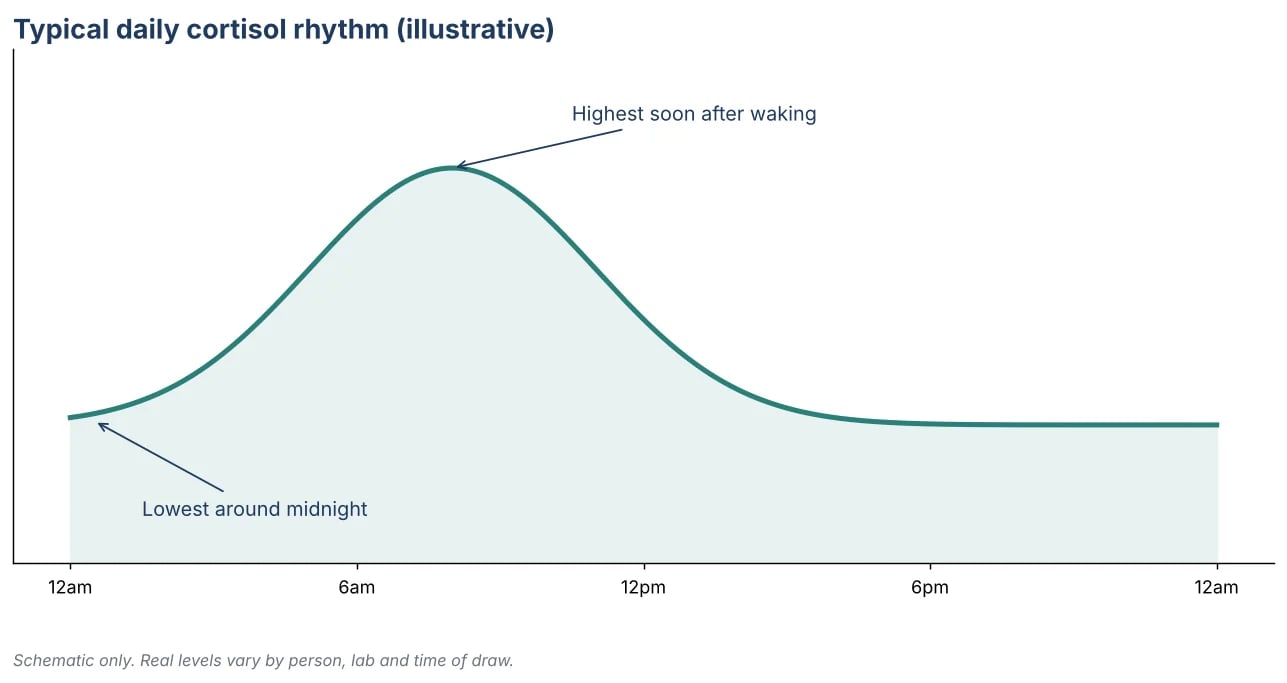
Typical daily cortisol rhythm (illustrative)
Cortisol is a steroid hormone produced by the adrenal glands, two small organs that sit above the kidneys. It is released in response to signals from the brain, specifically from the hypothalamus and pituitary, through a chain of messages often called the HPA axis. Cortisol helps regulate blood sugar, supports the immune system, influences blood pressure, helps the body respond to physical and psychological stress, and plays a role in the sleep and wake cycle. Stress hormones also interact with digestion and mood, which is the subject of why your gut health affects everything, even your mood.
The most important feature of cortisol for testing is its rhythm. In a healthy adult, cortisol is highest soon after waking, falls through the morning and afternoon, and reaches its lowest point around midnight. This pattern is called the diurnal rhythm, and it is the reason timing matters so much when a cortisol test is ordered. A level that would be normal at 8 a.m. may be meaningfully high at 11 p.m., and a single random measurement cannot describe the whole pattern.
Cortisol also responds to acute stress. A hard workout, a poor night of sleep, an infection, an injury or a frightening event can all raise levels for a short period. Those rises are normal and healthy. The concern in chronic stress is not a single spike but a sustained pattern that may affect sleep, mood, blood sugar, body composition and immune function over time.
The phrase adrenal fatigue is widely used online to describe a set of symptoms such as exhaustion, poor sleep, cravings, low mood and difficulty handling stress. Advocates suggest that long periods of stress wear out the adrenal glands and reduce cortisol output, and they often recommend supplements, adaptogenic herbs or special diets to restore function. The idea is appealing because it offers a physical explanation for real and unpleasant feelings. Our view on evaluating symptoms rather than chasing labels is set out in how to shift from sick care to true health care.
The difficulty is that adrenal fatigue is not a recognized medical diagnosis. The Endocrine Society and other professional bodies have reviewed the concept and found no reliable evidence that the adrenal glands become exhausted in the way the term suggests. The conditions that do affect the adrenal glands are specific and measurable. Primary adrenal insufficiency, also called Addison disease, occurs when the glands do not produce enough cortisol and sometimes aldosterone. Cushing syndrome occurs when the body is exposed to too much cortisol, often from medication or a tumor. These conditions have clear laboratory and clinical features, and they are very different from the symptoms that prompt people to search for adrenal fatigue.
This matters for practical reasons. If a person attributes persistent fatigue, weight change or low blood pressure to adrenal fatigue, a true endocrine disorder may be missed. Conversely, a person with mild, non-specific symptoms may spend money on supplements and tests that do not address the cause. The most useful approach is to take symptoms seriously, measure what can be measured, and look for the actual explanation.
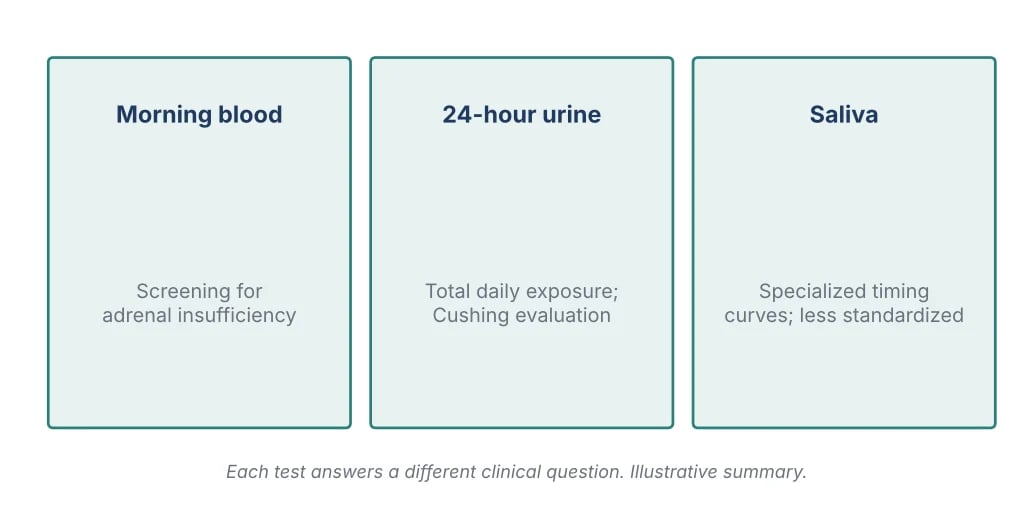
Cortisol test types compared (illustrative)
There are three main ways to measure cortisol, and each answers a different question. The first is a morning serum cortisol test, a blood draw usually taken between about 7 and 9 a.m. It is commonly used to screen for adrenal insufficiency and is often paired with other tests when the clinical picture points to the adrenal glands. It reflects the peak of the daily rhythm and is most useful when interpreted with the time of draw clearly recorded. Not every lab panel includes hormone tests like cortisol, and standard labs versus precision diagnostics explains what to ask for.
The second is a 24-hour urine free cortisol test. The patient collects all urine over a full day, and the total amount of cortisol excreted is measured. This test is used most often to evaluate possible Cushing syndrome, because it reflects total cortisol exposure across the day. It requires careful collection and can be affected by kidney function and by some medications.
The third is salivary cortisol, usually collected at several points during the day or at night. Salivary tests are promoted for stress assessment and for mapping the daily curve. They can be useful in specialized settings, such as evaluating late-night cortisol in some patients with suspected Cushing syndrome. However, results depend heavily on collection technique, on contamination and on the laboratory used, and the reference ranges are less standardized than for blood or urine tests. For general stress questions, salivary tests are often over-interpreted.
Some patients ask about hair cortisol, which measures cortisol incorporated into hair over several months. This test is an emerging research tool, and it is not yet a standard clinical measure for routine decisions. We do not recommend building a treatment plan on hair cortisol results alone.
A cortisol test is appropriate when a physician has a specific reason to suspect a problem. Examples include unexplained weight gain concentrated in the trunk with thin arms and legs, easy bruising, purple stretch marks, high blood pressure that is difficult to control, muscle weakness, frequent infections, or unexplained low blood pressure with dizziness and salt craving. A test may also be ordered when someone is taking glucocorticoid medication long term and the team is assessing the risk of adrenal suppression, or when a patient has had a pituitary or adrenal condition in the past. A cortisol test is one piece of a wider plan, described in building a personalized longevity plan.
Testing can also be useful for people with persistent sleep disruption, unexplained low energy, or blood sugar changes that do not fit their other results. In these situations the cortisol test is one part of a wider assessment that normally includes thyroid function, a complete blood count, metabolic markers, sleep history and a review of medications and supplements.
A cortisol test is not useful for every symptom of stress. A single normal result does not rule out chronic stress, and a single high result does not prove that you have a disorder. Measuring cortisol at home or through a generic stress panel without a clinical question often produces results that are difficult to interpret and lead to unnecessary worry. Cortisol levels are also affected by the time of day, by a recent meal or workout, by caffeine, by smoking, by pregnancy and by many medications, including some inhaled and topical steroids.
A cortisol test does not measure how stressed you feel. Two people with identical cortisol levels can report very different emotional experiences. For that reason, we consider symptom history, sleep patterns, mood, life circumstances and medical history alongside any laboratory result.
Chronic stress matters for longevity, but its effects are broader than cortisol alone. Persistent stress is associated with disrupted sleep, higher blood pressure, changes in appetite and food choices, reduced physical activity, weight gain around the waist, and higher levels of inflammatory markers. Over long periods, these changes can contribute to cardiovascular disease, metabolic disorders and reduced resilience to illness. Our anti-aging services address sleep, stress and metabolic health together, and are outlined on the anti-aging services page.
For most people, the most effective way to address the health effects of stress is to address the stress itself and its downstream effects. This means protecting sleep, building regular physical activity, eating consistently, reducing alcohol use, maintaining social connection, and seeking help for anxiety or depression when it is present. Medical evaluation is important when symptoms are severe, persistent or accompanied by other changes.
Several habits influence cortisol in predictable ways. Short or irregular sleep can flatten the normal daily rhythm and raise evening levels. Intense exercise raises cortisol temporarily, and regular moderate exercise is associated with healthier stress responses over time. Heavy caffeine intake, especially late in the day, can disturb sleep and push cortisol higher at night. Alcohol disrupts sleep architecture and can affect the stress response. Skipping meals, very low-calorie diets and high-sugar eating patterns may also affect blood sugar and the hormones that respond to it. Persistent tiredness has many causes, and could NAD IV therapy be your energy solution discusses one option that is sometimes raised, alongside its limits.
Light exposure matters too. Bright light in the morning helps anchor the circadian rhythm, and dim light in the evening supports melatonin and better sleep. These are simple changes, and they often produce more benefit than people expect.
Many products marketed for adrenal support contain ashwagandha, rhodiola, licorice root, or proprietary blends. Some of these ingredients have been studied for stress and sleep, and early trials of ashwagandha have reported reductions in perceived stress and in cortisol in some participants. The studies are generally small, short and not always consistent, and product quality varies widely. Licorice root can raise blood pressure and affect potassium levels, and it can interact with medications. For a careful look at how we separate evidence from hype in longevity products, see peptide therapy for longevity: separating evidence from hype.
We do not recommend adaptogens as a replacement for diagnosis. If you are considering a supplement for stress or sleep, bring the product label to your appointment so that your clinician can check for interactions and for the presence of ingredients that may affect your hormone or blood pressure results.
When a patient asks about cortisol, we begin with the question behind the question. What symptoms are you experiencing? When did they start? Are there signs of excess cortisol or deficiency? What medications and supplements are you taking? How is your sleep, mood and energy? From there, we decide whether a morning serum cortisol, a 24-hour urine test or no cortisol test at all is the most sensible next step. Dr. Bissoon leads these assessments, and you can read about his background on his provider page.
We explain results in plain language, including the limits of the test, and we coordinate with endocrinology when a specific adrenal or pituitary disorder is suspected. We also look at the broader precision diagnostics picture, because cortisol sits alongside thyroid hormones, sex hormones, blood sugar and inflammatory markers. Stress hormones rarely act alone, and a careful interpretation considers the whole system.
The most common mistake is interpreting a single result without considering timing and context. The second is treating a supplement as a diagnosis or a cure. The third is ordering multiple stress or adrenal panels from unverified sources and then making changes based on results that were not validated. The fourth is ignoring persistent symptoms because a test looked normal. A useful test answers a clinical question, is interpreted by a clinician who knows the patient, and leads to a specific plan. A useful lab test answers a clear question, which is the approach taken in longevity labs 101: which biomarkers predict healthspan.
Before ordering or booking a cortisol test, ask what the result will change. Ask which type of test is being used, at what time of day, and with what reference range. Ask whether the test is validated for the question you have. Ask whether any of your medications, supplements or recent illnesses could affect the result. If the answer to any of these questions is unclear, it is reasonable to ask for a discussion before the test is taken.
Cortisol does not act alone. It helps the liver release glucose when the body needs quick energy, and it influences how cells respond to insulin. Over long periods of high cortisol exposure, these effects can contribute to higher blood sugar, changes in fat distribution and higher blood pressure. This is part of why clinicians look at cortisol in patients who have unexplained diabetes, central weight gain and high blood pressure that is hard to control, particularly when those problems appear together.
Cortisol also interacts with sleep. Healthy cortisol falls in the evening, which helps make sleep possible. When stress or illness keeps cortisol elevated at night, falling asleep and staying asleep can become difficult, and poor sleep then increases the next day's stress response. Breaking this cycle often requires attention to sleep habits, daytime activity and, when needed, treatment of the underlying condition. Medication or supplements are rarely the first answer.
One of the most important causes of excess cortisol exposure is medication. Oral corticosteroids such as prednisone, and some inhaled, injected or topical steroids, can suppress the adrenal glands with prolonged use. This is a recognized medical effect rather than a wellness concern, and it is managed by the prescribing clinician, who may taper doses or monitor the adrenal axis. Patients who have taken steroids for several weeks or longer should not stop them abruptly without medical guidance, because sudden withdrawal can cause serious symptoms.
Patients should also tell their clinician about all medications, including over-the-counter products and supplements that contain steroid-like ingredients or that are sold as adrenal support. Some products are contaminated or contain undisclosed ingredients, and that can affect both symptoms and test results.
Some signs deserve prompt medical evaluation. Adrenal insufficiency can present with profound fatigue, weight loss, nausea, abdominal pain, dizziness on standing, salt cravings and darkening of the skin. A person with these symptoms should not wait for a routine appointment. Cushing syndrome can present with rounded face, central weight gain, thin skin that bruises easily, purple stretch marks, muscle weakness, high blood pressure and high blood sugar. These are different from ordinary stress, and the testing pathway is different too.
In an emergency, such as fainting, severe vomiting or confusion, seek urgent medical care. Adrenal crises are rare but serious, and they require prompt treatment.
When a patient describes stress, we often start with a structured conversation rather than a laboratory order. We ask about the main sources of pressure, how long they have lasted, how the patient is sleeping, eating and moving, whether they have noticed changes in mood or concentration, and what helps. We also ask about alcohol, caffeine, smoking and recreational substances, since each can influence how the body handles stress.
If the conversation suggests depression, anxiety or a sleep disorder, we discuss those directly and refer when appropriate. Stress that becomes persistent can lead to real medical conditions, and treating them is more effective than trying to correct a single hormone value. Cortisol testing is ordered when it answers a specific clinical question, not as a way to measure how stressed someone feels.
The body's cortisol rhythm responds to daily cues, especially light, meal timing and activity. Getting outdoor light within an hour of waking helps anchor the internal clock and supports a stronger daytime-to-night contrast. Moving the body during the day, whether through walking, strength training or other activity, helps the stress response return to baseline after it has been triggered. Eating at reasonably consistent times can also help steady blood sugar, which influences how the body reads stress.
In the evening, dimming bright lights, reducing screen intensity and finishing heavy meals earlier can make it easier for cortisol to fall and for sleep to begin. These habits are not dramatic, and they do not require supplements. They are repeatable and they work with the body's own systems.
Borderline cortisol results are common, particularly when the test was drawn at an unusual time, after a poor night of sleep, during an illness or after a stressful event. A borderline value is a reason to look more carefully, not a diagnosis. The usual response is to check the timing and conditions of the test, review medications, consider repeat measurement if appropriate, and assess symptoms and other markers before deciding whether further evaluation is needed.
In some cases a referral to endocrinology is the right step, particularly when results are clearly abnormal or when symptoms point to a specific disorder. We explain the reasons for any referral, and we make sure the patient knows who will follow up and when.
A productive appointment starts with a short list. Note the symptoms you are most concerned about, when they began, and what makes them better or worse. Bring a list of medications and supplements, including the exact names and doses. If you have had previous blood tests, bring the reports, especially any cortisol, thyroid or blood sugar results. Write down your sleep pattern for two weeks if you can. Finally, ask what result would change the plan, so that you understand why a particular test is being ordered.
Cortisol has become a symbol of modern stress, and it is tempting to look for a single lever that will fix everything. In practice, the most reliable influences are the ones that people already know about but often neglect: consistent sleep, daily movement, regular meals, limited alcohol, time outdoors, and meaningful social contact. These habits support the stress system in ways that are measurable and that do not depend on a product or a diagnosis. They also make any future medical testing easier to interpret, because the body is operating in a more stable baseline.
Our advice to most patients is to start with those fundamentals, track how they feel over several weeks, and return to the clinic if symptoms are persistent, severe or changing. When a specific test is needed, we order it deliberately and explain what it will and will not show.
Physical training is one of the most useful tools for building a resilient stress response, but the dose matters. Moderate, regular exercise tends to improve sleep, mood and the body's capacity to recover from stress. Very high training loads with inadequate food or rest can keep cortisol elevated, reduce performance and disrupt sleep, a pattern sometimes described as overtraining. Signs include persistent fatigue, declining performance, poor sleep, irritability, frequent illness and loss of motivation. If these appear, reducing volume, adding rest days, improving nutrition and reviewing sleep are usually the first steps. Persistent symptoms deserve medical review, since several conditions can mimic overtraining, including thyroid disease, anemia and low testosterone.
Normal ranges depend on the test, the laboratory and the time of day. A morning serum cortisol is typically higher than an afternoon or evening value. Your clinician should interpret your result against the reference range provided with your report.
Adrenal fatigue is not a recognized medical diagnosis. Real adrenal disorders such as Addison disease and Cushing syndrome are specific, measurable conditions with defined tests and treatments.
Yes. Acute stress raises cortisol temporarily, which is a normal part of the stress response. Chronic stress can keep the system active for longer periods, which may affect sleep, blood sugar and other health markers.
Saliva tests can be useful in specific clinical settings, such as some evaluations for Cushing syndrome, but results depend heavily on collection and laboratory methods. They are less reliable for general stress assessment.
Excess cortisol, as seen in Cushing syndrome, can cause central weight gain. Ordinary stress-related changes in cortisol are usually one of several factors in weight change, which also include sleep, activity, diet and hormones.
Some studies of ashwagandha report modest reductions in perceived stress and cortisol, but the evidence is limited. Talk to your clinician first, particularly if you take thyroid, blood pressure, immune or sedative medications.
A morning serum cortisol is usually drawn between about 7 and 9 a.m., when levels are typically highest. Your ordering clinician will specify the timing for your situation.
A test is worth considering when there are specific signs of excess or deficient cortisol, such as unexplained weight change with other features, persistent low blood pressure or unexplained fatigue with other abnormal findings. A clinician can help decide.
Fasting requirements vary by test. Many cortisol blood tests are done in the morning without strict fasting, but medications and recent meals should be reported to your clinician.
Cortisol testing may be included in our precision diagnostics assessments when clinically appropriate. Please contact our team to confirm what is available and how testing is arranged.
This page was written and medically reviewed by Lionel Bissoon, D.O., founder of Liondale Medical. Dr. Bissoon is a board-certified osteopathic physician specializing in anti-aging and concierge medicine on the Upper West Side of Manhattan.
This content is for educational purposes only and does not constitute medical advice. Individual results may vary. Consult a qualified physician before beginning any new treatment.
Published