Hair Loss Specialist in NYC: Get the Labs Before the Treatment
Before you buy a serum or book a procedure, learn why your hair is thinning. A physician explains the labs, hormones, and hair loss types that guide treatment.
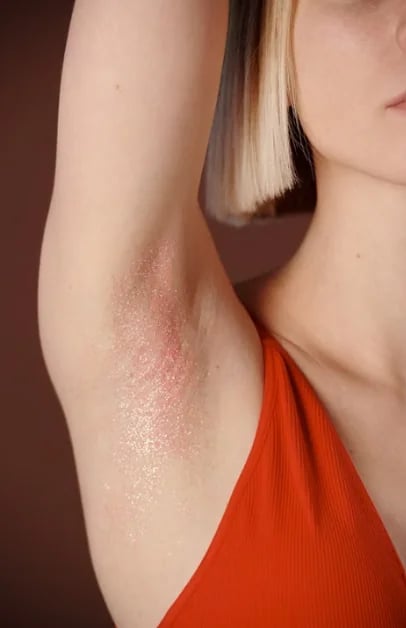
Most people notice it by accident. You lift an arm to reach a shelf, catch a glimpse in the mirror, and realize the underarm hair that used to be thick is sparse, patchy, or simply gone. Nobody warned you this could happen, and it is not a topic that comes up at dinner.
Here is the short version. Underarm hair thins for a handful of ordinary reasons, and occasionally for one that deserves a blood test. The trick is telling them apart. Gradual thinning in your fifties and beyond is common and usually harmless. Sudden loss in your twenties or thirties, loss that arrives together with fatigue, low sex drive, or changes elsewhere on the body, is a different conversation entirely.
This guide walks through what underarm hair actually is, why it leaves, how to read the pattern you are seeing, and what a proper evaluation looks like when it is worth pursuing.
Scalp hair and underarm hair are not the same tissue behaving the same way. Scalp hair grows for years at a time. Underarm hair is a different type, called terminal androgen-dependent hair, and it follows a much shorter cycle. Each strand grows for a few months, rests, and sheds.
The word androgen-dependent is the important part. Before puberty, your armpits are covered in nearly invisible fine hair. When adrenal glands and gonads begin producing androgens, a group of hormones that includes testosterone, DHEA, and their relatives, those fine hairs are converted into thicker, darker ones. That is why armpit hair arrives around the same time as body odor and a growth spurt.
This matters because it means underarm hair works as a small, visible readout of your androgen environment. It is not a precise instrument. Nobody should diagnose a hormone problem from armpit hair alone. But when a hormone-dependent tissue changes, it is reasonable to ask whether the hormones are changing too.
Let us set a baseline before talking about causes.
Underarm hair density varies widely between people. Some have a thick tuft from age fourteen; others have a modest amount all their lives. Genetics and ancestry play a large role, and people of East Asian descent, for example, tend to have less axillary hair on average than people of Mediterranean or Northern European descent. A person who has always had sparse underarm hair is not showing a symptom.
Change is what carries the information. Thinning that appears gradually across a decade, especially after fifty, sits within the normal range of aging. Sudden change, asymmetric change, or change that arrives alongside other symptoms is the part worth paying attention to.
Both men and women experience a slow decline in androgen production after their thirties. In men, total testosterone falls by roughly one percent a year on average, though the range between individuals is enormous. In women, adrenal androgens like DHEA-S drop considerably from the twenties into the sixties, and ovarian testosterone production falls after menopause.
The visible result, over decades, can be a lighter growth of underarm, pubic, and body hair. A man in his sixties who notices his underarm hair is thinner than it was at thirty-five is describing something extremely common. So is a woman in her fifties who notices the same.
Slow thinning, no other symptoms, and no dramatic timeline usually means you can watch and mention it at your next routine visit.
If you shave, wax, sugar, or use laser on your underarms, that is the first explanation to consider, and the most underrated.
Repeated shaving does not change hair thickness the way old myths suggest, but it can inflame follicles, cause ingrown hairs, and lead to chronic low grade folliculitis. Waxing tears hair from the root and can damage the follicle over years. Laser hair reduction, by design, permanently reduces hair in the treated area. If you had a course of laser a few years ago and have forgotten, that could be the whole story.
Some people also react to deodorants and antiperspirants, particularly products with strong fragrance or aluminum salts, with follicle inflammation that leads to thinning.
So the first question a good clinician asks is not about hormones. It is: what have you been doing to this area, and for how long?
Once you have ruled out hair removal and normal aging, a few medical explanations enter the picture. Each has a slightly different signature.
In men, loss of underarm and pubic hair is one of the classic physical signs of prolonged low testosterone. It tends to appear late, after the deficiency has been present for months or years, because body hair follicles need sustained androgen exposure to stay in their terminal state.
That timing is a useful clue. If testosterone drops sharply, you may notice fatigue, low libido, reduced muscle mass, and mood changes long before the hair goes. If the hair is already going, the deficiency is usually established rather than brand new.
The pattern to watch for is a cluster. Sparse armpit hair on its own means little. Sparse armpit hair plus reduced morning erections, lower drive, slower recovery from workouts, and a softer body composition is a cluster worth testing.
Low testosterone has several possible causes, from primary testicular problems to pituitary issues, obesity, sleep apnea, opioid use, and chronic illness. Finding the reason matters as much as the number.
In women, the story is more layered. Estrogen and androgens both influence body hair. After menopause, when estrogen falls sharply and ovarian androgen output drops, some women notice thinning of underarm and pubic hair while facial or chin hair may actually increase. That contrast looks odd, but it comes from the shifting balance between hormones and from differences in how individual follicles respond.
Younger women can also see thinning with conditions that suppress ovarian function, such as hypothalamic amenorrhea from under-eating or extreme training, or with premature ovarian insufficiency. Polycystic ovary syndrome, by contrast, usually increases body hair, but it can co-exist with thyroid problems that reduce it.
The thyroid is probably the most frequent medical cause of body hair thinning in both sexes. Hypothyroidism slows the hair cycle and often thins the outer third of the eyebrows, scalp hair, and body hair. Hyperthyroidism can cause diffuse shedding as well.
Thyroid disease is common, easily missed in early stages, and straightforward to test. If you are also tired, cold, constipated, gaining weight without a clear reason, or noticing dry skin, thyroid testing should be part of the evaluation. A screening TSH is the usual start, and a good clinician will often look at free T4, free T3, and thyroid antibodies as well, particularly if the TSH is borderline.
Low iron stores are a well documented contributor to hair shedding, particularly in menstruating women, vegetarians, endurance athletes, and anyone with gut absorption problems. The catch is that standard blood counts can look normal while ferritin, the storage form, is low enough to affect hair.
Ferritin thresholds are debated. Many labs call anything above 15 or 30 ng/mL normal, but hair specialists often prefer to see values comfortably higher. The right approach is to look at the number alongside symptoms, diet, and cycle history rather than relying on the lab's reference range alone.
Alopecia areata is an autoimmune condition in which the immune system attacks hair follicles. It usually shows up as round, smooth patches of hair loss, and it can affect any hair bearing skin, including the underarms. It may coexist with thyroid autoimmunity, vitiligo, and other autoimmune conditions.
If you have a clearly bounded bald patch in one armpit, especially if you have a similar patch on your scalp, beard, or brows, this is a possibility that deserves a dermatology look.
A long list of medications can cause diffuse hair shedding. The most familiar is chemotherapy, but others include certain anticoagulants, some antidepressants and mood stabilizers, retinoids, beta blockers, and anabolic steroids or supplements that suppress natural testosterone production.
That last category surprises people. Men using exogenous testosterone without monitoring, or taking certain supplements that shut down natural production, can see their own hormone axis go quiet. If you are on anything that affects your hormones, mention it explicitly.
A new medication started within the last three to six months is worth flagging to your prescriber. Shedding from a triggering event, called telogen effluvium, typically appears two to four months after the trigger.
Fungal infections, folliculitis, hidradenitis suppurativa, and contact dermatitis can all damage underarm hair. These usually come with visible redness, scaling, itching, or bumps, which is the first clue that the cause is dermatological rather than hormonal.
Location, speed, and companions matter more than the fact of loss itself. Here is a way to sort the possibilities, presented as a table because it is genuinely easier to scan than a paragraph.
| What you notice | More likely explanation | Suggested next step |
|---|---|---|
| Slow thinning over years, age 50 or older, no other symptoms | Normal aging and androgen decline | Mention at next routine visit |
| Thinning after starting or stopping shaving, waxing, or laser | Hair removal effects | Pause the method for three months and reassess |
| Red, itchy, or bumpy skin with thinning | Folliculitis, dermatitis, or fungal infection | Skin evaluation |
| Round smooth bald patch | Alopecia areata | Dermatology evaluation |
| Thinning with fatigue, cold intolerance, dry skin | Thyroid disease | Thyroid panel |
| Thinning with heavy periods, fatigue, restless legs | Iron deficiency | Ferritin and iron studies |
| Thinning plus low libido, reduced muscle, low energy in a man | Low testosterone | Hormone panel with repeat morning testing |
| Thinning plus hot flashes, cycle changes, dryness in a woman | Perimenopause or menopause | Hormone and symptom evaluation |
| Sudden loss across several body areas | Systemic cause | Prompt medical evaluation |
No table replaces a clinical history, but it gives you a sense of which door to knock on first.
A frequent question is whether losing armpit hair proves low testosterone. It does not, and the reasoning is worth spelling out.
Androgen dependence is real. Men with clinically diagnosed hypogonadism do experience loss of axillary and pubic hair, and starting testosterone therapy can restore some growth over months. But the relationship is not one to one. Many men with low testosterone keep normal underarm hair for years, and many men with normal testosterone have naturally sparse underarms.
So the correct reading is: change in axillary hair is a piece of evidence, not a verdict. When it lines up with symptoms and lab values, it strengthens the case. When it stands alone, it is a prompt to look, not a conclusion.
For men who wonder how testing and treatment actually work, our overview of testosterone replacement therapy for men explains the process from lab work to follow up.
A clinician who takes armpit hair loss seriously will want to answer three questions: how did it start, what else is going on, and what do the labs show.
Expect to be asked about timeline (weeks, months, years), other body hair changes (pubic, arms, legs, eyebrows, scalp), hair removal habits, new medications and supplements, menstrual and reproductive history if relevant, sleep, weight changes, stress, diet, and family history of thyroid or autoimmune disease.
A person who lost weight rapidly six months ago is a very different case from one who has been stable for a decade.
Testing follows the history, but a sensible first pass often includes thyroid function (TSH, with free T4 and antibodies when indicated), ferritin and iron studies, a complete blood count, vitamin D, and B12. In men, add morning total and free testosterone, SHBG, LH, FSH, and prolactin. In women, estradiol, FSH, and sometimes DHEA-S and testosterone, depending on age and cycle status.
Timing matters. Testosterone swings through the day and from one day to the next, so a single low value should be confirmed. Our explainer on fasting before blood panels covers which tests need fasting and which do not, which can save you a wasted morning.
The following are illustrative composites, not real patients.
The executive in his forties. A man notices thinning underarm hair, along with lower drive and a plateau in the gym. He sleeps five hours a night and has gained weight around the middle. His total testosterone is low, SHBG is normal, LH is low. Sleep apnea screening and weight management enter the plan alongside a discussion about whether treatment is appropriate.
These sketches show why the same symptom can lead to very different plans.
Treatment depends entirely on the cause, and in many cases the honest answer is that no treatment is needed.
If the cause is hair removal, stop or change the method, treat any inflammation, and give follicles three to six months to recover. Laser hair reduction is permanent by design, so regrowth is not expected.
If the cause is thyroid disease, correcting thyroid function typically allows hair to recover over several months. Hair cycles are slow, so patience is required.
If the cause is iron deficiency, repletion under guidance, plus finding out why stores were low, usually improves shedding. Taking iron without a test is not advised, since excess iron carries its own risks.
If the cause is low testosterone in a man, options range from lifestyle changes that support natural production, such as sleep, resistance training, weight reduction, and correcting alcohol or medication effects, to testosterone therapy when clinically indicated. Treatment decisions belong in a shared conversation that covers fertility goals, cardiovascular and prostate monitoring, and realistic expectations. Body hair may regrow partially over many months, though results vary.
If the cause is menopause or perimenopause, hormone therapy can be considered for women who are appropriate candidates, and body hair changes may improve as part of a broader response. Options such as bioidentical hormones are worth understanding before choosing a path.
If the cause is alopecia areata, dermatology offers topical, injectable, and newer systemic options depending on severity.
If the cause is normal aging, the correct plan is reassurance, plus attention to overall health.
Biotin deserves a specific warning. High doses interfere with several lab assays, including thyroid and hormone tests, which can mask the very problem you are trying to identify. If you take biotin, stop it several days before blood work and tell your clinician.
If you want to understand your own hormone trajectory in context, our piece on the hidden signs your hormones are aging faster than you are covers other subtle signals that tend to travel with hair changes. And because scalp, beard, and body hair often move together, where hair falls out when the cause is hormonal is a useful companion read.
Consider an evaluation if any of the following apply:
If none of these apply and the change is gradual, it is reasonable to mention it at your next physical and monitor for a few months.
If you are a man wondering about testosterone, the men's health program is where that work happens. Patients who want the full picture across systems can explore the anti-aging and longevity services or read more about Dr. Bissoon's background before booking.
Yes. Gradual thinning of underarm hair is a common part of aging in both men and women, driven by the slow decline of androgen hormones. If it happens slowly, after about fifty, and without other symptoms, it is usually not a cause for concern.
It can. Loss of axillary and pubic hair is a recognized sign of sustained testosterone deficiency. However, the reverse is not true: sparse underarm hair does not prove low testosterone. Blood tests, ideally drawn in the morning and repeated if abnormal, are needed to confirm.
Common reasons include hair removal habits, iron deficiency, thyroid disease, medication effects, skin inflammation, and less commonly autoimmune conditions or hormone problems. Sudden or patchy loss in a younger person deserves a medical evaluation.
It depends on the cause. Hair lost to irritation, thyroid imbalance, iron deficiency, or medication effects often regrows once the underlying issue is corrected. Hair lost to laser treatment is generally permanent. Hair lost to age-related androgen decline may partly return with treatment in some cases but not always.
Shaving does not change the biological thickness of hair, but repeated shaving can irritate follicles and cause folliculitis, which may reduce hair growth over time. Waxing and epilation can damage follicles more directly.
A reasonable starting panel includes thyroid function, ferritin and iron studies, a complete blood count, and vitamin D. For men, morning total and free testosterone with SHBG, LH, and FSH. For women, estradiol, FSH, and sometimes androgen markers. Your clinician will tailor the list to your history.
This page was written and medically reviewed by Lionel Bissoon, D.O., founder of Liondale Medical. Dr. Bissoon is a board-certified osteopathic physician specializing in anti-aging and concierge medicine on the Upper West Side of Manhattan.
This content is for educational purposes only and does not constitute medical advice. Individual results may vary. Consult a qualified physician before beginning any new treatment.
Published