The Top Places Your Hair Falls Out When the Cause Is Hormonal
If your hair sheds at a scary pace, your hormones might be the culprit. Find out the top places where hormonal hair loss occurs — plus why it’s happening, and how to stop it.

Ask a locker room full of men whether body hair reflects testosterone and most will say yes without hesitation. The hairy man is the high testosterone man, the smooth man is the low testosterone man, and the chest is a kind of dashboard. It is one of the most widely held beliefs in popular endocrinology, and it is mostly wrong. The same folk theory then runs the other way. A man who notices his chest hair thinning assumes his hormones have collapsed, and a woman who notices darker hair on her chin assumes she has too much of something. Sometimes these inferences are correct. Often they are not, and acting on them without understanding why can lead to unnecessary worry or, worse, to ignoring a real signal because it did not match the stereotype.
This guide explains what body hair actually reflects, why two men with identical testosterone can look nothing alike, which patterns of loss or excess do warrant a lab check, what else can thin or darken hair, and what testing and next steps look like in practice. It sits alongside the clinic’s articles on pubic hair, armpit hair and the places hair falls out when the cause is hormonal, and takes up the broader question those pieces raise: how much can hair tell you about your hormones?
The core biology is simple to state and counterintuitive to accept. Body hair growth is driven by androgens, the family of hormones that includes testosterone and its more potent derivative dihydrotestosterone, usually abbreviated DHT. At puberty, rising androgens convert fine, pale, barely visible hairs, called vellus hairs, into thicker, darker ones, called terminal hairs, in particular parts of the body. Beard, underarm, pubic area, chest, abdomen and back respond to this signal. These regions are sometimes called androgen dependent.
What determines how much hair a given region grows is not simply how much testosterone is circulating. It is how the follicle in that region responds. Three variables decide this.
The first is the level of androgen available, which is the factor everyone thinks about. Within the normal range, and men in good health vary widely in their testosterone, the level matters less than people expect for hair, because follicles are sensitive enough that moderate amounts produce a full response.
The second is the sensitivity of the androgen receptor in the follicle, which is largely inherited. Some follicles respond robustly to a small androgen signal, others barely respond to a large one. Differences in receptor sensitivity are an important reason that hairiness runs in families and varies between ancestries. A man whose father and brothers have dense chest hair is likely to have it too, regardless of his testosterone.
The third is the local conversion of testosterone to DHT by an enzyme called 5-alpha reductase within the skin. Follicles with high activity of this enzyme get a stronger signal than blood levels would suggest. This explains why DHT, not testosterone itself, is usually the key driver in the skin, and why drugs that block the enzyme affect hair and prostate tissue without changing blood testosterone much.
Put together, these variables make body hair a measure of tissue sensitivity first and hormone level second. Two men with identical testosterone on a lab report can have completely different chests, and a man with lower than average testosterone and highly sensitive follicles can be hairier than a man with high testosterone and less responsive ones.
If androgens make body hair grow, why do men with high androgen sensitivity often lose scalp hair? The scalp behaves differently. In people with a genetic predisposition, DHT shrinks scalp follicles over successive cycles, a process called miniaturization, and produces male pattern hair loss. The same hormone that thickens chest hair thins the crown. This is why a man can have a full chest, a thick beard and a receding hairline, and why the stereotypical image of the bald, hairy man holds some truth. It also means hair on the head and hair on the body cannot be read in the same direction.
For anyone investigating hair change, this has a useful implication. Scalp loss, beard changes and body hair changes may each have a different cause, and a plan that treats them as one symptom will miss the differences. The clinic’s article on getting labs before hair loss treatment makes the same point from the treatment side.
With that framework, the common beliefs can be tested.
Does a hairy chest mean high testosterone? Not reliably. It suggests that the follicles in that region are sensitive to the androgens present, and it says little about the level. A man with abundant chest hair can have low, normal or high testosterone.
Does a smooth body mean low testosterone? Again, not reliably. Some men with perfectly normal or high levels have sparse body hair because of genetics or ancestry. People of East Asian descent, for example, tend on average to have less body and facial hair than people of European or Middle Eastern descent without differences in hormone levels that explain it.
Does a change in your own pattern mean anything? Here the answer is more interesting, because comparison to yourself removes the genetic noise. A man whose chest hair was dense for twenty years and gradually thins over a few years, along with decreased beard growth, reduced need to shave and loss of underarm hair, has a pattern worth investigating. The trend within one person tells you more than the level between people.
That is also the logic behind the clinic’s men’s health evaluation, whose symptom list includes loss of body and beard hair among possible signs of low testosterone alongside fatigue, reduced libido and loss of muscle. Patients who want the broader context can also see the practice’s hair loss page, which lists the other conditions treated alongside hormonal causes. The hair is one clue among several, and a clue is only useful when weighed against the others, which is how the warning signs of a testosterone imbalance are best read.
Several patterns raise the likelihood that a hormonal cause is involved and justify testing.
Progressive thinning of beard, chest and underarm hair over months to years, especially alongside reduced libido, erectile changes, low energy, loss of muscle, increased body fat or lower mood. When hair changes occur with other symptoms of androgen deficiency, the combined picture is more informative than any single item.
Slower beard growth and less frequent shaving. Beard growth is one of the more androgen sensitive signs, and men often notice it before they notice anything else.
Loss of hair together with breast tissue enlargement or tenderness, or smaller testicles. This combination points to a shift in the ratio of androgens to estrogens, and deserves evaluation of testosterone, estradiol and pituitary hormones.
Late or incomplete development of body hair in a young man, particularly with other signs of delayed puberty. This calls for evaluation by a physician.
In each situation the next step is not a supplement. It is testing, which is described below, because several different conditions look alike from the outside and are treated very differently.
Different parts of the body respond at different thresholds, and knowing the order helps interpret what you see.
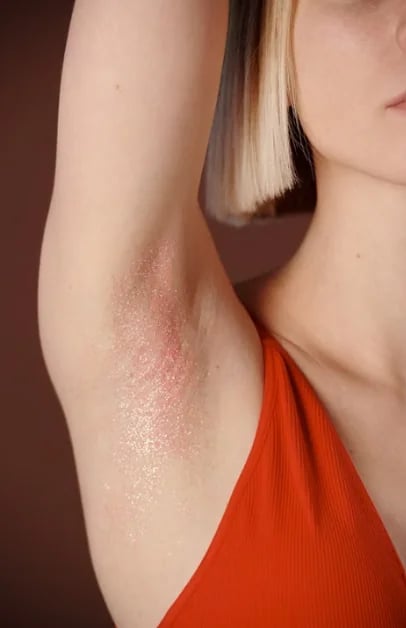
The beard is the most androgen responsive area, and slower growth or patchiness is often the earliest visible sign of a drop in androgen effect, though genetics set a wide baseline. Underarm and pubic hair respond at relatively low androgen levels, which is why they develop early in puberty. Their loss in adulthood is therefore worth noting, and the clinic’s separate guides on pubic hair loss and on losing armpit hair explain what tends to cause it and when it matters. Chest and abdominal hair need higher thresholds and develop later, and they vary the most between individuals. Back and shoulder hair are the most variable of all and the least informative as a hormonal signal.
Limb hair behaves differently. Hair on the arms and legs is less androgen dependent than hair on the trunk, so changes there are more likely to reflect circulation, friction, thyroid status or aging than a shift in testosterone. The eyebrows, especially the outer third, are a classic place to look for thyroid changes. And the scalp, as discussed, runs on its own rules.
Taken together, a useful rule is that losing the most sensitive areas first and the least sensitive last is consistent with a gradual fall in androgen effect, whereas a patchy or unusual pattern points elsewhere. The loss of beard and underarm hair with preserved leg hair, for example, tells a different story from a bald patch on one shin.
One more scenario deserves mention, because it explains many unusual presentations. Anabolic steroids, over-the-counter prohormone supplements and unsupervised testosterone use can all change body hair, acne, voice and breast tissue, and then suppress the body’s own production when stopped. A man who has used these and then notices hair thinning, shrinking testicles or low drive after stopping has a recovery question, not a mystery. Honest disclosure to the physician matters, since the testing and the plan are quite different. Women exposed to androgens through supplements, creams applied by partners or prescribed treatment can develop hirsutism and a deeper voice, and these effects can persist if exposure continues. In either case the first step is to stop guessing and to measure.
The practical lesson is that a hair change is a prompt for questions about everything that touches hormones: medications, supplements, creams, training habits and recent health events. The best clinicians ask all of them without judgment.
Because hair is such a sensitive tissue, many causes beyond testosterone can change it, and a surprising number are more common than low testosterone.
Thyroid disease is a classic mimic. An underactive thyroid slows hair growth and can cause diffuse thinning of body hair and the outer part of the eyebrows, with dry, coarse skin, fatigue and weight gain. An overactive thyroid can also cause hair thinning. A fuller discussion of what to measure appears in the clinic’s article on thyroid labs beyond TSH.
Iron deficiency and low ferritin are very common causes of increased shedding, particularly in women, and zinc and protein deficiency can contribute. Crash dieting, rapid weight loss and restrictive eating can all produce temporary shedding.
Telogen effluvium is a diffuse shedding that follows a physiological stressor such as a serious illness, high fever, surgery, major emotional stress or a sharp change in weight, and appears roughly two to three months after the event. It usually resolves on its own once the trigger has passed.
Alopecia areata is an autoimmune condition producing round, patchy loss of hair, which can affect body hair as well as the scalp and beard. It is not a hormone problem.
Friction causes localized loss. Tight socks, leg wraps, backpacks and clothing that rubs repeatedly can wear hair away in the same spot. Fungal infections of the skin, certain medications, chemotherapy and radiation can also affect hair.
Liver disease deserves a special mention. Cirrhosis can alter hormone metabolism so that estrogen effects increase, and a pattern of loss of chest and underarm hair with small red spider-like vessels on the skin and breast enlargement in men is a recognized sign. It is uncommon, but it illustrates why unexplained hair change is worth a physician’s attention.
Circulation can also play a role. Loss of hair on the lower legs, especially when accompanied by cool, shiny, pale skin, cramping in the calves with walking or weak pulses in the feet, can indicate reduced blood flow from peripheral artery disease and should be evaluated, particularly in people who smoke or have diabetes or high cholesterol.
In older adults, hair patterns shift for ordinary reasons. Hair on the legs and arms often thins with age, whereas hair on the ears, nose and eyebrows may become coarser as local androgen effects change. These shifts are normal and are not by themselves a sign of hormonal disease.
The relationship between testosterone and hair is easiest to see in men who start treatment. When testosterone is raised in someone who was truly deficient, body hair growth often increases gradually. Because hair grows slowly, changes unfold over months and may continue for a year or more. Beard growth tends to respond sooner than chest or back hair. Treatment can also unmask or accelerate male pattern hair loss in men who are genetically predisposed, because the scalp response runs in the opposite direction.
This is useful for both patient and physician. It shows that the effect on hair depends on baseline sensitivity, and it explains why the same treatment produces different results in different men. It is also a reason to discuss hair goals before beginning therapy. A man who is concerned about scalp hair should say so, because there are ways to monitor and manage it.
The clinic’s men’s health approach lists several delivery methods, including creams or gels, self-administered injections and pellets, and the choice influences how smooth or variable hormone levels are over time. The article on testosterone pellets compared with shots and the overview of what to expect from testosterone shots describe what patients can anticipate, including the timeline over which changes appear. Men on treatment are rechecked at regular intervals, about every three months at this practice, because dosing is adjusted to lab results and symptoms, not to appearance.
Hair responds slowly, and mood, energy and libido typically change first. A patient who judges treatment by whether his chest has filled in after a month will be disappointed. Hair is a late indicator.
The question reverses in women, because even small amounts of androgen can produce visible effects in sensitive follicles. Hirsutism is the growth of coarse, dark hair in a male pattern in women: the upper lip, chin, jawline, chest, lower abdomen, inner thighs and back. Clinicians gauge it with a standardized scoring system that rates nine body areas.
The most common cause by far is polycystic ovary syndrome, which also brings irregular periods, acne, scalp thinning and, often, insulin resistance. Other causes include non-classic congenital adrenal hyperplasia, thyroid and prolactin disorders, certain medications and, rarely, tumors of the ovary or adrenal gland. Rapid onset, particularly over a few months, with deepening of the voice, clitoral enlargement or severe acne, is a warning that needs prompt evaluation, because it suggests a high androgen level from a source that needs to be found.
Two other points matter. Some women have more body and facial hair on a purely genetic or ethnic basis, with normal hormones, and their pattern is stable over decades. This is not a disorder. And hypertrichosis, a generalized increase in fine or coarse hair not confined to androgen dependent areas, is a separate phenomenon caused by medications, metabolic conditions or inheritance.
Loss of body hair in women has its own list of causes, including thyroid disease, iron deficiency, menopause related changes and autoimmune conditions. Menopause brings a drop in estrogen and a relative shift in the androgen balance, which can lead to finer hair on the scalp and slightly coarser hair on the chin, an arrangement that surprises many women. The practice’s menopause care page and its article on testosterone therapy for women discuss how hormone balance is evaluated in this stage of life, and the article on hair falling out in hormonal patterns shows where changes tend to appear first.
When body hair changes are part of a larger picture, the evaluation follows a logic that makes the results interpretable.
The history comes first. A clinician will want to know the timeline, what else has changed, family patterns, medications and supplements, weight changes, sleep, alcohol use, athletic training, illness and stress. Many hair complaints are explained here without any test.
Physical examination looks at the distribution and texture of hair, the skin, thyroid, breast tissue in men and testicular size where relevant, and signs of conditions such as insulin resistance.
Laboratory testing for men typically measures total testosterone, free testosterone, sex hormone binding globulin, luteinizing hormone, follicle stimulating hormone, estradiol and often prolactin and thyroid hormones. Because testosterone is highest in the morning and varies day to day, a diagnosis of low testosterone generally requires low values on at least two separate morning tests, rather than a single reading. The practice’s workup, described in its men’s health evaluation and in the article on what a full men’s health workup covers, includes total and free testosterone, luteinizing hormone and estradiol, with thyroid function added in some cases.
For women, testing depends on the picture and may include total and free testosterone, DHEA sulfate, 17-hydroxyprogesterone, prolactin, thyroid studies, and markers of insulin resistance, with timing relative to the menstrual cycle considered.
For both sexes, a complete blood count, ferritin, a metabolic panel and vitamin D are commonly added when shedding or thinning is the concern. Questions about preparation, including whether fasting is needed, are answered in the guidance on fasting before blood panels. Hormone tests generally do not require it, though some metabolic tests do.
DHT itself is rarely helpful to measure for body hair questions, because blood levels do not reflect what is happening inside the follicle, which is the whole point of the earlier discussion.
Even with good data, interpretation requires judgment. A testosterone value must be read against the lab’s own reference range and against symptoms. Ranges vary between laboratories, and a value near the boundary between low and normal may mean different things in different people. Free testosterone and sex hormone binding globulin help explain cases where total testosterone looks acceptable but the usable fraction is low.
Normal results are as informative as abnormal ones. If testosterone is solid and thyroid, iron and ferritin are fine, the explanation is probably genetic, age related or related to local factors, and no hormone treatment is warranted. A clinician who tells you that your hair is not a hormone problem has done you a service. Conversely, abnormal results should be repeated before decisions are made, since single values can mislead.
Treatment, where indicated, targets the cause. Low testosterone is addressed with an approach that fits the person’s goals, including fertility. Thyroid disease is treated with thyroid medication. Iron deficiency is corrected. Autoimmune conditions are handled by an appropriate specialist. Polycystic ovary syndrome is managed with attention to insulin resistance and, where needed, medicines that reduce androgen effects. None of these uses body hair as the target, and none is a reason to chase the appearance of hair for its own sake.
A few ideas keep resurfacing.
Shaving does not make hair grow back thicker or darker. The blunt tip of a cut hair feels coarser as it emerges, and that is all. Laser and electrolysis reduce hair through damage to the follicle, not through hormonal change.
Having a lot of body hair does not mean you are more masculine in any medically meaningful sense, and having little does not mean you are deficient.
Supplements marketed as testosterone boosters do not reliably raise body hair, and most do not reliably raise testosterone. Anyone with symptoms should be tested rather than self-treating.
Losing a little hair with age is not a disease. The line between normal aging and a treatable condition is drawn by the pattern, the speed and the associated symptoms.
Topical products for body hair growth are rarely effective. Where growth is a goal, the question to answer first is why it has changed.
The weeks between noticing a change and getting results are a good time to remove the avoidable variables. Eat enough protein and do not crash diet, because rapid weight loss alone can trigger shedding. Sleep seven to nine hours, since poor sleep lowers morning testosterone and worsens nearly every hormonal symptom. Cut back heavy alcohol, which suppresses testosterone and disturbs liver hormone handling. Review everything you take, including supplements and over-the-counter products, and bring the labels to the visit.
Avoid starting a testosterone booster, a hair growth tablet or an online hormone product before testing. Doing so can change the numbers and cloud the picture, and it can mask a problem that deserves a proper diagnosis. If you are already on a prescribed treatment, do not change the dose on your own because of hair. Hair follows hormones slowly, and the right adjustment is based on labs and symptoms, which is why monitoring is scheduled at set intervals.
Finally, resist the urge to compare yourself with strangers, or with photographs of men who may be genetically very different. The only comparison that carries information is you against your own earlier self.
If you are noticing a change, a few steps make the conversation productive. Note when it began and how fast it has progressed. Take dated photographs of the affected areas, because memory is unreliable and the comparison is helpful. List medications, supplements and recent illnesses, weight changes or major stressors. Note any other symptoms, even ones that seem unrelated, such as changes in sleep, sweating, energy, sex drive, mood or skin, since the clinic’s articles on testosterone and fatigue, low testosterone and acne, and high testosterone and sweating show how widely hormone shifts can be felt.
A physician can then decide what to test and in what order. At Liondale Medical, Dr. Lionel Bissoon, a D.O. who practices anti-aging and bioidentical hormone medicine on Manhattan’s Upper West Side, evaluates men and women with this kind of picture, beginning with testing so that treatment is based on results and symptoms rather than assumptions. If you want to look at your own pattern, you can book a consultation and bring your photographs and timeline.
The practical conclusion is a modest one. Body hair is an interesting, imperfect clue about hormones, and its message depends on the person reading it. For most people, the amount of hair on their chest is mainly a family trait. For a smaller group, a change in the pattern is the first visible sign of something worth finding, and for that group a morning blood test is a faster and more reliable answer than any amount of staring in the mirror.
Not reliably. Hair density depends mostly on how sensitive the follicles are to androgens, which is largely inherited, not on how much testosterone circulates. Men with the same level can look very different.
No. Genetics and ancestry strongly influence body hair. Many men with normal or high testosterone have sparse chest hair, while some men with low levels are hairy.
DHT thickens hair in androgen dependent body areas but shrinks genetically sensitive scalp follicles. The same hormone can therefore produce opposite effects in different regions.
When it is progressive over months, especially with slower beard growth, low libido, fatigue, muscle loss, breast changes or smaller testicles. Those combinations justify testing.
Long-standing low testosterone can reduce body and beard hair growth. Thyroid disease, iron deficiency, stress, illness, friction and autoimmune conditions can also cause it, so testing helps tell them apart.
It often increases body hair gradually over months, depending on follicle sensitivity. It can also accelerate scalp hair loss in men who are genetically predisposed, so discuss hair goals beforehand.
Hirsutism is most often caused by polycystic ovary syndrome, but thyroid and adrenal conditions, medications and genetics can contribute. Rapid onset with a deepening voice needs prompt evaluation.
Sometimes. Hair loss on the lower legs with cool, shiny skin, calf cramping on walking or weak foot pulses can reflect peripheral artery disease and should be checked, especially in smokers or people with diabetes.
For men, typically total and free testosterone, SHBG, LH, FSH, estradiol, prolactin and thyroid tests. For women, testosterone, DHEA sulfate, 17-hydroxyprogesterone, prolactin and thyroid studies are common.
Hormone tests generally do not require fasting, though morning timing matters for testosterone. Metabolic tests such as glucose and lipids may need fasting, so follow the instructions for the specific panel.
No. A cut hair has a blunt tip that feels coarser as it grows out, but its thickness and color do not change.
Often yes. Leg and arm hair commonly thin with age while hair in the ears, nose and eyebrows can become coarser. Sudden or unusual change is worth a medical check.
This page was written and medically reviewed by Lionel Bissoon, D.O., founder of Liondale Medical. Dr. Bissoon is a board-certified osteopathic physician specializing in anti-aging and concierge medicine on the Upper West Side of Manhattan.
This content is for educational purposes only and does not constitute medical advice. Individual results may vary. Consult a qualified physician before beginning any new treatment.
Published