NAD+ IV Therapy: How It's Different From a Standard Vitamin Drip
How NAD+ IV therapy differs from a standard vitamin drip: mechanism, infusion time, what it targets, and candidacy. Liondale Medical, NYC.

Type "how does NAD+ work" into a search bar and you will find two kinds of answers. One is a paragraph of biochemistry that assumes you remember your college textbook. The other is a list of benefits that skips the biochemistry and goes straight to energy, focus and youth. Neither helps a person who is trying to decide whether an NAD+ infusion is worth a conversation with a physician.
This article tries to bridge the gap. It follows one molecule through the jobs it does in a cell, explains why scientists think its availability changes with age, separates what is well established from what is still a hypothesis in humans, and then looks at what delivering NAD+ by infusion is and is not designed to do. It is written for patients in New York who are curious, and it does not promise outcomes.
A short warning about tone. NAD+ is one of the better understood molecules in biology and one of the more over-marketed ones in wellness. Both statements are true at once, and a useful explanation has to hold both.
When people ask how NAD+ works, they are usually asking something else: does it do anything for me, and is that thing real? The honest route to an answer is to ask what the molecule does in the body, where its supply comes from and goes, what changes over a lifetime, and whether changing it from the outside has been shown to matter.
Those are four separate questions, and the evidence for each is of a different strength. The chemistry is settled. The age-related decline is well documented in animals and variably documented in people. The idea that raising levels improves human health is being tested, with some encouraging early signals and many open questions. Keeping the questions apart makes the rest of the discussion easier to follow. It is also the standard that serious anti-aging medicine has to meet, because a field that sells hope has a particular duty to separate the settled from the speculative, and to say plainly which is which.
NAD+ stands for nicotinamide adenine dinucleotide. Every living cell makes it, and it exists in a pair of related forms that swap back and forth: NAD+ and NADH. The easiest way to picture it is as a shuttle that carries small packets of energy between chemical reactions. Think of a delivery van that makes the same circuit all day, loading at one depot and unloading at another, and is never used up in the process. NAD+ picks up electrons in one reaction and becomes NADH, then drops them off in another and returns to being NAD+.
That ability makes it a coenzyme, a helper without which many enzymes cannot work. Hundreds of reactions in the body depend on it. It is not an exotic compound introduced by the wellness industry. It is part of the machinery of every cell you have, and it is built from vitamin B3 in its various forms.
The fact that it is everywhere is also the source of a common misunderstanding. Because NAD+ is involved in so many processes, claims about it can be stretched to cover nearly anything. The more careful approach is to look at the specific jobs it performs and ask which of them plausibly matter for aging.
The best known role is in energy production. When your cells break down glucose and fats, they pass electrons along a chain of reactions that ends in the mitochondria, the small structures that convert fuel into ATP, the usable energy currency of the cell. NAD+ is the carrier that collects those electrons from the early steps and delivers them to the final machinery.
Cells track the ratio between the oxidized and reduced forms closely, because that ratio acts as a gauge of energy status and tells enzymes whether to speed up or slow down. Without enough NAD+, the early steps slow down and the supply of ATP suffers. This is the reason NAD+ is so often associated with energy and with fatigue. The link is real at the level of cell biology, but it is not as simple as saying that more NAD+ means more energy. Cells keep a tightly regulated balance between the oxidized and reduced forms, and tissues differ in how much they depend on each pathway.
It also helps to know that fatigue in a living person has many causes, most of which have nothing to do with NAD+. Sleep, thyroid function, hormones, anemia, mood, medications and ordinary overwork all produce the same symptom, and a physician sorts through them before attributing tiredness to any single molecule. People who feel worn down will find a useful frame in the discussion of fatigue and whether an infusion might be part of the answer.
Here the picture changes from a carrier that is reused to a molecule that gets spent. A family of enzymes called PARPs respond to DNA damage. When a strand of DNA breaks, a PARP enzyme binds to the site, uses NAD+ as raw material to build a signal that recruits repair machinery, and in the process consumes the molecule.
Under ordinary conditions, this is fine, because cells regenerate what they use. When damage is heavy, from sun exposure, toxins, inflammation or simply years of accumulated wear, the demand can be large. Researchers have proposed that persistent damage draws down the available pool of NAD+ and leaves less for other jobs. The idea is plausible and has support in laboratory studies, though how far it explains aging in people is still being worked out.
This is one of the places where a loose slogan, that NAD+ repairs DNA, hides a subtler truth. NAD+ does not repair DNA. It supplies a tool that the repair enzymes use. If the repair demand is high and the supply is low, the system can become strained. If the supply is adequate, nothing is gained from adding more. The relationship is about balance, and it is worth remembering when someone describes a supplement as a repair treatment.
The third job is the one that has made NAD+ a subject of longevity research. Sirtuins are a family of seven enzymes in humans that regulate gene activity, stress responses, metabolism and the cell's internal clock. They remove small chemical tags from proteins, and they can only do so when NAD+ is available to power the reaction.
That dependence ties sirtuin activity to the cell's energy state. When energy is plentiful and NAD+ is abundant, sirtuins are active. When NAD+ is scarce, they are not. In animals, sirtuin activity has been linked to metabolic health, stress resistance and in some experiments to lifespan, which is why the pathway attracted attention from researchers in aging. The brain is one of the areas of interest, and the broader argument for acting early on brain health is laid out in the case for Alzheimer's prevention.
The step from animals to human aging is where caution belongs. Sirtuins are real, their dependence on NAD+ is real, and their biology is genuinely interesting. Whether nudging them in a middle aged person produces measurable health benefits is a question trials are still trying to answer. This is a hypothesis with a plausible mechanism and some preliminary data, not a demonstrated treatment for aging.
If there is a villain in this story, it is an enzyme called CD38. It sits on the surface of many immune and other cells, and it breaks down NAD+ as part of calcium signaling and immune activity. In research on aging, CD38 activity has been found to rise with age and with chronic low grade inflammation, and studies in animals suggest it may be a major reason NAD+ levels fall in older tissues.
That finding reframes the question. If NAD+ levels decline in part because an enzyme is consuming more of it, then simply adding more may be a partial answer, since the drain continues. It also links NAD+ to something much broader than a single supplement or infusion: the inflammatory state of the body. Systemic inflammation, which has many sources including diet, sleep, body composition, infection and gut function, may influence how much NAD+ is available.
That connection is one reason physicians interested in longevity look at the whole picture. The relationship between inflammation and the digestive tract, for instance, is part of the case made in the discussion of gut health, and it points to a general principle: levels of a molecule reflect the conditions around it, and conditions can often be improved at their source.
Cells do not receive NAD+ from a single supply. They build it through three routes, and the balance among them shifts with the tissue and the circumstance.
The first route builds it from the amino acid tryptophan, a slow, multistep process that happens mainly in the liver. The second uses nicotinic acid, one form of vitamin B3. The third, and in most tissues the most important, is the salvage pathway, which recycles nicotinamide, a byproduct of the reactions that consume NAD+, back into the molecule. The rate limiting enzyme in that recycling loop is called NAMPT, and its activity declines in some aging tissues.
Two related compounds, nicotinamide riboside and nicotinamide mononucleotide, enter the same pathways and are sold as supplements. Studies in people have shown that oral nicotinamide riboside raises blood NAD+ measurements. What those increases mean for health, in the studies completed so far, is less clear, and results have been modest or mixed depending on the outcome. The thing to keep in mind is that a higher number in blood is a biochemical result, not necessarily a clinical benefit.
The claim that NAD+ falls with age appears in almost every article on the subject, and it deserves a careful look. In animals, particularly rodents, tissue NAD+ levels decline in many organs with age, and the decline is associated with metabolic and functional changes. In humans, the evidence is more varied. Some studies have found lower NAD+ in older people's tissues or blood, while others have found less change, and measuring NAD+ accurately in a living person is technically difficult because levels differ among tissues and blood is only a proxy.
The reasonable summary is that a decline is likely but not uniform, that its size differs between people, and that blood levels are an imperfect guide to what is happening inside muscle, brain or liver. Anyone who tells you precisely how low your NAD+ is, from a single test, is overstating what current methods can do.
This is also why the argument for NAD+ support is often framed less as correcting a measured deficiency and more as supporting a pathway that is under strain in aging. That framing is reasonable as a hypothesis. It is not equivalent to treating a lab-proven deficiency, and it should not be presented as such.
Before any infusion enters the conversation, it helps to know how much of the NAD+ economy is governed by ordinary behavior. Regular exercise, both endurance and resistance training, raises the activity of the recycling enzyme in muscle and improves the number and quality of mitochondria. Sleep and a regular daily rhythm matter because sirtuins and the body clock influence each other, and disrupted sleep is associated with disordered metabolism. Constant eating keeps metabolic load high, while periods of lower intake shift cells toward pathways that depend on NAD+.
None of this is glamorous, and none of it can be sold, which is why it is underrepresented in articles about the molecule. The short list of daily habits that Dr. Bissoon has shared covers much of this ground, and a person who has not addressed sleep and movement is unlikely to get the most from any other step.
NAD+ is a large, charged molecule. It does not slip easily across cell membranes. Taken by mouth, it is largely broken down in the gut and the liver before it reaches tissues, and the fragments are reassembled according to need. Outside cells, enzymes break the intact molecule into precursors that cells can take up and rebuild.
This is the basic reason precursors such as nicotinamide riboside exist: they are small and travel well. It is also the reason infusions are a topic of debate. When NAD+ is delivered intravenously, a portion is broken down in the bloodstream and the pieces are taken up and reused, and the extent to which intact NAD+ enters cells is not fully settled. What is measurable is that blood levels rise during and after an infusion, and many patients report how they feel. What is harder to prove is exactly how much reaches which tissue and what that does over time.
Delivery speed matters, too. Patients receiving infusions commonly describe sensations such as flushing, pressure in the chest or abdominal cramping when the rate is too fast, which is why a slow, supervised infusion in a medical setting is the norm. That tolerance profile is one of the practical differences between a physician supervised infusion and a product taken at home, and a good clinic adjusts the rate to the patient.
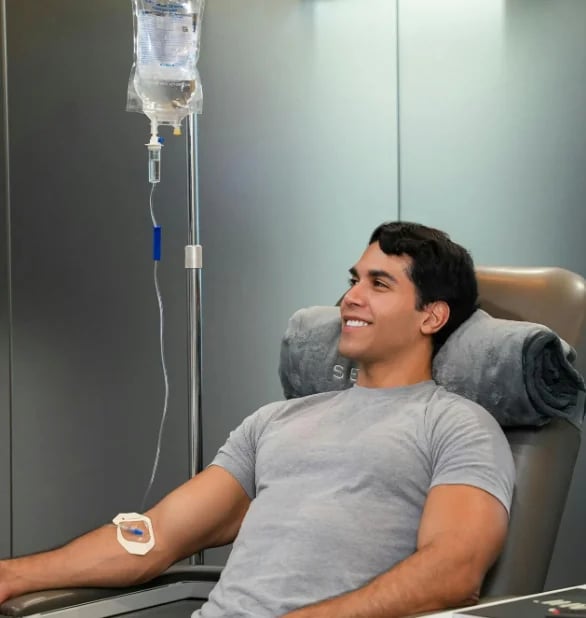
Given all this, what is a reasonable way to think about an NAD+ infusion? As a way to deliver a pathway substrate directly into the circulation, bypassing the digestive tract, under medical supervision, for people whose physician believes support of this pathway is appropriate. Some patients report improvements in energy, clarity and general wellbeing, and the experience can be meaningful to the person having it. A summary of what patients commonly look for, and what the practice describes, appears in the overview of NAD+ benefits.
What an infusion is not is a proven treatment for aging, a replacement for sleep, exercise or medical care, or a standalone fix for fatigue. It is not a treatment for a specific disease, and it is not a guarantee of any result. A physician who is honest about this will describe it as one possible input into a larger plan, and will measure whether the plan is working instead of assuming it is.
It is also worth remembering what the placebo effect can do. Receiving a carefully administered treatment in a calm setting, with attentive staff and time set aside for yourself, can make people feel better regardless of the contents. That is not a criticism, since feeling better matters, but it is a reason to judge any therapy by more than how an afternoon felt.
Patients often ask when they will feel a difference, and the honest answer is that it varies. Some describe a change in the days after an infusion, others after several sessions, and others notice nothing. Because the experience is subjective and expectations are strong, it is sensible to agree in advance on a defined trial, say a short series of sessions, with a list of what will be tracked: energy through the day, sleep quality, exercise recovery, mood and any laboratory markers the physician considers relevant.
At the end of the trial, the question is simple. Is there a change that matters to you, and does it justify continuing? If so, the plan can be refined. If not, stopping is a reasonable and respectable result. A good clinic is as comfortable with the second answer as with the first.
The mechanisms above connect to several other approaches, and understanding the connections helps place NAD+ in context. Exercise stimulates NAMPT and mitochondrial function in muscle, and keeping that muscle matters more with every decade, which is the heart of the work on frailty. Sleep affects the circadian systems that sirtuins help regulate. Caloric intake and fasting patterns influence NAD+ metabolism. Body composition and inflammation influence CD38. Hormone balance affects energy metabolism, which is why signals of hormonal aging often overlap with the complaints that lead people to ask about NAD+.
Other therapies work through different routes. Plasma exchange removes and replaces circulating plasma and addresses what travels in the blood. Ozone therapy works through oxygen and oxidative signaling. Regenerative approaches focus on tissue repair and the body's cell based responses. Each has its own mechanism, its own evidence base and its own appropriate candidates, and they are not interchangeable.
This is also where the simplest habits remain the strongest, and they are the foundation on which any additional therapy should rest.
People who read about longevity medicine often come away wanting to do everything at once: an infusion, a precursor supplement, an exercise change, a fasting schedule and a new hormone plan. The impulse is understandable, and the result is often a situation in which nobody can tell what is helping. A physician generally prefers to change one or two things at a time, so that effects can be attributed and side effects traced.
Different therapies also answer different questions. Even closely related ideas, such as plasma exchange, act on the blood instead of on a cellular pathway. Ozone therapy works through oxidative signaling and circulation. Regenerative approaches aim at tissue repair. Hormone care addresses signaling in the endocrine system. NAD+ support targets a metabolic pathway. Choosing among them depends on what is wrong, what has been tested and what the patient is prepared to do, which is why a plan built from laboratory findings usually beats one built from a menu.
A person who walks into a practice asking for NAD+ because they read about it online is starting with a solution. A physician starts with a question: what is going on with this person's energy, sleep, metabolism, hormones and inflammation, and what does the evidence say about the best ways to address each?
In a practice built around precision diagnostics, that means laboratory testing, a thorough history and a plan that is revisited. Dr. Bissoon approaches this as part of the Human Refinement program, where treatment choices follow from what is found. In that context NAD+ may be one tool, used when it fits, monitored for effect and stopped if it does not help.
That structure is also what the concierge model is meant to make possible. Time to listen, to test and to follow up is what turns a therapy from a product into a medical decision. The difference may sound abstract, but in practice it shows up in whether anyone checks, a few weeks later, whether you are actually better.
Most healthy adults tolerate slow NAD+ infusions well, but tolerance is not universal, and a medical review comes first. Pregnancy and breastfeeding call for caution. People with certain cancers, active infections, cardiac or kidney conditions, or those taking medications that could interact should talk to their physician before starting. Research on NAD+ metabolism in cancer cells is an active and unsettled area, which is one more reason a history of cancer should be discussed openly and not assumed to be irrelevant.
The general safety rules of IV therapy apply as well: sterile technique, trained staff, appropriate screening, monitoring during the infusion and a clear plan for what to do if something feels wrong. Anyone who is uncomfortable during an infusion should say so at once. Slowing the rate usually resolves the common sensations, and a clinic that treats that feedback as useful information is a clinic worth trusting.
A few habits make it easier to read what is written about NAD+, including this article. Notice whether a statement concerns a cell or a person. Many headlines describe results in cultured cells or mice and present them as human findings. Notice whether a result is a number or a feeling. A rise in a blood marker is not the same as a rise in function. Notice the size of the study, whether there was a control group and whether it measured something that matters to you.
Be wary of certainty in either direction. Claims that NAD+ reverses aging are far ahead of the evidence. Claims that it does nothing overstate in the other direction, because the underlying biology is real and the research is active. The accurate position is a conditional one: promising mechanism, preliminary human data, individual variation, and a need for honest monitoring.
Finally, ask what the person making the claim gains. A physician like Dr. Bissoon, who will also tell you when something is unnecessary, is more credible than anyone who recommends the same thing for everyone.
Because the brain is an energy hungry organ and neurons depend heavily on mitochondrial function, researchers have looked at NAD+ metabolism in the context of cognitive aging and neurodegeneration. Animal studies have suggested links between NAD+ pathways and neuronal resilience. Human data are early, and no one should present NAD+ as a treatment or a preventive measure for a brain disease.
What can be said is that supporting energy metabolism, sleep, exercise and vascular health are reasonable parts of a plan for protecting the brain over decades. The same is true of muscle and mobility, where the question is how to stay strong in later decades. NAD+ biology touches these themes, but it does not replace the basics.
The office is on West 74th Street, and the first step is a conversation. You can schedule a visit to talk through your goals and your history, and to find out whether NAD+ belongs in your plan or whether other priorities should come first.
If you are considering NAD+ support, a realistic expectation is modest and individual. Some people notice a change in energy or focus over a series of sessions. Some notice little. Some experience mild side effects during the infusion that resolve when the rate is slowed. A careful physician will set a defined trial period, agree on what you will track, and review the results with you.
The more important expectation is about the process. You should leave a consultation understanding why NAD+ was or was not recommended for you, what else is being done, how progress will be measured and what would lead you to stop. If those answers are clear, the decision is yours to make with good information, and a plan that has been reasoned out in that way will serve you better than any single molecule.
NAD+ is a coenzyme found in every cell. It carries electrons in energy producing reactions in the mitochondria, serves as raw material for DNA repair enzymes called PARPs, and powers sirtuins, which regulate gene activity and metabolism.
Studies in animals show tissue NAD+ declining with age, partly because an enzyme called CD38 rises with age and inflammation and consumes NAD+, and partly because recycling pathways slow down. Human data are less uniform.
The biology is real and the research is active, but NAD+ has not been proven to slow aging in people. It is better described as a pathway under study than as an established anti-aging treatment.
NMN and nicotinamide riboside are smaller precursors that cells convert into NAD+. NAD+ itself is a large molecule that is poorly absorbed by mouth. Precursors raise blood NAD+ in studies, though the health effects are still being worked out.
Some NAD+ is broken down in the blood and the fragments are reused, and how much enters cells intact is still debated. Blood levels rise during infusion, but the effect on specific tissues is harder to measure.
NAD+ is involved in cellular energy production, and some people report feeling more energetic after treatment. Fatigue has many causes, including sleep, hormones, thyroid problems and anemia, so a physician should evaluate it first.
Patients sometimes report flushing, chest pressure, nausea or cramping if the infusion runs too fast, which is why it is given slowly under supervision. Discuss your medical history and medications with a physician beforehand.
Blood tests exist, but levels vary among tissues and blood is only a proxy for what is happening in muscle, brain or liver. A single number should not be treated as a precise measure of your cellular status.
A standard vitamin infusion supplies vitamins and minerals, while NAD+ delivers a specific coenzyme involved in energy metabolism and cellular signaling. The two have different purposes, and a physician chooses based on your needs.
In research, exercise stimulates the recycling pathway and mitochondrial function in muscle, which supports NAD+ metabolism. It is one of the reasons lifestyle remains the foundation of any longevity plan.
Anyone who is pregnant or breastfeeding, has certain medical conditions or takes interacting medications should discuss it with a physician first. A review of your history determines whether it is appropriate.
A physician should agree with you in advance what you will track, such as energy, sleep, laboratory markers or function, and review them after a trial period. If nothing improves, it is reasonable to stop.
This page was written and medically reviewed by Lionel Bissoon, D.O., founder of Liondale Medical. Dr. Bissoon is a board-certified osteopathic physician specializing in anti-aging and concierge medicine on the Upper West Side of Manhattan.
This content is for educational purposes only and does not constitute medical advice. Individual results may vary. Consult a qualified physician before beginning any new treatment.
Published