Blood, Saliva or Urine: Which Hormone Tests Hold Up When a Dose Depends on the Result, and Which Ones Only Look Convincing
A patient arrives with a printout from a mail-in kit. It has colorful bar graphs, a reference band shaded green, and a handful of hormones plotted against it like a weather map. Cortisol is shown at four points across a day. Estrogen and progesterone are listed with their metabolites. The summary at the bottom suggests several supplements. The patient has been told these results prove something. The physician looks at the graph, then at the patient, and starts with an honest question: what exactly was measured, in what, and how?
Hormone testing has become a consumer product, with kits that arrive in a box, collect spit or dried urine or a finger prick of blood, and return a report within days. Some of that testing is perfectly sound for what it measures. Some of it measures something real that has little to do with the decision being made. Some of it is precise about the wrong question. Knowing which is which does not require a laboratory degree. It requires understanding what each sample type can and cannot tell a clinician.
This article goes through the main ways hormones are measured: serum blood tests, saliva, urine, dried urine metabolite panels, finger-prick cards and the occasional hair test. It covers what each is actually good for, where each runs into trouble, how everyday things such as a supplement or the time of day can distort a result, and how a physician decides which tool fits which question. It is general information, and it favors sources that have been studied against a reference standard.
Start with the question, not the test
The first thing that separates a useful hormone test from a decorative one is the question that prompted it. A man with low drive and fatigue is asking whether his testosterone is low and why. A woman in her mid-forties with sleeping problems and irregular cycles is asking whether she is in perimenopause or whether something else is going on. A person with weight gain and a rounded face is asking whether cortisol is excessive. A patient on hormone therapy is asking whether the dose is right.
Each of those questions has an established testing approach, and in most cases it begins with a blood sample. The approach is established because it has been compared with clinical outcomes in studies, because laboratories can be checked against reference materials, and because the ranges used to interpret the results come from large, well-described populations. A test that lacks those properties can still measure something, but a physician who relies on it for a dosing decision is operating without a map.
Serum blood tests: the reference point
Blood is the standard because it has been standardized. Hormones in blood travel in two forms: bound to carrier proteins and free. Total testosterone, for example, includes both, while free testosterone is the small fraction that is not bound and can enter cells. Most circulating testosterone is bound, mainly to sex hormone binding globulin and albumin, and the proportion that is bound varies from person to person. That is why a total value alone can mislead, and why a physician may request sex hormone binding globulin, or a calculated or directly measured free value, to interpret it.
Accuracy depends on the method. For hormones present at high concentrations, standard immunoassays work well. For those at very low concentrations, such as estradiol in men or in postmenopausal women, mass spectrometry is more reliable, because antibody-based tests can cross-react with similar molecules. Laboratories that handle hormone testing well participate in quality programs that compare their results with reference values, and a clinician who orders hormones regularly tends to know which laboratories are consistent.
Blood tests have limits. They capture a moment, and hormones fluctuate: testosterone is highest in the morning, cortisol follows a daily rhythm, and in menstruating women estradiol and progesterone swing across the month. A single draw is a snapshot, which is why timing matters, a point covered further below. And because blood is drawn in a clinical setting, it can be affected by stress, a long wait or the difficulty of the draw itself. Even so, for most decisions about prescribing hormones, serum levels remain the foundation.
Saliva: real hormone, uncertain meaning
Saliva testing is built on a sound idea. Steroid hormones are small fat-soluble molecules that diffuse from blood into saliva, and the amount in saliva reflects the free, unbound fraction. A collection is painless, can be done at home and can be repeated across the day.
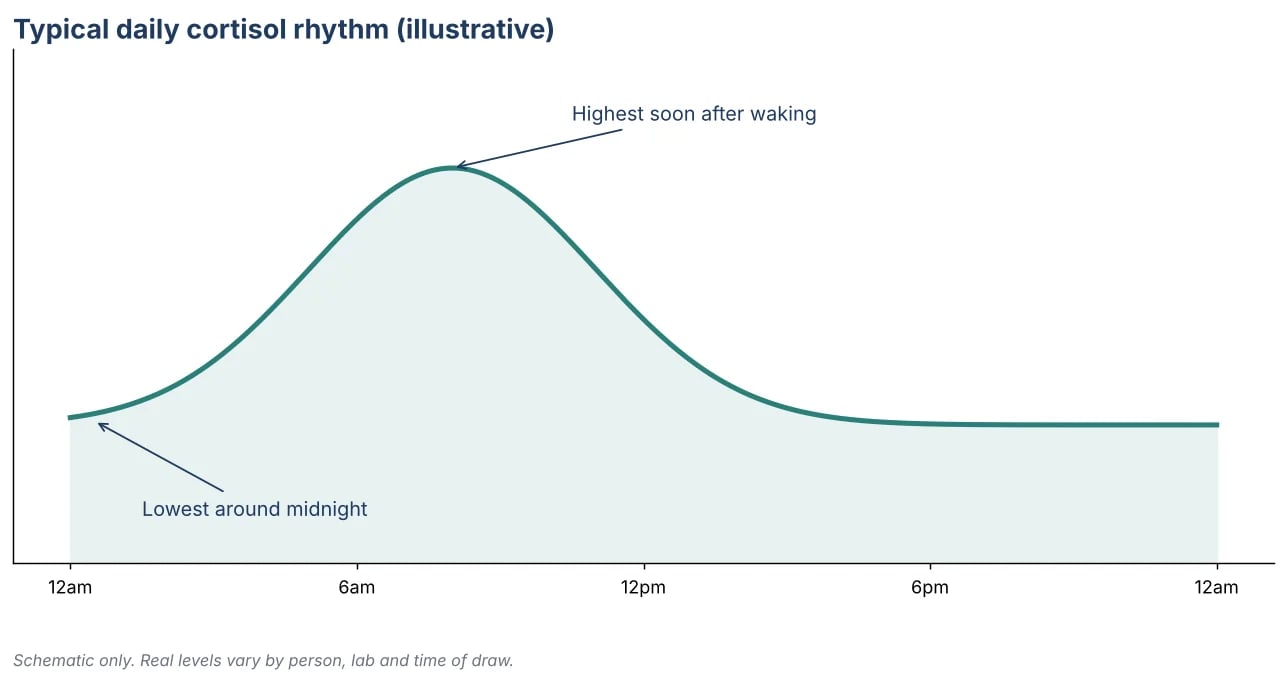
For one application, saliva is established and accepted: late-night salivary cortisol is used as a screening test for Cushing syndrome, a condition of cortisol excess, because cortisol normally falls to a low point at night and an abnormally high level in saliva at that hour is informative. That use has been studied, validated against diagnostic standards and incorporated into guidelines. Beyond that screen, cortisol testing is tangled up with the popular idea of adrenal fatigue, which major endocrine societies do not recognize as a diagnosis.
Outside that use, saliva becomes less reliable. Salivary concentrations of sex hormones are very low and sensitive to contamination and to how the sample is collected. Studies comparing salivary sex hormone measurements with serum values and with clinical outcomes have found poor agreement for several hormones, and results are particularly unreliable for people using topical hormones, where residue on the skin or in the mouth can raise salivary levels without reflecting what the body is exposed to. Saliva has been used to monitor hormone therapy, and many clinics do so, but major professional societies do not endorse it for guiding dosing. A report showing that salivary progesterone is high in a woman who applies a cream says little about whether her uterus is protected.
Urine: a different window altogether
Urine tests come in two broad forms. The older and well-established one is the twenty-four hour urine collection, in which everything excreted is gathered over a day. It remains useful for specific questions, such as measuring free cortisol to screen for Cushing syndrome or assessing certain metabolic disorders, and it is a recognized part of the endocrine toolkit.
The newer form, popular in consumer testing, uses dried urine samples collected on filter paper at several points in a day, which are analyzed for hormones and their breakdown products. These panels report metabolites of estrogen, progesterone, cortisol and androgens, and they come with interpretation that includes comments on estrogen metabolism pathways and risk. The technology behind them, chromatography with mass spectrometry, is sound, and the compounds are being measured correctly. The difficulty lies in what the measurements are taken to mean.
Estrogen metabolite ratios, for example, are marketed as indicators of cancer risk or hormone health. The evidence that ratios measured in urine predict clinical outcomes in individuals, or that changing them improves outcomes, is limited and inconsistent. Urine excretion also depends on kidney function, hydration, the activity of metabolizing enzymes and how a person's body disposes of hormones, which complicates interpretation. Studies directly comparing these panels with outcomes that matter, such as symptom relief or fracture or cancer rates, are scarce. In practical terms, a dried urine test can be an interesting research tool and a prompt for questions, but it is not a validated basis for dosing hormone therapy or for diagnosing a hormone disorder.
Finger-prick cards and dried blood spots
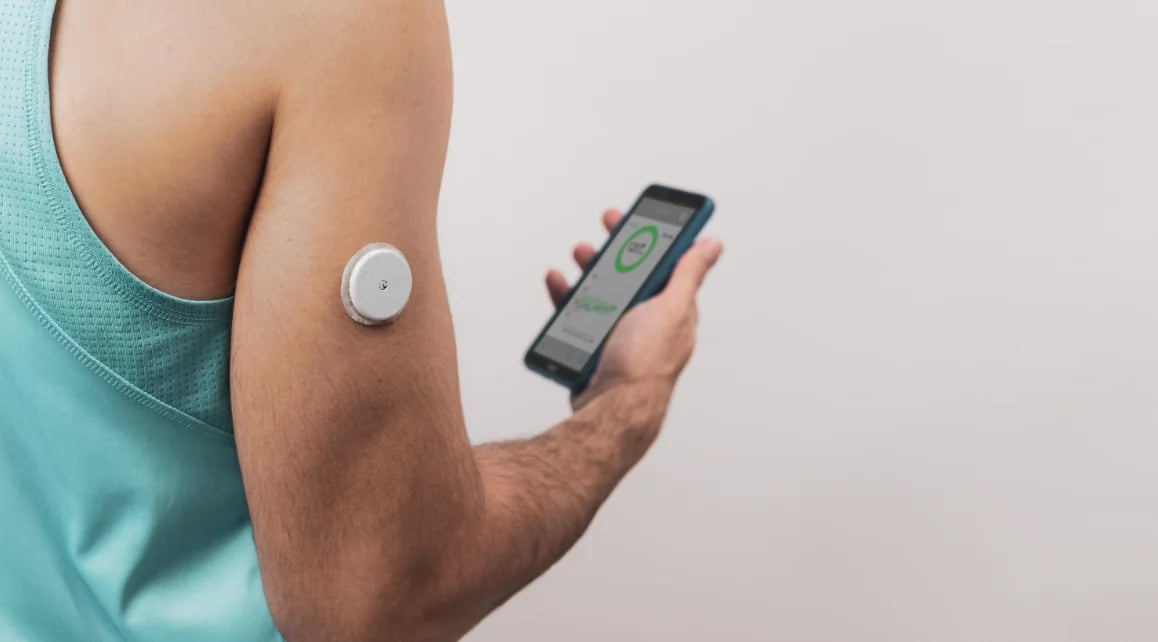
Another category of at-home testing uses a drop of blood from the finger placed on filter paper. Dried blood spot methods are legitimate in many applications, including newborn screening and certain research settings, and they allow measurement without a trip to a lab. The limitations are practical. Small volumes mean less precise results for hormones that circulate at low concentrations. The collection technique affects accuracy: squeezing the finger dilutes the sample with tissue fluid, and the blood has to dry properly. Hematocrit alters how blood spreads on the paper. For most hormones, the correlation with venous serum values is imperfect, and a number from a finger-prick card cannot be interchanged with a clinical lab value without validation.
Convenience matters, and for people who cannot easily reach a draw site such a test may be better than none. But when a decision depends on the result, a standard venous blood draw at an accredited laboratory remains the better default. What happens to a blood sample once it leaves the arm, from handling to analysis, is a large part of why the venous result is trusted.
Hair testing and other outliers
Hair analysis for hormones has attracted interest because hair grows slowly and could reflect exposure over weeks or months. Hair cortisol has been studied as a marker of long-term stress in research settings, and the findings are interesting but variable. Hair products, washing, hair color and environmental contamination affect results, and the relationship between hair cortisol and clinical conditions is not established well enough for individual diagnosis. Sex hormone testing in hair is even less reliable. Other novel specimen types, such as breath or sweat, remain experimental for this purpose.
The pattern across these categories is similar. The technology may be real, and the measurement may be precise. What is missing is the evidence that the result changes a decision for the better.
Timing: the variable most reports ignore
Even the best test fails if it is drawn at the wrong time. Testosterone follows a daily rhythm, peaking in the morning, and a sample taken in the afternoon can read substantially lower, particularly in younger men. Cortisol is highest soon after waking and lowest at night. In women who still menstruate, estradiol, progesterone, luteinizing hormone and follicle stimulating hormone change dramatically across the cycle, and a progesterone drawn on day three is nearly meaningless unless the question is about something other than ovulation.
For men on injectable testosterone, the timing relative to the last dose changes the reading, with levels high a day or two after a shot and lower just before the next; a clinician who wants to know the peak or the trough must specify it, and for treated patients the ester matters, since cypionate and enanthate peak and fall on different schedules and change what any one blood draw means. For women on estrogen patches or gels, the draw may need to be timed after application. Fasting may or may not matter, depending on the hormone and on what else is on the order, and a sensible set of instructions about fasting before blood work avoids needless confusion.
Interference: the supplement that changes the answer
One of the least known sources of error is biotin, vitamin B7, a common ingredient in hair, skin and nail supplements, often in doses far above the daily requirement. Many laboratory immunoassays use a biotin-based chemistry, and high circulating biotin can interfere, producing falsely high or falsely low results depending on the design of the assay. The regulators have issued warnings because it has caused misleading thyroid, hormone and cardiac test results. People who take biotin are usually advised to stop it for several days before blood work, and in any case should tell the physician.
Other everyday influences include recent intense exercise, sleep deprivation, acute illness, alcohol the night before, certain medications such as corticosteroids and birth control pills, which raise binding proteins and change how total hormone values are read, and thyroid medication timing. A good physician asks about all of these. A mail-in report generally does not.
What a report can look like and what it leaves out
A reputable clinical lab report has a few features that are easy to take for granted. It states the method, the reference range and the units. It flags results relative to ranges derived from comparable populations. It comes from a laboratory that is accredited and that participates in external quality checks. It arrives with a clinician who knows the patient.
A direct-to-consumer panel may state ranges optimized, in the report's language, for wellness, and shade them in a way that makes values outside a narrow band appear abnormal. A man whose testosterone is in the middle of the laboratory range may be told he is suboptimal. A woman with normal progesterone may be told she is deficient. The label optimal has no standard definition, and the narrower the band, the more people are classified as needing something. This is not a new form of the marketing instinct, but it is one reason that a careful clinician reads such reports with caution. The gap between standard labs and a more detailed panel is real, but more markers are only better when they answer a question.
When extra testing is justified
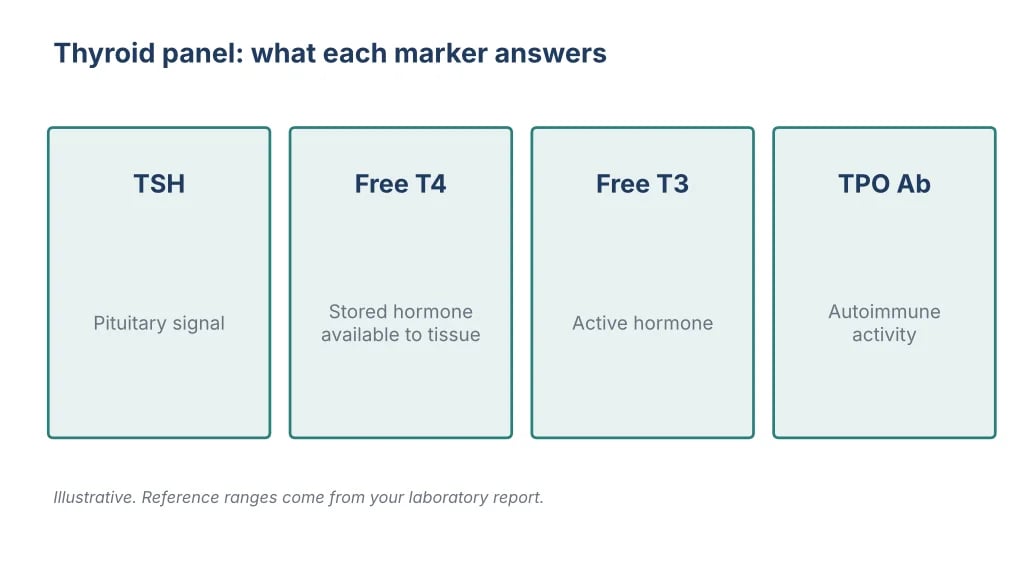
None of this means that more detailed testing has no place. A physician who works with hormones frequently orders more than a single value. A thyroid evaluation that goes beyond thyroid stimulating hormone, a lipid assessment that includes particle measures, and a cardiovascular marker such as lipoprotein(a) can change decisions about treatment and prevention. The key is that each added test has a reason and a plan: what will be done if the value is high, low or normal.
Thyroid testing is a good illustration, since the question of whether a patient's symptoms might come from the thyroid is routine, and a fuller picture than a single marker can help, which is where thyroid labs beyond the standard screen earn their place. What justifies it is clinical suspicion and a defined next step, not the existence of a test that can be ordered.
Hormone therapy and monitoring: where the stakes rise
For patients on hormone therapy, the stakes of a test are different. A result may lead to a higher or lower dose, and the dose affects safety. This is the setting in which unvalidated tests are most concerning. A dose adjusted according to a salivary level that does not reflect tissue exposure can leave a woman with too much or too little hormone relative to what she needs. A dose guided by a urine metabolite ratio can chase a number that has no demonstrated clinical meaning.
Professional societies generally recommend that dosing of menopausal hormone therapy be guided primarily by symptom relief and safety, with blood testing used selectively, such as when absorption is in question or when particular delivery methods are used. For men on testosterone, serum testosterone and hematocrit are the principal monitoring tests. For women who use testosterone, the cautions about measurement are particularly pronounced, since the levels are low and the assays are imperfect, which complicates any testosterone therapy for women. The risks and evidence gaps of menopausal hormone therapy are why numbers alone do not settle the question, as the evidence on BHRT risks makes plain.
Reading a report you already have
If a person already has a mail-in report, a few questions help decide how much weight to place on it. What was the sample type and what method was used? Is the laboratory accredited, and does it participate in proficiency testing? Were the ranges derived from a relevant population, and are they the same as the ranges used by clinical labs? Was the timing appropriate for the hormone being measured? Was anything, such as biotin, a topical hormone or a recent illness, likely to have affected the result? And what decision, specifically, does the report support that a standard blood test would not?
A physician can often use the report as a conversation starter, then confirm anything important with a validated test. Patients who bring the report along are not wasting anyone's time. They are giving a clinician a sense of what concerns them.
Choosing a clinician who tests with a purpose
The most useful sign of good testing is that it has a purpose. A clinician who orders a hormone panel explains why each result is on it, what the plausible findings would mean, and what will follow. A physician-led practice tends to see testing as one input to a decision, and it will usually be able to say why one approach was chosen over another; the difference between physician-led and other models often shows up in precisely this way. A person who wants to begin with a clear plan can arrange a consultation and bring prior results to compare.
Frequently Asked Questions
Is saliva testing accurate for hormones?
It is established for late-night cortisol screening for Cushing syndrome. For sex hormones, agreement with blood levels is poor, and professional societies do not endorse saliva for guiding hormone therapy dosing.
Are dried urine hormone panels reliable?
They measure real compounds accurately, but the evidence that metabolite ratios predict outcomes or should guide treatment is limited. They are better treated as a prompt for questions than a basis for dosing.
Why do doctors prefer blood tests for hormones?
Blood tests have been standardized against reference methods and compared with clinical outcomes, and their ranges come from well-described populations. Timing and method still matter.
Does biotin affect hormone test results?
Yes. High-dose biotin from hair and nail supplements can interfere with many immunoassays and produce falsely high or low results. Ask your physician how long to stop it before testing.
When is the best time of day to test testosterone?
Usually in the morning, when levels are highest, and often on more than one day to confirm a low result. Men on injections may need the draw timed to a specific point in the cycle.
Can I use a finger-prick home kit instead of a lab?
For convenience it may be better than none, but small samples and collection technique reduce accuracy for many hormones. A venous draw at an accredited laboratory is the better choice for decisions about treatment.
What should I bring to a visit if I already did a mail-in test?
The full report, the name of the laboratory and the sample type, plus a list of supplements and medications. Your physician can decide which results to confirm with a standard test.
This page was written and medically reviewed by Lionel Bissoon, D.O., founder of Liondale Medical. Dr. Bissoon is a board-certified osteopathic physician specializing in anti-aging and concierge medicine on the Upper West Side of Manhattan.
This content is for educational purposes only and does not constitute medical advice. Individual results may vary. Consult a qualified physician before beginning any new treatment.
Cortisol testing can reveal real hormone problems, but adrenal fatigue is not a diagnosis. Learn when a morning cortisol test helps and what it cannot show.