Men's Health Specialist in NYC: What a Full Workup Actually Covers
A men's health specialist looks beyond testosterone. See what a thorough workup covers after 40, from heart risk and sleep to labs, and how to choose a doctor.

There is a joke that goes around men's health circles: women get menopause, men get a mortgage. It lands because it points at something real. Around midlife, many men notice that sleep is worse, the belly is bigger, the gym is less rewarding, desire is lower and the mood is flatter. They look for an explanation, and the internet offers one with a catchy name. Andropause. Male menopause. Low T.
Whether any of those labels fits depends on what is going on in the body, and the honest answer is that it varies enormously between men. Testosterone does decline with age, one of several ways hormones aging shows up in daily life. For a minority of men the decline goes far enough to cause a recognizable syndrome. For a much larger group, the symptoms that sent them searching have other causes, most of which are fixable and none of which a hormone injection will touch.
This guide goes through the decades one at a time, because what is normal at thirty-five is different from what is normal at sixty-five, and because the right question changes with age. It explains why the word andropause is controversial, what clinicians actually diagnose, which symptoms point to the hormone and which point elsewhere, and how a man in New York can tell when it is worth seeing a doctor who specializes in this.
Menopause is an event. Over a few years, a woman's ovaries stop releasing eggs, estrogen and progesterone fall steeply, periods end and the change is unmistakable and universal. Male aging does not work this way. There is no moment when the testes shut down. Testosterone declines gradually, on average by a small percentage each year after the thirties or forties, and many healthy men keep levels in the normal range into old age.
That difference is why many endocrinologists dislike the word andropause. It implies a universal, abrupt event that does not exist. The term most clinicians prefer is late-onset hypogonadism, which describes a specific condition: low testosterone, together with symptoms, appearing in later life. The condition is real, but it affects a minority of men. In a large European study that followed thousands of men aged forty to seventy-nine, symptomatic late-onset hypogonadism was found in only a small percentage of them, far fewer than the number of men who had some symptoms and far fewer than marketing implies.
That does not make the word useless. Patients use it, it captures an experience many men recognize and it brings them into the office. A physician can work with it, provided the conversation moves quickly from the label to the measurement. Anyone who diagnoses andropause from symptoms alone, without testing, is guessing. And a man who is told that his symptoms are just aging, without anyone checking his testosterone, thyroid, glucose or sleep, is being short-changed in the opposite direction.
Guidelines from endocrinology and urology societies agree on the basic structure. A diagnosis of male hypogonadism requires two things: symptoms and signs consistent with testosterone deficiency, and consistently low testosterone confirmed on repeated morning blood tests. Neither alone is enough.
The symptoms with the strongest link to low testosterone are sexual: reduced desire, fewer spontaneous or morning erections and erectile difficulty. Other features are less specific. They include low energy, low mood, reduced muscle mass and strength, increased body fat, hot flashes and sweats, difficulty concentrating, and reduced bone density. Each of these has many other causes.
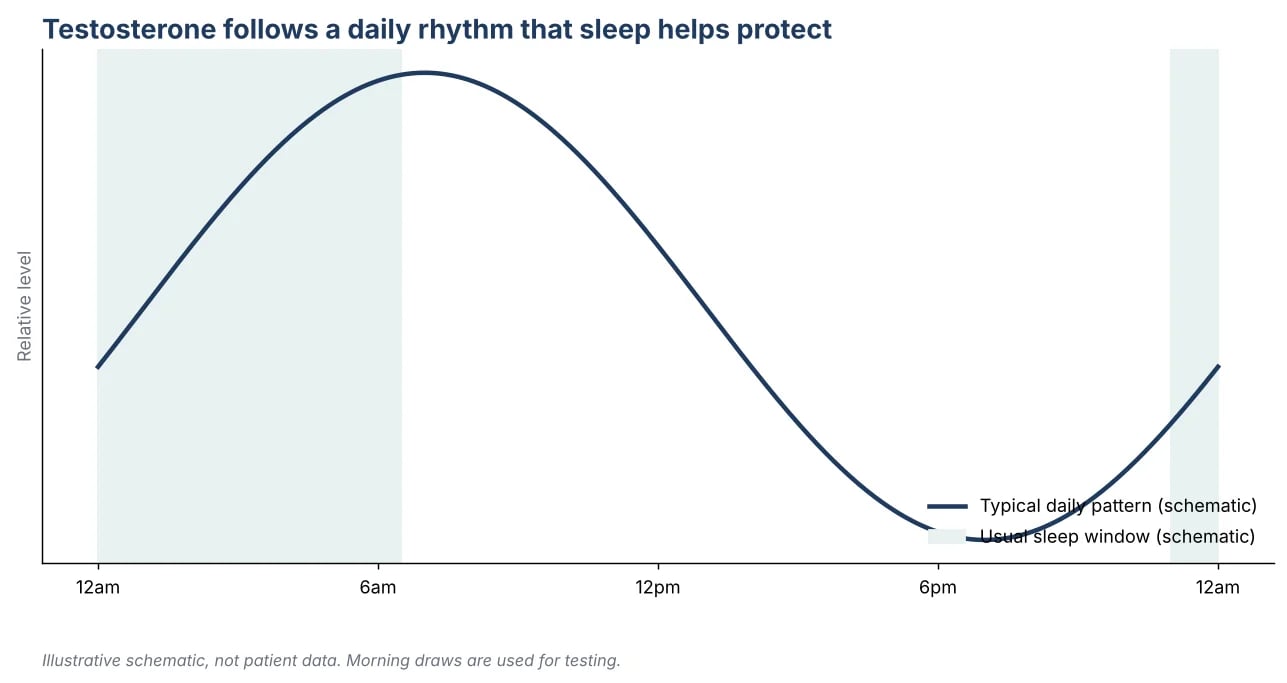
The blood test matters as much as the symptoms. Testosterone is highest in the morning and varies from day to day, so a single afternoon reading can mislead. Guidelines commonly call for at least two early-morning measurements of total testosterone, and a threshold of around three hundred nanograms per deciliter is often cited by urologists, though societies and laboratories use somewhat different cutoffs. Free testosterone and the protein that binds testosterone are measured when total levels are borderline, since obesity and aging change how much testosterone is bound. The idea that one number defines a man is mistaken. The pattern across tests, symptoms and clinical context is what counts.
A forty-six-year-old attorney sleeps five hours, drinks most evenings and has put on twenty pounds since his last physical. He is tired, irritable and uninterested in sex. His testosterone is low-normal. When he treats his sleep apnea, cuts back on alcohol and loses weight, his energy and desire recover, and a repeat test shows a higher level.
A fifty-eight-year-old contractor is lean, active and sleeps well. He has noticed a steady decline in desire over three years, no morning erections and losing muscle despite training. His morning testosterone is clearly low on two occasions and his other tests are unremarkable. He is a classic candidate for treatment after a prostate and cardiovascular review.
A sixty-three-year-old retired teacher is exhausted and low in mood. His testosterone is mildly low, but his blood count shows anemia, and his thyroid is underactive. Treating those problems relieves most of his symptoms before testosterone is even considered.
These are composites, not real patients, and they illustrate the central point: identical complaints, three different answers.
A man in his thirties with low testosterone is unusual, and unusual deserves attention. The expected decline has barely started, so a low level at this age usually has a reason. Common ones include obesity, which converts testosterone to estrogen and suppresses its production; sleep apnea; heavy alcohol use; opioid or other medications; extreme dieting or overtraining; chronic illness; and, less often, problems with the pituitary gland or testes.
What men in this decade usually report is fatigue, a flat drive, weight gain around the middle and trouble building muscle. Often these come with a demanding job, young children and short sleep, which are enough to produce them without any hormonal disorder. The challenge is to sort the two.
The most important point for this age group is fertility. Many men in their thirties are planning families or are in the middle of it, and testosterone treatment suppresses sperm production. A man who treats low T with injections without considering this may find himself with a sperm count near zero when he wants children. The options for treating low testosterone while protecting fertility are an important part of the conversation, and the fertility question on TRT should be settled before any prescription.
By the forties, the average decline is under way and the typical life stage piles up competing explanations. Sleep quality worsens. Visceral fat accumulates. Stress peaks. Alcohol intake often creeps up. Blood pressure, glucose and cholesterol begin to drift. Each of these affects energy and desire, and several of them lower testosterone, so it can be hard to tell cause from effect.
This is the decade in which weight is the single strongest modifiable driver. Fat tissue converts testosterone to estradiol and produces inflammatory signals that suppress the hormonal axis in the brain, and low testosterone, in turn, promotes more fat gain, a loop that has been described often. Weight loss through diet, exercise or medical treatment can raise testosterone meaningfully in men with obesity, sometimes enough to restore symptoms. The way GLP-1 drugs change body composition and metabolism is one reason the interaction between weight-loss medication and male hormones is an active topic.
A man in his forties who suspects low T should expect a physician to look at the whole picture. That means the usual blood tests, plus a check on thyroid function, blood sugar, liver and kidney function, iron, vitamin D and often a sleep question. If testosterone is low after those are addressed, treatment can be reasonable. If it is normal, the work shifts to the causes of the symptoms. A full workup is designed to do exactly that, and it saves men from treating the wrong thing.
In the fifties, more men have levels that are genuinely low, and the consequences are more tangible. Muscle loss accelerates, bone density declines, and metabolic problems such as prediabetes and fatty liver become common. Sexual symptoms are more frequent. Men are also entering the age range in which prostate screening and cardiovascular risk assessment take on weight.
This is the decade in which the benefits and risks of treatment need the most careful discussion. A man in his fifties with confirmed low testosterone and clear symptoms is exactly the kind of patient in whom treatment can help, with the benefits described in trials: better sexual function, increased lean mass, improved bone density and, in some, better mood and energy. He is also the kind of man who needs baseline PSA and a prostate examination, a review of heart risk and a plan for monitoring the blood count.
Another change to watch for is a creeping decline in muscle that can be mistaken for normal aging. Strength training, protein and sleep matter more than ever, and the way hormones interact with muscle loss is part of that story. A man who combines resistance training with attention to hormones gets more than one who relies on either alone.
In older men, low testosterone is relatively common, and so are conditions that complicate treatment. Heart disease, prostate enlargement, sleep apnea, anemia and reduced kidney function are more prevalent. The most rigorous trials of testosterone in older men with low levels have enrolled this age group, and they show benefits in sexual function, anemia and bone, with more modest effects elsewhere.
For men in their sixties and seventies, the goals shift toward function and independence. Preserving muscle and bone, preventing falls and fractures, maintaining sexual health and protecting the mind become the priorities. Testosterone is one tool, and a modest one, within a plan that includes exercise, nutrition and medication review. The decision to treat is individual, weighing benefit against cardiovascular, prostate and blood count risks, and it is revisited regularly.
Older men are also the group most likely to have been told that fatigue and low drive are simply age. Sometimes that is true. Sometimes it is a missed diagnosis of hypogonadism, anemia, depression, thyroid disease or a medication side effect, and a short evaluation can find it.
Many men worry that testosterone feeds prostate cancer, a belief that dates to mid-century studies in men who already had advanced disease. Current evidence in men without prostate cancer does not show that treatment causes it, though testosterone can raise PSA modestly and can enlarge the prostate, and men with untreated prostate cancer should not take it. For men in their fifties and beyond, a baseline PSA and prostate examination before treatment, and periodic checks afterward, are routine.
A rise in PSA on treatment is not automatically alarming, and it is not ignored either. A physician looks at how fast it rose, repeats the test and decides whether further evaluation is needed. Men with urinary symptoms such as a weak stream or getting up at night should mention them, since they may be due to benign enlargement that testosterone can change. The goal is to keep treatment from hiding a problem and to catch one early if it exists.
Comparing male and female hormonal aging is helpful, as long as the differences are clear. Female menopause is defined by the end of menstrual cycles and a steep, relatively predictable fall in estrogen, which is why treatment decisions follow a well-established framework. The care model that has developed around menopause reflects that clarity.
Men have no such marker. Their decline is slow, variable and heavily influenced by health, so two men of the same age can have very different testosterone levels. A man does not lose fertility on a fixed schedule either; many father children in their sixties and seventies, though sperm quality declines. Treating a man's hormones like a woman's, by assuming a predictable drop that needs replacing, does not match the biology.
Testosterone is only one of several hormones that shape long-term health, and the reason to care about it extends beyond how a man feels this month. Bone density in men falls with age, and fractures of the hip and spine carry serious consequences. Low testosterone contributes to bone loss, as does low vitamin D, low calcium intake, smoking, heavy drinking and inactivity. A man with low testosterone and thin bones has a stronger reason to look at the whole picture than one with only a flat mood.
The cardiovascular side is more nuanced. Low testosterone is associated with obesity, diabetes and heart disease, but association is not cause, and the largest trial of treatment in men at heart risk did not show an increase in major events. Even so, the safest approach is to treat testosterone as one marker within a broader set of biomarkers that include blood pressure, lipids, glucose and inflammation, and to let the whole set guide decisions.
Taking the long view also means resisting the urge to chase a number. A man who feels well with a mid-normal level has no need for treatment, and a man who feels poorly with a similar level needs another explanation. What matters over decades is function: strength, bone, mood, desire, energy and independence, and the habits and medical care that preserve them.
It helps to sort the common complaints by how well they track with testosterone. Reduced libido and fewer morning erections track most closely, and they usually improve with treatment when testosterone is truly low. Erectile difficulty is more complicated, since blood vessel health, diabetes, medications and anxiety play large roles. Fatigue, low mood and brain fog are common in low T, and just as common in sleep apnea, depression, thyroid disease, anemia and plain overwork. Muscle loss and fat gain respond partly to testosterone and partly to lifestyle. Hot flashes and sweats occur in some men with a sharp drop, and they have other causes as well.
The picture also includes complaints men do not always connect to hormones. Skin changes are one: low testosterone can be associated with thinner, drier skin and slower healing, though acne is more often linked to high androgen levels or to treatment. Hair patterns change with age and with the hormone dihydrotestosterone more than with testosterone itself. Quality of sleep and the mood changes that follow it can both cause and result from low testosterone. A list of warning signs is a starting point for noticing patterns, and not a diagnosis.
Because so many symptoms overlap, a questionnaire cannot settle the question. A man with five symptoms and a normal testosterone has something else going on. A man with two symptoms and a clearly low level may have exactly what he suspects.
Several conditions imitate low testosterone closely enough to fool both patients and doctors. Obstructive sleep apnea causes fatigue, low drive, morning headaches and weight gain, and it lowers testosterone as well. Depression produces low energy, low libido and poor concentration. Hypothyroidism produces fatigue, weight gain and low mood. Anemia causes tiredness and low stamina. Diabetes and prediabetes affect energy, erections and weight. Medications for blood pressure, mood and pain can reduce desire or erectile function. Excess alcohol suppresses testosterone directly.
Sorting these out is why a careful evaluation matters. Two men can arrive with identical complaints and need completely different care. One needs a sleep study. Another needs thyroid treatment. A third needs testosterone. The only reliable way to know is to measure.
The most common frustration in this field is the borderline result. A total testosterone just above or just below a cutoff, in a man with some symptoms, does not give a clean answer. Several steps help. Repeating the test on another morning guards against ordinary variation. Measuring free testosterone and the binding protein clarifies how much hormone is available to tissues. Looking for reversible causes such as weight, sleep and medications lets the body show what it can do. Reassessing after a period of lifestyle change tells a physician whether treatment is needed or whether the numbers moved on their own.
Some men have symptoms and mid-normal levels and ask whether treatment might still help. The evidence for treating men with normal testosterone is poor, and most guidelines advise against it. The more useful path is to find what is causing the symptoms. Standard reference ranges are wide, and the difference between standard panels and fuller testing is that precision diagnostics with a broader set of markers can reveal contributing problems even when the headline number is normal.
When testosterone is truly low and symptoms are present, treatment is replacement: giving the hormone back to the range seen in healthy younger men. Options include injections, gels, patches and pellets, each with trade-offs in convenience, stability and monitoring. The choice between long-acting pellets and shots, for example, involves flexibility and consistency, and it is made with the physician.
Treatment is not a cure for aging, and it is not a performance enhancer. It does not replace exercise, sleep or good nutrition. It carries real effects that need monitoring: blood counts, prostate markers, lipids and blood pressure. It suppresses sperm production. It is generally a long-term commitment, because stopping typically lets levels fall again. A man who understands those terms is prepared to decide.
It is also not the only intervention. For men whose levels are low because of obesity or sleep apnea, treating those problems can raise testosterone and improve symptoms without hormones. For men who want to preserve fertility, other approaches exist. For men with mild deficiency, a period of lifestyle change is often a reasonable first step. Good care offers the whole menu.
A man who wants to know what he can do before, or alongside, any prescription has real options. Losing excess weight is the most powerful lever for those who carry it, with studies showing testosterone rises as body fat falls. Resistance training supports muscle and hormone health, and adequate sleep is essential, since much of daily testosterone production occurs during sleep. Moderating alcohol helps. Managing chronic stress matters, since sustained cortisol elevation suppresses the hormonal axis. Adequate protein, enough total calories and sufficient zinc and vitamin D intake support the machinery.
These are the same recommendations that anyone would give for health in general, and they sit at the center of the anti-aging tips a physician who treats these patients tends to give. They are not glamorous, but they work better than most supplements marketed for male vitality, and they make any later treatment safer and more effective.
Searching for a low T doctor or a low T clinic in New York City turns up a wide range of options, from academic urology and endocrinology practices to boutique men's health clinics and online services. Differences in approach matter. A thorough visit takes a detailed history including sexual function, sleep, mood, medications and fertility goals. It includes a physical examination. It orders morning blood tests, often with additional markers, and it explains the results in plain terms. It discusses options, including doing nothing for now. It describes how treatment would be monitored.
A quicker visit, with a questionnaire and a prescription, may be convenient and may also miss the cause. When the practice emphasizes concierge continuity, the physician who orders the labs also interprets them with you and follows the results over time, which suits a condition that unfolds over years.
Some men have low testosterone for reasons that call for specialist input. Men with very low levels, unusually low sex drive from a young age, headaches or visual changes, or abnormal pituitary hormone results may have a pituitary problem that needs imaging. Men who have had testicular injury, mumps, chemotherapy or radiation can have primary testicular failure. Men with genetic conditions such as Klinefelter syndrome often go undiagnosed until adulthood. Men taking opioids or long-term steroids frequently have suppressed testosterone as a side effect of the drug. Each of these changes both the evaluation and the treatment options.
If there is a one-paragraph summary, it is this. In the thirties, low testosterone is unusual and demands a reason, with fertility front and center. In the forties, overlap with stress, sleep and weight makes careful sorting essential, and lifestyle change can move the numbers. In the fifties, true deficiency becomes more common, treatment decisions grow weightier and prostate and heart assessment is part of the plan. In the sixties and beyond, low levels are common, goals shift toward function, and treatment is weighed against more complicated health risks. At every age, symptoms alone are not enough, and one blood test is not enough.
A man who suspects his hormones are involved can begin by writing down his symptoms and when they started, listing every medication and supplement, and noting sleep, alcohol and weight changes. Then he can see a physician willing to test properly. Dr. Bissoon builds evaluations around measurement and a plan, and that is where the conversation starts. Whatever the answer turns out to be, knowing which of the many possible explanations applies is worth more than the label.
It is easy to feel that something is off and to want a name for it. A name is useful only if it leads to the right action. Andropause as a label can lead a man toward a hormone he does not need, or away from a sleep study he does. Late-onset hypogonadism as a diagnosis, made on repeated measurements and a real symptom pattern, leads to a defined plan with defined checkpoints. The difference between the two is not semantic. It is the difference between guessing and knowing, and it is why the first step in this area of medicine is nearly always a careful set of tests and a conversation, and almost never a prescription written on the spot.
Testosterone declines gradually with age, but there is no sudden, universal drop like female menopause. The condition clinicians diagnose is late-onset hypogonadism, which affects a minority of older men.
Andropause is a popular term for age-related testosterone decline with symptoms. Many doctors prefer late-onset hypogonadism because it describes a specific, testable condition.
On average it begins to fall gradually from the thirties or forties at a small percentage per year, though many healthy men stay in the normal range into old age.
The most specific are low sexual desire, fewer morning erections and erectile difficulty. Fatigue, low mood, muscle loss and weight gain are common but have many other causes.
It requires symptoms plus consistently low testosterone on repeated early-morning blood tests. Free testosterone and binding proteins are checked when results are borderline.
Yes. Obesity, sleep apnea, alcohol, opioids, other medications, chronic illness, extreme dieting and pituitary or testicular problems can all lower testosterone.
In some men, yes. Losing excess weight, improving sleep, resistance training, moderating alcohol and treating sleep apnea can raise levels and improve symptoms.
Low testosterone at this age usually has a cause that should be found first. Treatment suppresses sperm production, so fertility plans must be discussed before starting.
Low testosterone can be associated with thinner, drier skin and slower healing, though acne is more often linked to high androgens or to treatment. Skin changes have many other causes.
Endocrinologists, urologists and physicians who focus on men's health or longevity medicine treat it. What matters is a thorough evaluation, repeat testing and ongoing monitoring.
Often it is long-term, because levels typically fall again when it stops. The decision is revisited regularly, and some men stop if benefits do not justify the risks.
Evidence for treating men with normal testosterone is poor, and guidelines advise against it. Finding the real cause of symptoms is the better path.
This page was written and medically reviewed by Lionel Bissoon, D.O., founder of Liondale Medical. Dr. Bissoon is a board-certified osteopathic physician specializing in anti-aging and concierge medicine on the Upper West Side of Manhattan.
This content is for educational purposes only and does not constitute medical advice. Individual results may vary. Consult a qualified physician before beginning any new treatment.
Published