Regenerative Medicine 101: What It Actually Means for a Longevity Patient
What regenerative medicine actually means for a longevity patient: ozone therapy, NAD, TPE, and how they fit a plan. Liondale Medical, NYC.

Patients researching advanced ozone treatments in New York City are increasingly coming across the term EBO2 therapy, sometimes written as EBOO or ebo2, and wondering exactly what sets it apart from other forms of ozone treatment. EBO2, which stands for Extracorporeal Blood Oxygenation and Ozonation, is one of the most advanced ozone therapy techniques currently available, and it forms a central part of the concierge treatment approach offered at Liondale Medical under the guidance of Dr. Lionel Bissoon. This guide walks through exactly how EBO2 therapy works, what a treatment session actually involves, and what patients can realistically expect before, during, and after treatment.
EBO2 therapy is an advanced medical ozone treatment in which a patient's blood is temporarily circulated outside the body through a closed, sterile system, oxygenated and infused with medical-grade ozone, and then returned to the body. This is meaningfully different from simpler ozone therapy techniques, such as major autohemotherapy, in which a smaller volume of blood is withdrawn, mixed with ozone in a syringe, and reinjected.
Because EBO2 processes a much larger volume of blood through a continuous flow system, it is often described as a more thorough and efficient method of delivering ozone's effects throughout the bloodstream. The technique is closely related to what many patients search for under the term ten-pass ozone therapy, since the blood is cycled through the oxygenation and ozonation process multiple times during a single session, a hallmark of the EBO2 approach practiced at Liondale Medical's medical ozone therapy program.
Medical ozone is a naturally occurring molecule made up of three oxygen atoms, distinct from the two-atom oxygen molecule the body normally uses for respiration. When introduced into the bloodstream in carefully controlled, medical-grade concentrations, ozone triggers a cascade of biological responses that proponents believe can support several aspects of health and cellular function.
Ozone is thought to stimulate the production of antioxidant enzymes within the body, which play a role in managing oxidative stress. It is also associated with improved oxygen utilization at the cellular level, since ozone interacts with red blood cells in ways that can enhance their ability to release oxygen to tissues throughout the body. Additionally, ozone has demonstrated antimicrobial properties in laboratory settings, which is part of why it has drawn interest in the context of certain chronic infections and immune support protocols.
It is worth noting that while ozone therapy has a growing body of clinical interest and use internationally, it remains an evolving area of medicine in the United States, and patients considering EBO2 therapy should discuss their specific health history and goals thoroughly with a qualified physician before beginning treatment.
Patients researching ozone therapy in NYC often encounter several different delivery methods, and understanding the distinctions helps clarify why EBO2 has become a preferred approach for many providers and patients seeking a more comprehensive treatment.
This is one of the more traditional ozone delivery methods, in which a smaller amount of blood, typically around 100 to 200 milliliters, is drawn into a bag or syringe, mixed with ozone gas, and then reinfused into the patient. It is a relatively simple procedure but processes a comparatively limited volume of blood in a single pass.
In this technique, a very small amount of blood is drawn, ozonated, and then injected intramuscularly rather than intravenously. This method is generally used for more localized or immune-modulating purposes rather than delivering ozone throughout the entire circulatory system.
EBO2 uses a specialized closed-loop machine that continuously draws blood from the patient, passes it through an oxygenation and ozonation chamber, and returns it to the body throughout the session. Because the system processes blood continuously rather than as a single static batch, a much larger total volume of blood can be treated with oxygen and ozone during one session, often cycling through the equivalent of a significant portion of the patient's total blood volume multiple times.
This is the technique behind what is often marketed as ten-pass ozone therapy, referring to the number of times blood is cycled through the ozonation chamber during a single treatment session. The higher number of passes is generally associated with more thorough oxygenation and ozonation of the blood compared to single-pass or smaller-volume techniques.
Patients arriving for an EBO2 therapy session at Liondale Medical can expect a structured, monitored process from start to finish. The session begins with a brief check-in and, depending on the treatment plan, a review of recent lab work or vital signs to confirm the patient is ready to proceed safely.
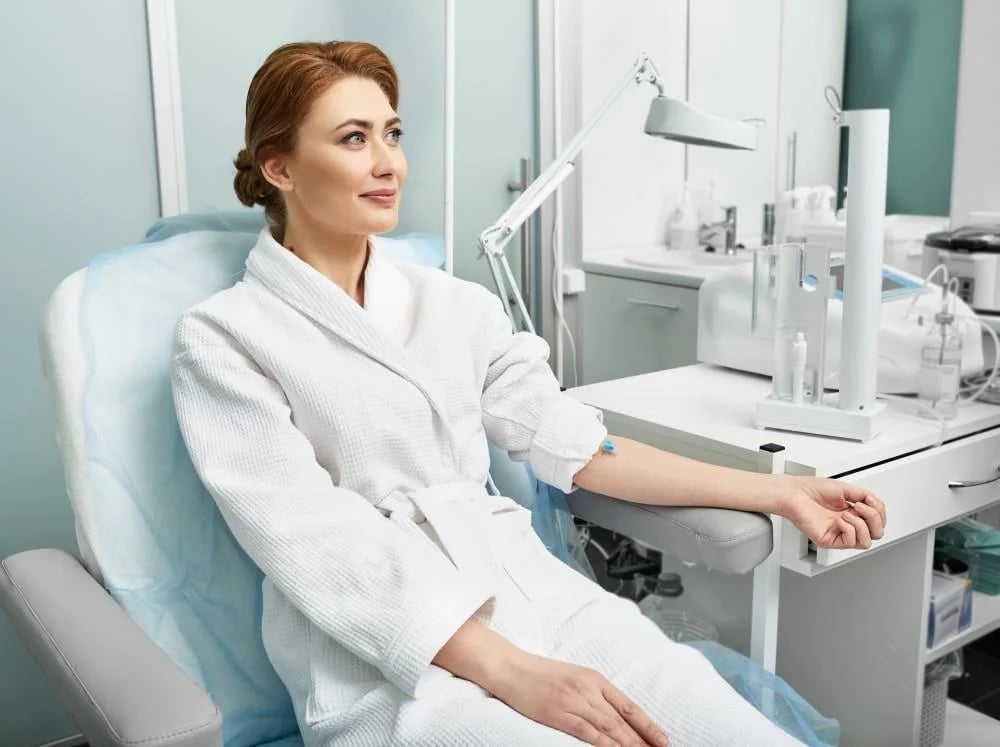
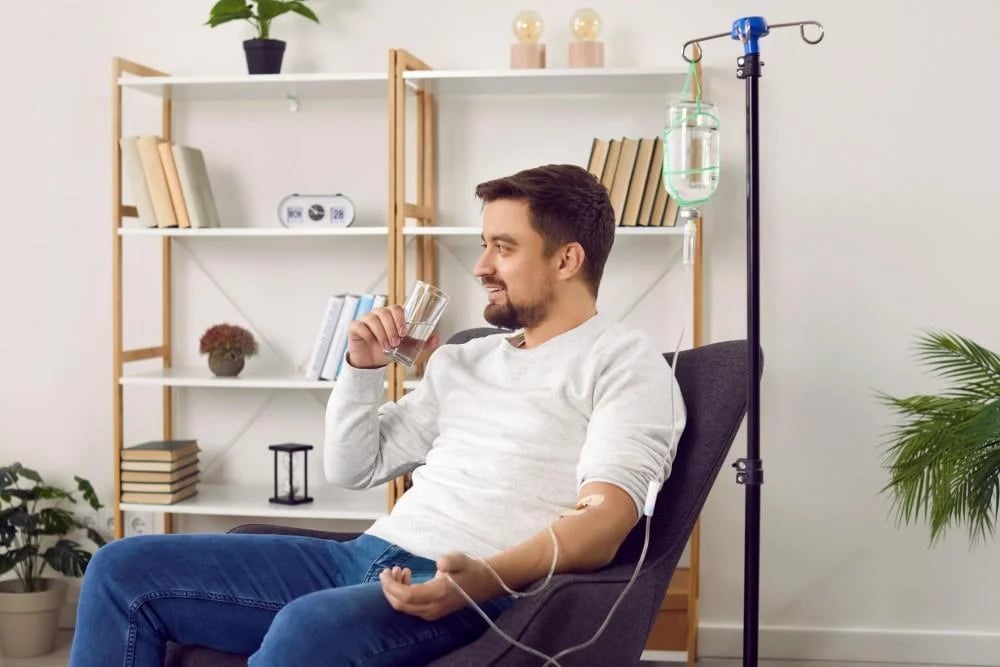
An intravenous line is placed, typically in the arm, which serves as the access point for both withdrawing and returning blood throughout the session. The IV line connects to the closed-loop EBO2 system, which continuously draws blood, passes it through the oxygenation and ozonation chamber, and returns it to the patient's bloodstream. Throughout this process, the patient remains seated or reclined comfortably, and many patients read, rest, or simply relax during the session, since the procedure itself is not physically demanding.
A typical EBO2 session lasts approximately 45 minutes to just over an hour, depending on the specific protocol and number of passes involved. Vital signs are monitored throughout the session to ensure patient safety and comfort. Once the session concludes, the IV line is removed, and patients are typically able to resume normal daily activities immediately afterward, since the procedure does not require sedation or an extended recovery period.
Before beginning EBO2 therapy, patients at Liondale Medical undergo a thorough consultation with Dr. Bissoon to review their health history, current medications, and specific health goals. This step is essential, since ozone therapy is not appropriate for every patient, and certain health conditions or medications may require careful consideration or make the treatment unsuitable altogether.
Baseline lab work is often recommended before starting treatment, both to establish a starting point for tracking progress and to rule out any underlying conditions that would affect the safety or appropriateness of ozone therapy. Patients are typically advised to stay well hydrated in the days leading up to their session and to eat a light meal beforehand rather than arriving on an empty stomach, since this can help minimize any lightheadedness during the procedure.
Most patients tolerate EBO2 therapy well and are able to drive themselves home and return to normal activities immediately following a session. Some patients report a mild sense of relaxation or, less commonly, mild fatigue in the hours following treatment, which typically resolves within a day.
Because ozone therapy is generally used as part of an ongoing wellness or treatment protocol rather than a single standalone session, Dr. Bissoon works with each patient to determine an appropriate treatment schedule based on their specific health goals, which may involve a series of sessions spaced over several weeks, followed by periodic maintenance sessions.
Patients explore EBO2 therapy for a range of reasons, often as part of a broader concierge approach to health optimization and longevity. Some patients are drawn to ozone therapy as part of a general wellness and anti-aging protocol, seeking to support cellular energy production and manage oxidative stress as part of a comprehensive longevity strategy. Others are interested in ozone therapy in the context of chronic fatigue, immune support, or recovery from illness, working closely with Dr. Bissoon to determine whether the treatment aligns with their specific health picture.
Because EBO2 therapy is one component of Liondale Medical's broader approach to regenerative medicine and anti-aging care, it is often discussed and planned alongside other treatments, including nutritional support, hormone optimization, and other IV-based therapies, depending on the patient's individual goals.
As with any medical treatment involving blood, safety protocols matter enormously in ozone therapy, and this is one of the most important factors patients should evaluate when choosing where to receive treatment. A closed-loop, single-use system for each patient session is essential to prevent any risk of cross-contamination, and treatment should always take place under the direct oversight of a qualified physician who can monitor for any adverse reactions and adjust the protocol as needed.
Certain patients may not be appropriate candidates for EBO2 therapy, including those with specific blood disorders, active bleeding conditions, or certain enzyme deficiencies, which is why a thorough medical history review and appropriate lab work are essential first steps before beginning treatment. Dr. Bissoon's extensive background in ozone therapy allows him to carefully screen patients and tailor treatment protocols to each individual's health profile.
Dr. Lionel Bissoon has built Liondale Medical around a concierge model of care that combines advanced diagnostics with a highly personalized approach to longevity and wellness. Rather than offering ozone therapy as an isolated, one-size-fits-all treatment, Dr. Bissoon integrates EBO2 therapy into a broader, individualized health strategy shaped by each patient's specific goals, lab results, and health history.
Patients considering EBO2 therapy at Liondale Medical benefit from the practice's emphasis on close, responsive, private care, where questions are answered directly and treatment plans are adjusted based on how each patient responds over time. This level of attentive oversight is particularly important for a treatment like EBO2 therapy, where individualized screening and monitoring play a significant role in both safety and results.
If you are considering EBO2 therapy in NYC and want to discuss whether it fits your specific health goals, schedule a consultation with Dr. Bissoon's office at Liondale Medical today.

Medical ozone therapy is not a new or experimental concept invented for the wellness industry. Ozone has been studied and used in various medical contexts for over a century, with early applications in wound care and infection control dating back to the early twentieth century. Over the following decades, physicians in parts of Europe, particularly Germany, developed more refined protocols for administering ozone therapeutically, laying the groundwork for the autohemotherapy and extracorporeal techniques used today.
The development of closed-loop systems like those used in EBO2 therapy represents a more recent advancement, allowing for a much larger and more precisely controlled volume of blood to be treated in a single session compared to earlier autohemotherapy methods. This technological evolution is part of why EBO2 has become an increasingly preferred technique among physicians who incorporate ozone therapy into their practice, since it allows for more consistent and thorough treatment delivery.
While ozone therapy has a long history of clinical use internationally, it is important for patients to understand that it continues to be regarded as a complementary or integrative treatment in the United States rather than a first-line conventional therapy for most conditions, and it should always be discussed within the context of a patient's overall care plan with their treating physicians.
Patients exploring concierge wellness treatments in NYC often encounter a range of IV-based options, and understanding how EBO2 therapy compares to other popular treatments can help clarify where it fits into an overall wellness strategy.
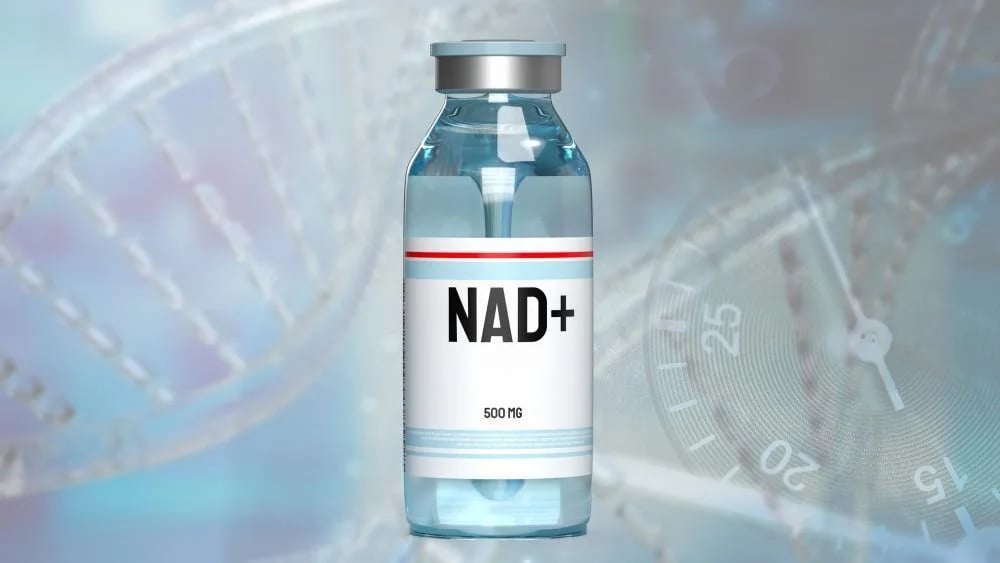
NAD IV therapy, for example, delivers nicotinamide adenine dinucleotide directly into the bloodstream, a coenzyme involved in cellular energy production that some patients pursue for its potential role in supporting mitochondrial function and combating fatigue. While NAD therapy and EBO2 therapy are sometimes pursued for overlapping goals, such as supporting energy levels and cellular health, the mechanisms are quite different. NAD therapy directly supplies a specific coenzyme the body uses in energy metabolism, while EBO2 therapy works by oxygenating and ozonating the blood itself, triggering a broader physiological response related to oxidative stress management and oxygen utilization.
Some patients choose to incorporate both treatments into their overall wellness protocol, working with Dr. Bissoon to determine an appropriate sequencing and schedule based on their specific goals and how their body responds to each treatment individually.
A central concept behind the interest in ozone therapy relates to oxidative stress, a state in which the production of reactive oxygen species in the body outpaces the body's ability to neutralize them with antioxidants. Oxidative stress has been studied extensively in the context of aging, chronic fatigue, and a range of other health concerns, and many longevity-focused treatment protocols, including those offered at Liondale Medical, are built around addressing this underlying physiological process.
Proponents of ozone therapy suggest that controlled, medical-grade ozone exposure can trigger an adaptive response in the body, upregulating the production of the body's own antioxidant enzymes in a way that may help better manage oxidative stress over time. This concept, often referred to as ozone's hormetic effect, is part of the theoretical foundation behind why some patients pursue a series of ozone treatments rather than a single isolated session, allowing the body's adaptive response to build over time.
Because individual responses to any wellness treatment vary considerably, Dr. Bissoon avoids making guarantees about specific outcomes and instead focuses on careful, individualized monitoring throughout a course of EBO2 therapy. Some patients report noticing changes in their energy levels or general sense of well-being over the course of several sessions, though these experiences are inherently subjective and vary from person to person.
Rather than relying solely on subjective impressions, Dr. Bissoon often incorporates follow-up lab work at appropriate intervals to help track relevant markers over the course of a treatment protocol, providing a more objective way to evaluate how a patient is responding and whether adjustments to the treatment plan are warranted.
Patients beginning a course of EBO2 therapy at Liondale Medical can support the best possible experience by following a few practical preparation steps ahead of each session. Staying well hydrated in the day or two leading up to a session helps support easier blood draw and circulation throughout the treatment. Eating a light, balanced meal a few hours before the appointment, rather than arriving on an empty stomach, can help minimize any lightheadedness during the procedure.
Patients are also encouraged to wear comfortable clothing with sleeves that can be easily rolled up or removed to allow convenient access for the IV line, and to bring a book, a tablet, or simply plan to relax during the session, since the treatment itself involves sitting or reclining comfortably for the duration. Communicating openly with Dr. Bissoon's office about any changes in health status, new medications, or symptoms between sessions is also an important part of ensuring each treatment is appropriate and safe.
Because ozone is more commonly associated in the public mind with air quality and pollution warnings, some patients arrive at their first consultation with misconceptions about medical ozone therapy. It is worth clarifying that the ozone used in EBO2 therapy is medical-grade, generated by a specialized device specifically for this purpose, and administered in carefully controlled concentrations designed for therapeutic use, which is an entirely different context from ambient ozone exposure in polluted air.
Another common misconception is that ozone therapy involves injecting gas directly into the bloodstream in a way that could be dangerous. In reality, techniques like EBO2 therapy work by exposing blood to ozone within a closed system before returning oxygenated, treated blood to the body, a process carefully controlled to avoid introducing free gas directly into the circulatory system. Understanding these distinctions can help patients feel more informed and comfortable as they consider whether EBO2 therapy is right for them.
At Liondale Medical, EBO2 therapy is rarely offered as a standalone, isolated treatment. Instead, Dr. Bissoon typically situates it within a broader, personalized longevity and wellness strategy that may include hormone optimization, nutritional guidance, and other regenerative treatments tailored to each patient's specific health picture. This integrated approach reflects the practice's overall philosophy of precision medicine, in which advanced diagnostics inform a customized combination of treatments rather than a generic, one-size-fits-all protocol.
Patients interested in EBO2 therapy are encouraged to view it as one component of a comprehensive health optimization strategy, discussed and adjusted over time in partnership with Dr. Bissoon, rather than a single quick fix disconnected from their broader health goals.
Dr. Lionel Bissoon has spent years focused on integrative and regenerative approaches to health, building Liondale Medical around a concierge model that prioritizes precision diagnostics and highly personalized treatment planning. His approach centers on identifying the root causes behind a patient's health concerns rather than addressing symptoms in isolation, using advanced testing to build a clear picture of each patient's unique physiology before recommending a treatment plan.
This philosophy extends directly to how EBO2 therapy is offered at the practice. Rather than treating ozone therapy as an isolated add-on service, Dr. Bissoon incorporates it thoughtfully into each patient's broader care plan, informed by lab work, health history, and ongoing monitoring throughout a course of treatment. Patients working with Dr. Bissoon benefit from his responsive, attentive approach to care, where questions are addressed directly and treatment plans are adjusted based on individual progress rather than a rigid, predetermined protocol.
Patients researching this treatment online will often encounter a range of related terms that can be a source of confusion. Terms such as blood oil change, EBOO, and ebo2 therapy are generally all referring to the same underlying extracorporeal blood oxygenation and ozonation technique, sometimes described colloquially as a way of refreshing or oxygenating the blood. The ten-pass ozone therapy terminology specifically refers to the number of cycles the blood completes through the oxygenation and ozonation chamber during a single EBO2 session, with ten passes representing one commonly used protocol, though the exact number of passes used in a given session is determined by the treating physician based on the specific treatment plan.
Understanding that these terms largely describe the same core technique can help patients feel more confident navigating information online and asking informed questions during their consultation, rather than assuming each term refers to an entirely separate and distinct treatment.
Patients sometimes ask why they would pursue an in-office treatment like EBO2 therapy rather than simply taking oral antioxidant supplements, since both are broadly associated with managing oxidative stress. The key distinction lies in the proposed mechanism of action. Oral antioxidant supplements work by directly supplying antioxidant compounds that the body can use to help neutralize free radicals.
Ozone therapy, by contrast, is thought to work through a different pathway, potentially stimulating the body's own internal antioxidant enzyme production through a carefully controlled, temporary increase in oxidative load, an approach sometimes referred to as a hormetic response. This is a fundamentally different mechanism than simply supplying external antioxidants, which is part of why some patients and physicians view ozone therapy as a complementary approach rather than a direct substitute for a comprehensive nutrition and supplementation strategy. Many patients ultimately incorporate both approaches, oral antioxidant support and periodic ozone therapy, as part of a broader, multi-pronged wellness strategy.
As ozone therapy has grown in popularity within the wellness and longevity space, patients in NYC now have a number of providers to choose from, and the quality of oversight and equipment used can vary considerably between practices. When evaluating where to receive EBO2 therapy, patients should prioritize a provider who is a licensed physician with specific training and experience in medical ozone therapy, rather than a practice where the treatment is administered without direct physician oversight.
It is also worth asking about the specific equipment used and confirming that the practice uses a closed, single-use system for each patient, which is an essential safety standard for any extracorporeal blood treatment. Patients should feel comfortable asking detailed questions about the physician's experience with the treatment, how candidacy is assessed, and what kind of monitoring takes place during and after sessions.
Dr. Bissoon's extensive background in integrative and regenerative medicine, combined with his hands-on, concierge approach to patient care, positions Liondale Medical as a practice where EBO2 therapy is delivered with a strong emphasis on individualized screening, careful monitoring, and thoughtful integration into each patient's broader health strategy, rather than being offered as a standardized, one-size-fits-all service.
Every patient considering EBO2 therapy at Liondale Medical begins with a comprehensive consultation with Dr. Bissoon. This initial visit is designed to go well beyond a brief intake form, involving a detailed discussion of the patient's health history, current symptoms or concerns, prior treatments attempted, and specific goals for pursuing ozone therapy.
Dr. Bissoon reviews any existing lab work the patient may have and often recommends additional targeted testing to build a clearer picture of relevant health markers before finalizing a treatment plan. This diagnostic-first approach reflects the broader precision medicine philosophy that defines Liondale Medical's concierge model, ensuring that EBO2 therapy, when recommended, is tailored specifically to the patient rather than applied as a generic wellness treatment disconnected from their individual health picture.
Patients leave their consultation with a clear understanding of the recommended treatment plan, an honest assessment of what to realistically expect, and an opportunity to ask any remaining questions before scheduling their first session. This level of thorough, individualized planning is central to how Dr. Bissoon approaches every treatment offered at the practice, EBO2 therapy included.
Most patients describe the sensation as similar to a standard IV infusion, with minimal discomfort beyond the initial needle placement. The session itself is generally well tolerated and does not require sedation.
The number of sessions varies based on individual health goals and how a patient responds to treatment. Dr. Bissoon typically recommends a personalized schedule after an initial consultation and, in many cases, an initial series of sessions followed by periodic maintenance visits.
Ten-pass ozone therapy generally refers to the EBO2 technique, describing the number of times blood is cycled through the oxygenation and ozonation chamber during a single session. The terms are often used interchangeably to describe this same advanced delivery method.
Most sessions last approximately 45 minutes to just over an hour, depending on the specific protocol used and the number of passes involved in the treatment.
Yes, most patients are able to resume their normal daily activities, including driving, immediately after a session, since the procedure does not require sedation or an extended recovery period.
When performed by a qualified physician using a closed, sterile, single-use system and appropriate patient screening, EBO2 therapy is generally well tolerated. A thorough medical history review before starting treatment is essential to confirm candidacy and identify any conditions that would make the treatment unsuitable.
Patients pursue EBO2 therapy for a range of reasons, including general wellness and anti-aging support, immune system support, and recovery from chronic fatigue, often as part of a broader, individualized longevity and health optimization plan developed with Dr. Bissoon.
Certain medications, particularly blood thinners, may need to be reviewed carefully with Dr. Bissoon before beginning treatment, since they can affect candidacy or require specific precautions during the session. Patients should always disclose their full medication list during the initial consultation so this can be evaluated properly.
Some patients do combine multiple IV-based treatments as part of a broader wellness protocol, though the specific sequencing and scheduling of different treatments is determined individually by Dr. Bissoon based on each patient's health profile and goals, rather than following a fixed, universal combination for every patient.
Maintenance frequency varies widely based on individual response and health goals. Some patients return for periodic sessions every few months, while others may space maintenance visits further apart. Dr. Bissoon typically discusses an appropriate maintenance schedule once a patient has completed their initial course of treatment and the response has been evaluated.
There is a growing body of research on medical ozone therapy, including studies exploring its antimicrobial properties, its effects on oxidative stress pathways, and various clinical applications, though research in this area continues to evolve. Patients are encouraged to discuss the current state of evidence directly with Dr. Bissoon, who can speak to how the treatment fits within the broader context of both clinical research and his own clinical experience.
Liondale Medical offers EBO2 therapy at its Upper West Side location in Manhattan, under the direct supervision of Dr. Lionel Bissoon, as part of the practice's broader concierge approach to longevity and regenerative medicine.
This page was written and medically reviewed by Lionel Bissoon, D.O., founder of Liondale Medical. Dr. Bissoon is a board-certified osteopathic physician specializing in anti-aging and concierge medicine on the Upper West Side of Manhattan.
This content is for educational purposes only and does not constitute medical advice. Individual results may vary. Consult a qualified physician before beginning any new treatment.
Published