The Difference Between a Physician-Led and Nurse-Led Longevity Clinic
What separates a physician-led longevity clinic from a nurse-led one, where each model genuinely excels, and which questions to ask before enrolling.
Searching for an anti-aging doctor in New York City produces an odd mixture of results. Some are boutique clinics with polished websites. Some are hospital physicians who have never used the phrase. Some are cosmetic practices, some are supplement sellers with a medical license attached, and a few are serious physicians who treat the biology of aging with the same care they would give any other medical problem. The term itself does not tell you which you are looking at. “Anti-aging” is a marketing phrase, not a specialty, and two doctors who both use it can practice in completely different ways.
A more useful approach is to start from the question you actually have. A person worried about a family history of early heart disease needs a different kind of physician from a person whose energy collapsed after menopause, who in turn needs a different one from a person whose ninety year old mother is falling. Each question has a specialist who is trained to answer it, and a few questions fall in the gaps between specialties, which is where longevity physicians and integrative practices find their place. This guide maps the main kinds of doctors a New Yorker might see, what each is genuinely best at, how to check credentials, which red flags to watch for, and how to ask for an honest account of the evidence behind a recommendation.
Medicine recognizes specialties through certifying boards. The American Board of Medical Specialties oversees the major ones, among them internal medicine, family medicine, endocrinology, geriatrics, cardiology and dermatology. Anti-aging medicine is not one of those recognized specialties. There are organizations that offer certificates in anti-aging or longevity medicine, and some of their courses are rigorous and some are weekend programs, but those certificates do not carry the same weight as completing a residency and passing a board examination in a defined specialty.
This does not make an anti-aging or longevity physician unqualified. Most are fully trained doctors who hold a primary board certification in something else, often internal medicine, family medicine or emergency medicine, and who have added training in hormones, nutrition, metabolism or regenerative therapies. Many are osteopathic physicians, holding a D.O. degree, which is a complete medical license with the same prescribing and practice rights as an M.D. and additional training in musculoskeletal medicine. The point is that the label tells you almost nothing, and the important information lies in the primary training, the clinical approach and how decisions are made.
It follows that the right first step is not to find the best anti-aging doctor. It is to work out what you need, and then to decide whether a longevity oriented physician, a conventional specialist or both are appropriate.
Write down, in one or two sentences, what you want help with. Most people fall into a few groups.
Some want a thorough baseline. They are healthy, in their forties or fifties, and they want to know where they stand on cardiovascular risk, metabolic health, hormones and bone and muscle before something goes wrong. They want a physician with time to explain results and build a plan.
Some have symptoms they cannot place. Fatigue, weight gain around the middle, poor sleep, low drive, brain fog, hot flashes, hair thinning. They have usually been told their labs are normal and want someone to look more closely.
Some have a diagnosed condition and want a second opinion or a more comprehensive approach, for example thyroid disease, prediabetes, high cholesterol or osteoporosis.
Some are interested in a particular treatment they have heard about: hormone therapy, peptides, NAD infusions, plasma exchange, ozone, GLP-1 medications, rapamycin. They want to know whether it is right for them.
Some are looking after an older relative and need help with function, memory, medications and safety.
Each of these points to a different starting point, and the sections below take them in turn.
For a baseline evaluation, a good internist remains the best starting point. They are trained in the evidence for screening, vaccination, blood pressure and cholesterol management, diabetes prevention and the early detection of cancer, and these areas account for most of the preventable loss of healthy years in adults. Nothing in longevity medicine outweighs getting blood pressure controlled, staying current with cancer screening, not smoking, sleeping adequately, exercising and keeping a healthy weight.
The limitation, in the United States, is time and structure. Standard primary care visits are short, insurance reimbursement favors treating established disease over exploring risk, and the lab panels ordered tend to be the basics. Patients who want a long conversation and a deeper look often look for concierge or direct primary care models, which trade a membership fee for longer visits and easier access. Those models are discussed in detail in the article on whether concierge medicine is worth it, and the practical differences between them and traditional care shape how well they suit different people.
Endocrinologists are specialists in the glands and hormones: thyroid, pituitary, adrenal, pancreas, parathyroid, ovaries and testes. They are the right physicians for thyroid disease, diabetes, adrenal and pituitary disorders, osteoporosis, polycystic ovary syndrome and confirmed hypogonadism. Their training is strongest in diagnosing and treating disease states, and they are rigorous about guideline based care.
The tradeoff is that endocrinology has historically focused on abnormal values and defined diseases. A patient whose testosterone is at the low end of normal, whose thyroid is technically in range but who feels terrible, may hear that nothing is wrong. Whether that is an appropriate answer or an incomplete one depends on the case. Guidelines caution against treating borderline values without symptoms, and for good reason, since hormone therapy has real risks. At the same time, some patients are managed too conservatively, and a second look from a clinician with experience in subclinical or symptomatic patterns can be reasonable. The key is that both perspectives are honest about the uncertainty.
Geriatricians are internists with additional training in the care of older adults. Their strength is function: mobility, falls, cognition, frailty, hearing, vision and the interaction of multiple medications. The central concept in their field is deprescribing, the careful removal of medicines that are no longer helping, because older adults on many drugs can suffer from side effects that look like aging.
Despite the name, geriatricians are not just for the very old. They are valuable for anyone caring for a parent, and for patients in their seventies and beyond whose main goals are independence and quality of life. They are less likely to focus on optimization in healthy middle aged adults, and they are cautious about interventions without strong evidence. That caution is a feature when the stakes are high.
Heart disease remains the leading cause of death, and risk can be refined with tests that standard panels omit. A preventive cardiologist can interpret markers such as ApoB, a more precise measure of atherogenic particles than standard LDL, and lipoprotein(a), a genetically determined risk factor that most people have never had measured. The article on lipoprotein(a) and the annual physical explains why a normal cholesterol panel can miss it. Coronary calcium scoring and carotid imaging can further stratify risk.
If your concern is a strong family history of early heart attack or stroke, a preventive cardiology consult may be the single most valuable appointment. A longevity physician can order many of the same tests and coordinate care, but a cardiologist is the one who will manage medication decisions and procedures if risk turns out to be high.
Menopause care is an area where training varies greatly. Many gynecologists and primary care physicians received little instruction in the management of menopause symptoms, and the public conversation about hormone therapy was distorted for years by the interpretation of early trial results. Practitioners certified by menopause focused professional societies have additional training and are a useful signal. Menopause care is also an area where bioidentical hormone prescribing, within evidence based boundaries, is a core part of what some integrative and longevity practices do, and the practice’s approach to menopause care outlines how that is handled in a concierge setting.
A patient with hot flashes, sleep disruption, vaginal symptoms and mood change should find a clinician who takes the symptoms seriously, reviews her personal and family risk and explains the benefits and risks of hormone therapy on a timeline that matches current guidance. Whether that clinician is a gynecologist, an internist, an endocrinologist or a longevity physician matters less than whether they know the literature and listen.
Men with low energy, low libido, reduced muscle and mood changes often wonder about testosterone. The right evaluation starts with confirming low levels on repeat morning testing, checking other hormones and ruling out contributors such as sleep apnea, obesity, medications and thyroid problems. Urologists and endocrinologists commonly manage this, and so do many men’s health clinics. A comprehensive workup is described in the article about what a men’s health specialist’s full workup covers, and the practice’s men’s health service lists the labs it uses, including total and free testosterone, luteinizing hormone and estradiol, with re-testing at set intervals for men on treatment.
The important point is that testosterone therapy has benefits and risks that should be discussed openly, including effects on fertility, red blood cell count and prostate monitoring. A physician who prescribes it without baseline labs, without a plan for follow up or without asking about fertility goals is not practicing carefully, regardless of title.
Functional medicine and integrative medicine are broad terms for approaches that look for root causes, emphasize nutrition and lifestyle and combine conventional and complementary tools. Some of the best practitioners in this space are excellent diagnosticians who spend time that the conventional system does not allow. Others lean heavily on unvalidated tests and supplements.
The distinction is important. A responsible integrative physician uses validated tests, explains the evidence for each recommendation, distinguishes between established and experimental approaches and is willing to refer to a specialist when needed. A less careful one orders large panels of unusual tests, recommends many supplements and interprets normal variation as pathology. Patients should be especially wary when the primary revenue source is selling products directly.
A longevity physician sits at the intersection of these fields. The best of them combine solid primary training with attention to cardiovascular risk markers, metabolic health, hormones, body composition and sleep, and they build a long-term plan. They also tend to be familiar with a wider range of treatments, including hormone therapy, GLP-1 medications, peptides and regenerative approaches. Several of the topics people most often ask about are covered in plain language, from the question of which blood markers predict healthspan to what precision diagnostics measure that standard labs do not, and the personalized longevity plan article walks through how the pieces fit.
Practically, the model suits people who want continuity with a single physician who sees the whole picture. Liondale Medical, for example, is a private concierge practice on the Upper West Side led by Dr. Lionel Bissoon, a D.O. who is described as an anti-aging, regenerative and integrative medicine and bioidentical hormone specialist, with more than two decades in practice. The practice’s services include anti-aging medicine, hormone care for men and women, regenerative medicine and concierge care. As with any physician, the useful step for a prospective patient is to ask about training and certifications directly and to verify them independently, which the next section explains how to do.
Short sketches show how the logic works. They are composites meant to illustrate the reasoning, not individual patients.
A fifty two year old man with a father who had a heart attack at fifty has normal cholesterol on his annual panel and wants to know whether he is safe. The question is cardiovascular risk, so the best first step is a preventive cardiology or lipid focused evaluation including ApoB, lipoprotein(a) and possibly a coronary calcium score. A longevity physician can order the same blood tests and coordinate, but if the results are high risk, a cardiologist should own the decisions.
A forty eight year old woman has had poor sleep, hot flashes and a sharp drop in energy over a year. Her primary care physician says her labs are normal and suggests antidepressants. The question is menopause symptom management, so she needs a clinician who is current on menopause care and willing to discuss hormone therapy openly. That may be a gynecologist with menopause training, an internist or a longevity physician, and what matters is whether the clinician reviews her risk and explains the options.
A seventy eight year old woman is taking eleven medicines, has had two falls this year and is increasingly forgetful. The question is function and safety, and the right physician is a geriatrician, who will review every medication and focus on mobility, cognition and independence. Nothing a longevity clinic offers will matter as much as that review.
In each case the specialty follows the question. The common thread is that the physician chosen is willing to say when the problem belongs elsewhere, and the patient is better off for the referral.
Before booking, a short call can reveal a great deal. Ask who the physician is, what they are board certified in and where they trained. Ask whether the physician personally sees patients at every visit or whether other staff do, a point explored in the discussion of who is actually delivering the care in a clinic. Ask how long the first visit lasts, which tests are typical and whether results are reviewed with the physician. Ask what the fees include and whether any services are required to join. Ask how the practice handles a problem outside its scope.
The tone of the answers matters as much as the content. Clear, patient answers suggest a practice used to informed patients. Vague answers, hurried redirection to a package or reluctance to name credentials suggest the opposite. You are choosing a long relationship, and the first call is a preview of it.
Verification takes minutes and is worth doing for every physician, whether or not they use the word anti-aging.
Check the license. New York State publishes a license verification tool through the Office of the Professions that confirms the physician is licensed, shows the license history and indicates any registration issues. The state also offers a physician profile service that includes education, training, board certifications, hospital affiliations and certain legal and disciplinary actions. These are public and free.
Check board certification. The American Board of Medical Specialties and the American Osteopathic Association both offer ways to verify whether a physician is board certified and in which specialty. A physician can be fully licensed without being board certified, so the question to ask is which board and which specialty, and whether the certification is current. Ask also what training they completed after medical school.
Look at the pattern of practice. Does the physician describe a clear model, with defined services, a process for evaluation and honest limits? Do they publish content that explains rather than just promotes? Do they appear in sources outside their own website? A track record that includes teaching, publication, interviews or long standing patient relationships is informative, though it is not proof of quality.
Ask about hospital privileges and referral relationships. A doctor who works in a private setting should be able to explain how they coordinate with hospitals and specialists when something more serious emerges, including how your records can be shared.
Certain patterns reliably signal a practice to avoid or approach with caution.
Guarantees. No physician can promise to reverse aging, cure a chronic disease or deliver a specific result. Language about turning back the clock by a number of years should be treated as marketing.
Prescribing without testing. Hormones, thyroid medication, peptides and other prescription treatments should follow a history, an examination and appropriate laboratory work, and should include follow up testing. A practice that starts therapy at the first visit without baseline labs, or that never retests, is not following basic safety standards.
One size fits all protocols. If everyone leaves with the same set of infusions, supplements and injections regardless of their results, the plan is a package, not medicine.
Pressure and urgency. Limited time offers, large prepaid bundles and discounts for committing on the spot do not belong in medical care.
Unexplained test panels. A long list of unusual tests with no clear explanation of what each means and how it will change management is a warning. A good physician can tell you why a test is ordered and what they would do with each possible result.
Dismissal of conventional care. A physician who tells you to stop prescribed medication without a reasoned plan, or who disparages screening and vaccination, is not acting in your interest.
Opacity about credentials. If you cannot find where the physician trained, which boards certified them or what their license status is, the absence of information is itself a signal.
One of the most effective things a patient can do is to ask each recommendation to declare its level of evidence. The categories are not complicated.
At the top are interventions with strong, repeated evidence of benefit for important outcomes: blood pressure control, statin therapy when indicated, exercise, adequate sleep, tobacco avoidance, vaccination, cancer screening and treatment of diabetes. These form the base of any sensible plan.
In the middle are treatments with good evidence in defined groups and reasonable evidence for benefit with known risks, such as hormone therapy for menopause symptoms in appropriate candidates, testosterone therapy for confirmed hypogonadism and some medications used for weight and metabolic health. GLP-1 medications belong here for weight and cardiometabolic outcomes, and the question of their relationship to aging itself is discussed in the article on GLP-1 drugs and longevity.
At the bottom are emerging or experimental areas where research is early and evidence is limited or mixed: certain peptides, NAD infusions, plasma exchange, ozone and similar approaches. Reputable practices that offer these will say so, describe what is known and unknown, and ask for informed consent in that context. The evidence for peptide therapy and longevity is a good example of an honest, balanced treatment of the subject.
A doctor who can place each recommendation in one of these tiers, and who is comfortable saying “this one is experimental,” is a doctor worth listening to.
Whatever type of physician you choose, the first visit should have a recognizable shape. There should be time to talk, usually forty five to ninety minutes in a longevity or concierge setting. The physician should ask about your history, family history, medications, sleep, diet, exercise, stress, alcohol and goals. They should examine you. They should explain the tests they want to order, and why.
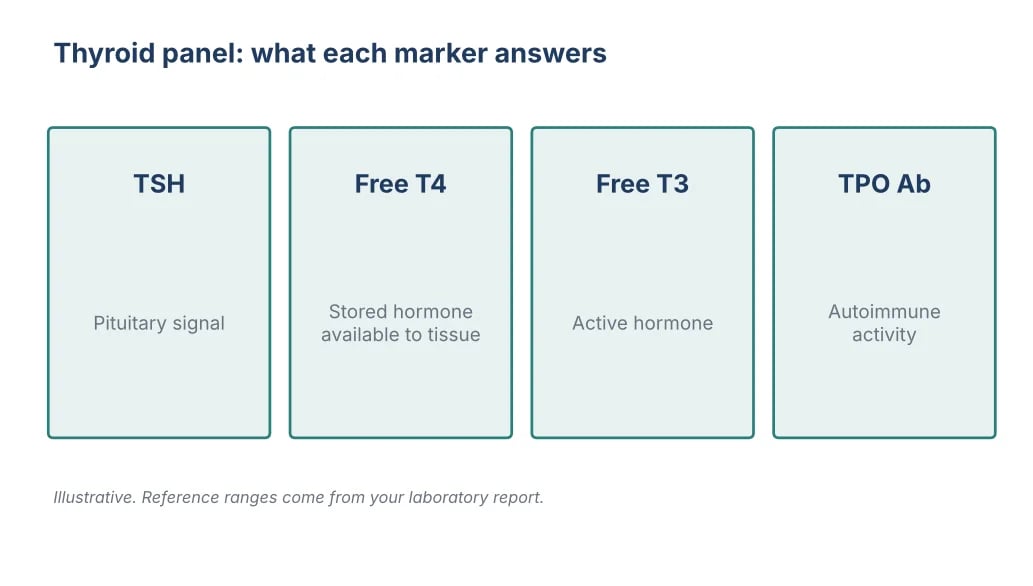
A thorough baseline often includes a comprehensive metabolic panel, a lipid profile with ApoB and sometimes lipoprotein(a), fasting glucose and insulin or hemoglobin A1c, high sensitivity C-reactive protein, a complete blood count, thyroid studies, vitamin D, B12 and iron markers, and sex hormones where relevant. Understanding what is being measured and why is easier with context, such as the discussion of thyroid labs beyond TSH, which shows how a single number can mislead, and the explanation of why some panels need fasting and others do not.
The follow up visit is where the value emerges. The physician should explain the results in plain language, identify what matters and what does not, and propose a small number of priorities rather than a long list. Expect a plan that includes lifestyle foundations and, where appropriate, medication or supplement recommendations with defined monitoring.
New Yorkers have unusual access to specialists, and also unusual exposure to marketing. A few practical points follow.
Insurance and fees. Many longevity and concierge practices are out of network or cash based, which means patients pay directly and may seek reimbursement from their plan for some services. Ask what is included in fees, what labs cost and whether they are billed to insurance or paid directly, and get the answers in writing.
Coordination of care. If you have a primary care doctor or specialists, tell them about your plan, and ask your longevity physician to communicate with them. Fragmented care is a real risk, especially with hormones and prescriptions. Statewide health information exchange allows sharing of records among participating providers, and patients can request their own records.
Convenience. A practice on the Upper West Side serves a different commuting pattern from one in Midtown or Brooklyn. Continuity matters in this kind of medicine, so choose a location you will actually visit for repeat testing and follow up.
Boroughs and the region. Patients travel from across the city and from Long Island and New Jersey for particular services. If you are traveling, find out which parts of care can be done through telehealth and which require an in person visit.

A workable approach is to begin with your question, choose the type of physician best matched to it, verify credentials and ask for the evidence behind each recommendation. For many people the ideal arrangement is a combination: a primary physician who coordinates, specialists for defined problems and, if desired, a longevity oriented physician who connects them and manages the broader plan.
If you are weighing a concierge or longevity practice, it helps to meet the physician before committing, to ask the questions in this guide and to see whether the way they answer feels like the way you want to be cared for. A visit with Dr. Lionel Bissoon or any other physician should leave you with a clearer understanding, not a pressure to buy. If you would like to explore whether the practice’s approach to anti-aging medicine, hormone care and concierge services fits your goals, you can schedule a visit and bring your questions.
No. The American Board of Medical Specialties does not recognize it as a specialty. Most anti-aging or longevity physicians hold a primary board certification in another field such as internal medicine or family medicine.
An endocrinologist is board certified in hormone and metabolic disease and focuses on diagnosing and treating defined conditions. A longevity doctor usually has a primary specialty plus extra training in prevention, hormones and metabolic health, and takes a broader, long-term approach.
Yes. Osteopathic physicians are fully licensed to practice medicine and prescribe in all states, with additional training in musculoskeletal medicine. Verify board certification for either degree.
Use the New York State Office of the Professions license verification tool and the state’s physician profile service. They show licensure, education, board certifications and certain disciplinary information.
When you have a strong family history of early heart disease, abnormal ApoB or lipoprotein(a), or symptoms such as chest pain. A preventive cardiologist manages high risk and procedures, while a longevity doctor can coordinate.
Typically a metabolic panel, lipid profile with ApoB, glucose and insulin or A1c, high sensitivity CRP, complete blood count, thyroid studies, vitamin D, B12, iron markers and relevant sex hormones. The physician should explain what each result changes.
Guarantees of reversing aging, prescribing without baseline labs, identical protocols for every patient, pressure to prepay large bundles, unexplained test panels and unclear credentials.
Evidence is limited or emerging for these. A reputable practice will say so, explain what is known and unknown and obtain informed consent. Ask each recommendation to be placed in an evidence tier.
No. Concierge medicine is a membership model with longer visits and easier access. Some concierge practices focus on longevity and hormones, but the model and the clinical focus are separate.
Often not directly. Many practices are cash based or out of network. Ask what fees include, how labs are billed and whether you can submit claims for reimbursement.
Yes, and it is usually best. Share your plan with your primary physician and specialists and ask for records to be shared so medications and hormones are coordinated.
In a longevity or concierge setting, usually forty five to ninety minutes, with time for history, examination and an explanation of testing. Results should be reviewed in a follow up visit.
This page was written and medically reviewed by Lionel Bissoon, D.O., founder of Liondale Medical. Dr. Bissoon is an osteopathic physician specializing in anti-aging and concierge medicine on the Upper West Side of Manhattan.
This content is for educational purposes only and does not constitute medical advice. Individual results may vary. Consult a qualified physician before beginning any new treatment.
Published