EBO2 Therapy in NYC: How It Works and How It Differs from Standard Ozone Therapy
EBO2 is a distinct ozone technique, not a typo. Dr. Bissoon explains how it differs from 10-pass ozone, what a session involves, and who it suits.
Patients researching ozone therapy tend to have one question underneath all the others: what is this appointment actually going to be like? Not the biology, not the history, just the practical, minute-by-minute reality of sitting down for treatment. At Liondale Medical on the Upper West Side of Manhattan, Lionel Bissoon, DO, offers 10-pass ozone therapy as one of the most requested treatments in the practice, and walking through exactly what happens tends to answer more questions than any general overview of the science does.
The 10-pass method gets its name from a genuinely simple mechanical fact: your blood is cycled through the ozone mixing chamber ten separate times within a single session. A defined volume of blood is drawn, mixed with medical-grade ozone under controlled pressure inside a closed system, and returned to your body, and this cycle repeats ten times before the session ends. It's a refined, decades-old protocol, not a new or experimental approach, and the repetition is deliberate, allowing a smaller volume of blood to receive a thorough, cumulative exposure to therapeutic ozone across the full session.
Ozone therapy's origins trace back over a century, first used for wound disinfection in field hospitals during World War I, long before antibiotics existed. The 10-pass protocol specifically emerged from decades of refinement within that broader tradition, formalized in European medicine before becoming more widely available elsewhere. Knowing this history matters for a simple reason: this is a technique with a long, accumulated track record behind it, not something invented recently and marketed ahead of any real clinical experience.
Your first 10-pass session doesn't start with the treatment itself. It starts with a consultation where Dr. Bissoon reviews your health history, current symptoms, and what you're hoping to get out of treatment. This matters because ozone therapy isn't a one-size-fits-all intervention, and understanding your specific situation shapes how your sessions get structured going forward. If you haven't had recent bloodwork, this is often when it gets ordered, both to confirm candidacy and to establish a baseline you and Dr. Bissoon can track against later.
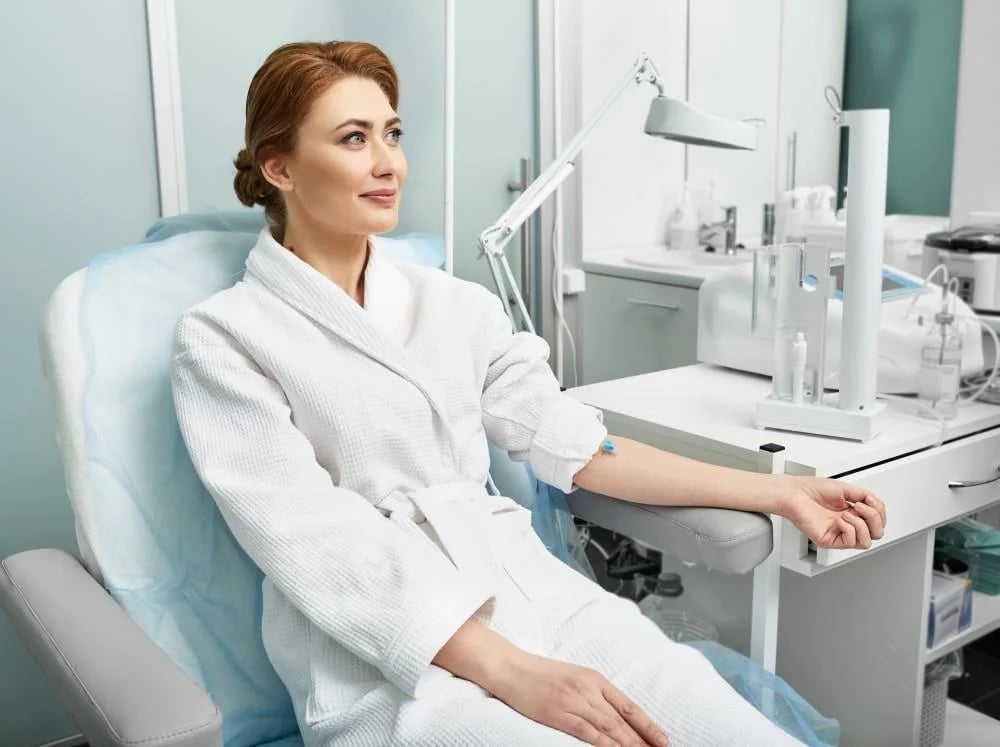
On treatment day, you'll be seated somewhere comfortable, a real chair, not an exam table, since you'll be there for a while. A technician will check in on how you've been feeling since your last visit, or for a first appointment, walk through your intake information one more time to confirm everything's current.
From there, the process itself begins. Blood is drawn much like a standard lab draw, through a needle placed in your arm. That blood travels through a sealed, sterile system where it gets mixed with medical-grade ozone under controlled pressure, then returned to you through the same line. This cycle happens ten times over the course of the appointment.
This is usually the part patients care about most, and the honest answer is: not much. Most people describe the sensation as similar to giving blood for routine labs, just spread across a longer seated period while the mixing and reinfusion cycles happen. There's no burning, no sharp discomfort beyond the initial needle placement, and no sedation involved. You're awake, alert, and free to occupy yourself the entire time.
A typical 10-pass session runs somewhere between 30 minutes and an hour, depending on your individual factors and how your body responds to the process. This is meaningfully shorter than some other blood-based ozone protocols, like EBO2, which processes a larger blood volume through a continuous circuit rather than the same fixed volume cycled multiple times. Patients curious about that distinction can find a full comparison in our guide to EBO2 therapy, which covers how the two methods differ mechanically and when one might be recommended over the other.
Here's something that surprises first-time patients: there's very little required of you during treatment. Most people read, scroll their phone, listen to a podcast, or simply relax. A handful of patients close their eyes and nap through part of the session. There's no active participation needed beyond sitting still with your arm in position, and the technician monitors the process throughout so you don't need to track anything yourself.
Once your tenth pass completes, the needle is removed, a bandage goes on, and you're generally free to leave. There's no formal observation period required for the vast majority of patients, and no sedation to wear off since none was used. Most people drive themselves home or head straight back to work. A small number of patients report feeling mildly tired for the rest of the day, similar to how some people feel after donating blood, though this typically resolves on its own without any specific intervention needed.
How many sessions you'll need depends heavily on what you're treating. A patient using 10-pass therapy for a specific joint issue, addressed through the closely related prolozone approach, might notice improvement within a handful of visits. Someone working through a longstanding condition like chronic Lyme disease or fibromyalgia is typically looking at a longer, more sustained course spread across weeks or months, since these conditions generally respond better to cumulative treatment than to any single session judged in isolation. Dr. Bissoon lays out realistic expectations and specific check-in points during your initial consultation rather than quoting a generic number that applies to everyone.
The patients who come in specifically asking about 10-pass ozone therapy tend to fall into a few recognizable groups. Some are managing a diagnosed chronic illness, Lyme disease and fibromyalgia come up often, and have already tried a fair amount of conventional treatment without full resolution. Others are dealing with a slow-healing wound or injury where standard care has stalled. And a fair number simply feel like their energy, recovery, and general resilience have declined without an obvious cause, and are looking for a way to support their body's own repair processes more directly. Patients in that last group often pair their ozone sessions with IV therapy, since addressing nutrient gaps alongside inflammation tends to produce faster, more noticeable results than either approach alone.
There's also a smaller group worth mentioning: patients who've already tried other approaches, hormone optimization, dietary changes, standard medical treatment, and feel like they've plateaued despite doing everything reasonably right. Ozone therapy sometimes gets added at this stage not as a replacement for what's already working, but as an additional lever that targets inflammation directly rather than indirectly through diet or hormone balance alone. Patients whose plateau seems connected to declining hormones specifically sometimes find our men's health services useful to explore alongside ozone therapy, since the two address different but sometimes overlapping contributors to the same stuck feeling.
There's no elaborate prep required for a 10-pass session, which is part of what makes it accessible for a busy schedule. Staying reasonably hydrated beforehand is a good general practice, since it can make the blood draw itself slightly easier, but there's no fasting requirement, no medication to hold, and no special dietary restriction in the days leading up to your appointment for most patients. If you're taking blood thinners or have a specific bleeding disorder, this is exactly the kind of detail Dr. Bissoon needs upfront during your consultation, since it can affect how your session is approached.
Ozone therapy has a genuinely strong safety record when administered by a trained provider using medical-grade ozone in sterile, closed systems, which is standard practice at Liondale Medical. Side effects, when they occur at all, tend to be mild: brief lightheadedness, minor bruising at the needle site, or the mild post-session fatigue mentioned earlier. Dr. Bissoon reviews your health history before your first session specifically to confirm 10-pass ozone therapy is an appropriate fit for you rather than assuming it applies universally.
Ozone therapy at Liondale Medical rarely stands entirely alone. Patients also managing chronic inflammation sometimes combine it with our broader regenerative medicine offerings, since the two approaches support tissue repair through complementary mechanisms. Those whose fatigue or recovery concerns trace back to a hormonal shift often benefit from a fuller evaluation through our anti-aging program, which looks at hormones and nutrient status alongside inflammation rather than treating each in isolation. And patients whose primary concern is a specific joint or muscle issue sometimes find that prolozone, a related injectable ozone treatment, fits their situation better than the blood-based 10-pass approach, a distinction Dr. Bissoon walks through during your evaluation. Patients specifically managing a Lyme disease diagnosis alongside these concerns can find more detail in our guide to Lyme disease and treatment-resistant symptoms, which covers how ozone therapy fits into a broader treatment strategy for that specific condition.
Before starting treatment, it's worth asking what specific outcome your provider expects to see and by what timeline, so you have something concrete to measure against rather than a vague sense that things should improve eventually. It's also worth asking how 10-pass therapy will be coordinated with anything else you're currently doing medically, since the goal at Liondale Medical is always integration with your existing care rather than a separate, disconnected treatment track running alongside it.
Curious whether 10-pass ozone therapy fits your specific situation? Schedule an evaluation with Dr. Bissoon at Liondale Medical.
Your blood is cycled through the ozone mixing chamber ten separate times within a single session, a defined volume mixed with medical-grade ozone and returned to your body with each pass.
Typically 30 minutes to an hour, depending on individual factors, shorter than some other blood-based ozone protocols like EBO2.
Most patients describe it as similar to a routine blood draw for lab work, with no significant discomfort beyond the initial needle placement.
This varies by condition, from a handful of sessions for a specific issue to an ongoing course over weeks or months for chronic conditions like Lyme disease or fibromyalgia.
Most patients return to normal activities immediately afterward. Some report mild fatigue for the rest of the day, which typically resolves on its own.
Yes, Liondale Medical offers 10-pass ozone therapy at our Upper West Side Manhattan location and sees patients from across the greater New York City area.
This page was written and medically reviewed by Lionel Bissoon, D.O., founder of Liondale Medical. Dr. Bissoon is a board-certified osteopathic physician specializing in anti-aging and concierge medicine on the Upper West Side of Manhattan.
This content is for educational purposes only and does not constitute medical advice. Individual results may vary. Consult a qualified physician before beginning any new treatment.
Published